

Florida Business Sale Insights
Research and practical guidance for Florida business owners preparing for a future sale. Explore articles on valuation, SDE and EBITDA, confidentiality, buyer qualification, due diligence, broker fees, financing, and regional market considerations.
Florida Minimum Wage and Business Valuation
If your trailing books show only a few weeks at Florida’s $15 minimum wage, the expense still needs to be reconciled. Use a payroll bridge to show buyers the annual effect on earnings.

Business Acquisition Loan Rates in Florida: What Buyers Can Borrow
Two buyers can agree on the price and have different amounts available at closing. Work through a loan-payment example, SBA coverage rules and the financing milestones a seller can verify.
Selling a Business and Keeping the Real Estate in Florida
If you own the building your Florida business operates in, market rent changes both valuations. Run the numbers on selling the property with the company or keeping it and leasing it to the buyer.

What Happens to My Employees When I Sell My Business in Florida?
An ownership change can affect who employs your team, when they get paid and when new benefits begin. Learn what to confirm with the buyer and your advisers before the first day under new ownership.

Recurring Revenue Business Valuation: What Sellers Can Prove
The value of recurring revenue depends on who stays, what they pay, and whether the relationships can transfer. Learn how to document renewals, margins, and commitments before selling.

How to Prepare a Business for Sale in Florida
Before you list your Florida business, check that a buyer can verify earnings, your team can handle everyday decisions and the essentials can transfer.

Selling Your Business to Retire in Florida
Work backward from your last working day and the proceeds you need. A Florida business sale can fund retirement, but the timing and terms matter as much as the headline price.

Selling Your Business to Private Equity in Florida
A private equity offer can combine a closing check with equity you keep invested and money you may receive later. Compare the proceeds, risk, and operating role before committing to a buyer.
Letter of Intent When Selling a Business in Florida
A Florida business sale LOI can bind you to exclusivity while the price remains subject to diligence. See what to check before signing and how to keep the buyer accountable to milestones.

Commercial Lease Assignment When Selling a Business in Florida
A buyer needs a workable path to occupy the premises, and you need clarity about the obligations that remain after closing. Review the lease, renewal options, lender requirements and guaranty release before the closing calendar depends on a landlord’s signature.

Asset Sale vs Stock Sale for a Florida Business
An asset sale transfers agreed assets and obligations; a stock sale changes ownership of the company. Understand how each structure affects contracts, liabilities, purchase-price allocation, and the practical work of handing over your business.

Earnout When Selling a Business in Florida: Terms to Review
Would you accept a higher offer if part of the price depended on results after closing? Learn how to test an earnout formula, protect your access to records, and decide how much contingent payment you can afford to accept.
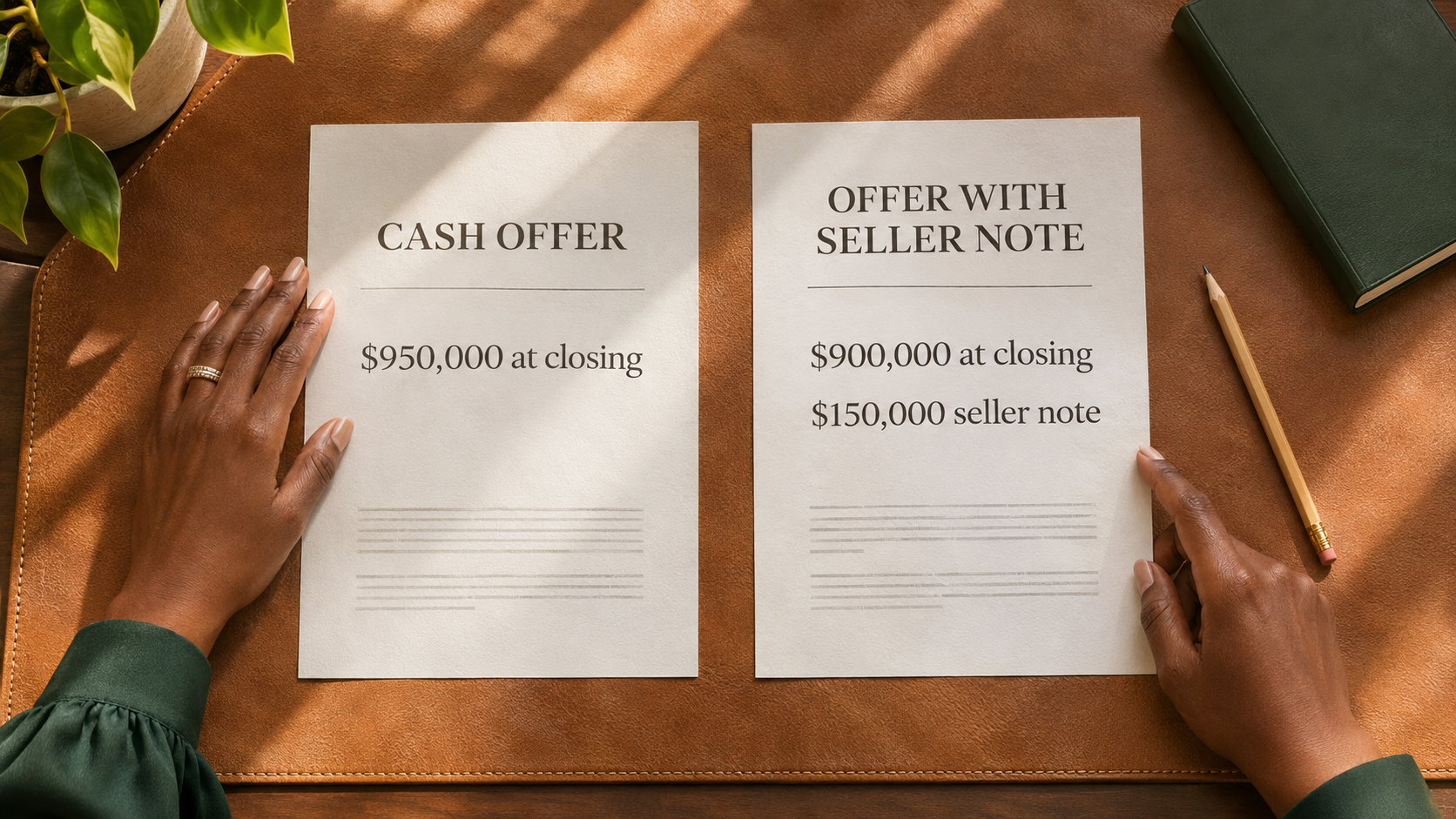
Seller Financing When Selling a Business in Florida
A seller note can build trust, bridge a funding gap, and give you room to ask for a higher price. Learn how to compare the cash you receive at closing with the repayment risk you take on, including in SBA-financed sales.

Quality of Earnings Report for a Business Sale in Florida
A quality of earnings review connects reported profit to the records behind it. Learn what the accountant tests, how to prepare your financial files, and when a lender needs its own independent report.

Sell My Logistics Business in Florida: What Sets the Multiple
A Miami customs broker just got acquired for its trade-lane relationships, and deals like that reset what a Florida logistics business is worth. Here is how 3PLs, freight brokerages, warehousing, and trucking operations get priced — asset-light versus asset-heavy, and why the share of your revenue sitting under multi-year contract does more to your multiple than anything else. Written for owners deciding whether now is the time to sell.

Sell My Gym in Florida: What Each Buyer Actually Pays
Crunch just rolled up nine Florida 24 Hour Fitness clubs, and consolidation like that resets what your gym is worth. Here is what an SBA operator, a multi-unit franchise group, and a private-equity platform each pay for a Florida gym, and the recurring-revenue and churn numbers that move every one of their offers. Written for owners deciding whether now is the time to sell.

Who Buys Businesses in Florida? The Five Buyer Types and What Each Pays
Most owners picture one buyer for their business: a person who wants to run it. There are five, and they pay very different numbers for the same company. Here is who actually buys businesses in Florida — SBA-financed individuals, search funds, private-equity platforms, strategic competitors, and family offices — how each one prices owner-dependence and clean books, and why a new SBA rule just shrank one of those pools.

How to Prepare a Business for Sale in Florida: The Pre-Market Readiness System
A 12–18 month exit-readiness checklist for Florida owners: clean financials, defensible add-backs, reduced owner dependence, transferable contracts, and a lender-ready diligence file before the business goes to market.

Who Buys Landscaping Businesses in Florida?
Three very different buyers are competing for Florida landscaping and grounds-maintenance companies right now — private-equity-backed platforms, regional operators, and individual or SBA-financed buyers — and each one values your business differently. This post breaks down who they are, what each pays the most for, and how to make the highest payer compete for your company.

Do I Need a Business Broker to Sell in Florida? FSBO vs. Broker, With the Math
You do not always need a business broker. If you already have a credible buyer or the deal is tiny, selling on your own can work. For everyone else, the question is math: does a broker’s commission cost more than the price lift from competition, screening, and a deal that survives due diligence? Here is the honest comparison.