
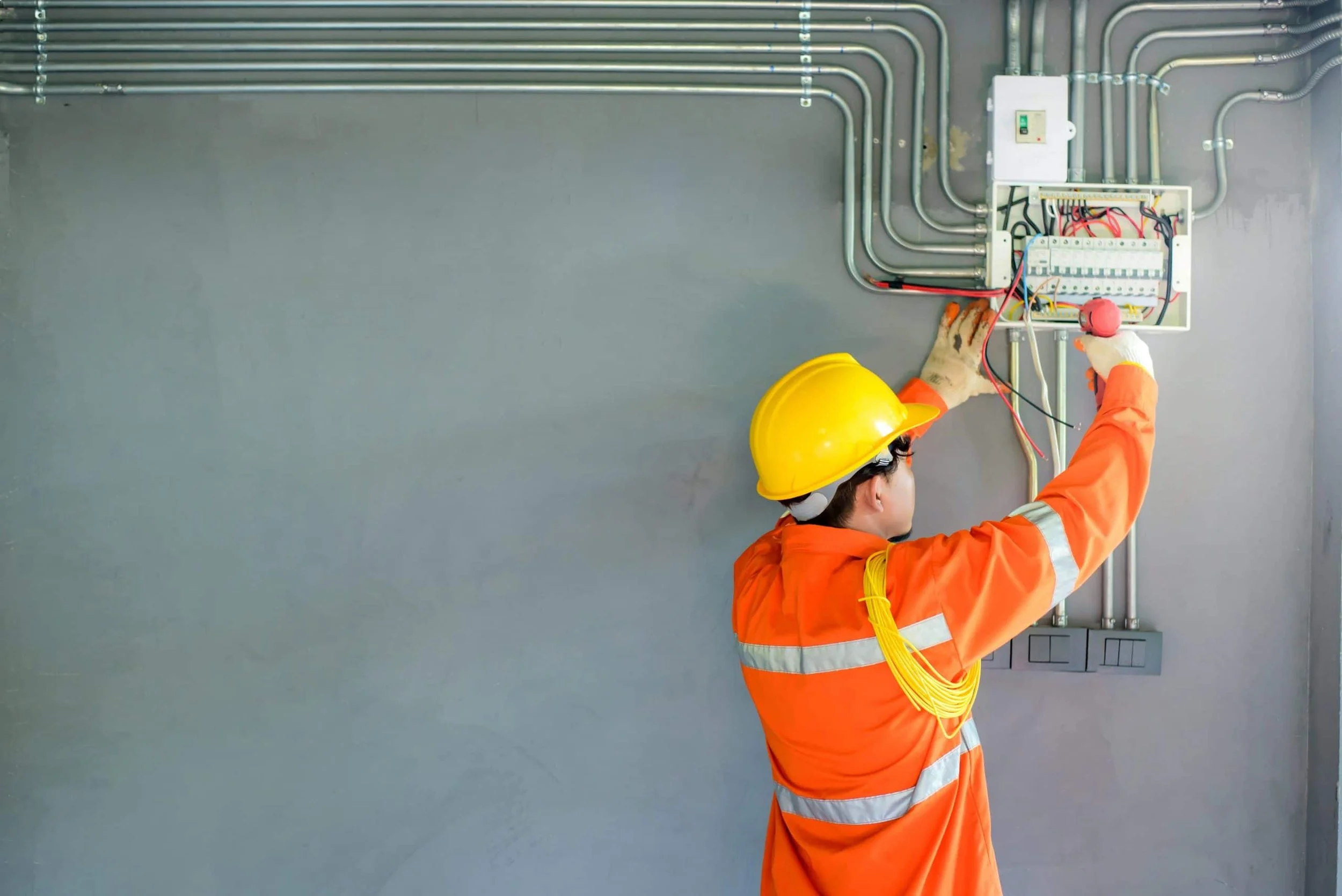
Electrical Business Broker in Florida
You may know your electrical company has value without having perfectly organized financials, a final exit date, or every transition detail resolved. Sailfish Equity Advisors helps Florida electrical contractors understand what their business may be worth, identify the issues buyers will examine, and build a confidential path toward a successful sale.


You Can Start Before Everything Is Perfect
Many electrical business owners begin the conversation before their books are fully cleaned up or before they know exactly when they want to sell. Some are still involved in estimating, hold the company’s qualifying license, or need time to develop the next layer of leadership.
That does not mean you should wait to understand your options.
We can begin with the information you already have, identify what a serious buyer will eventually need, and show you which improvements could have the greatest effect on value. A confidential review gives you clarity without committing you to put the company on the market.
What Creates Buyer Confidence in an Electrical Contractor?
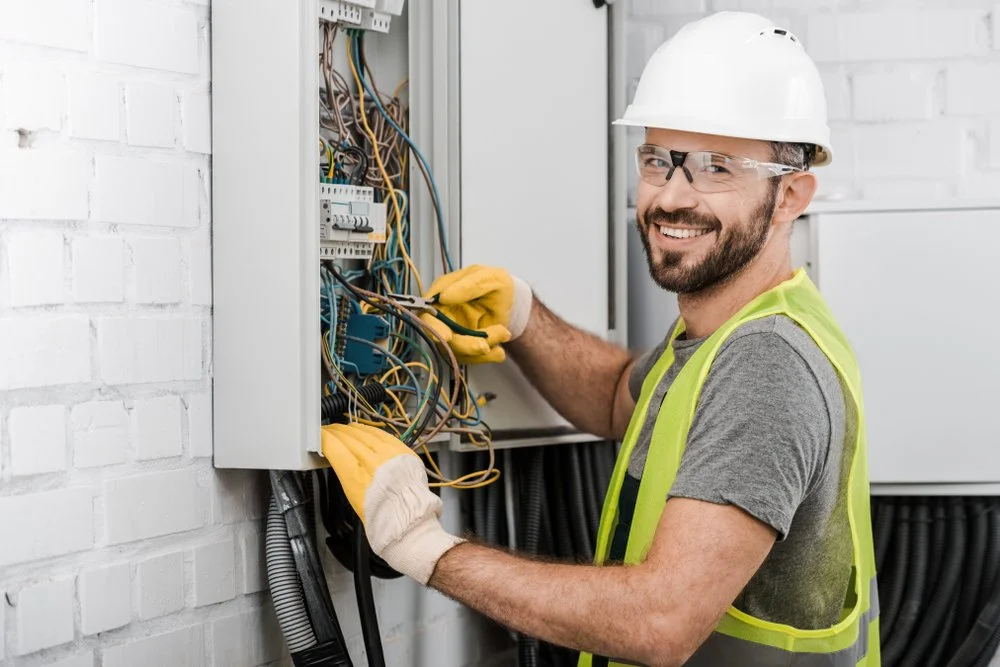
Licensed Leadership Beyond the Owner
Buyers want confidence that the company can remain properly licensed, supervised, and operational after the sale. A clear qualifier plan, experienced foremen, licensed electricians, and managers who can lead projects without constant owner involvement can significantly reduce transition risk.
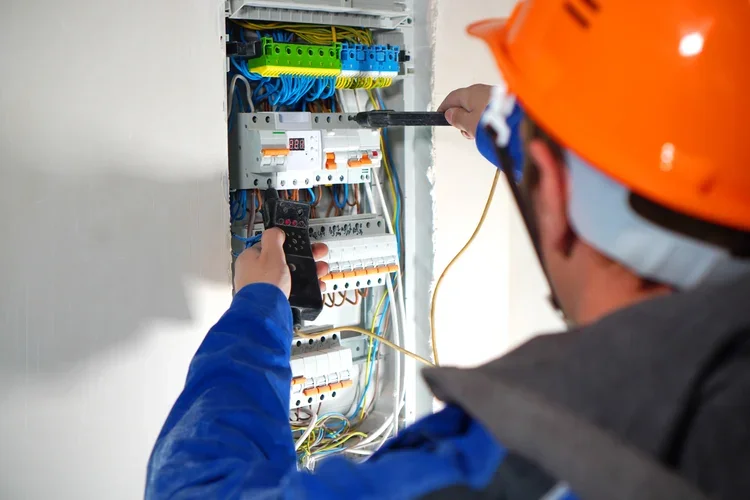
Recurring Service Revenue and a Balanced Project Mix
Electrical companies with a healthy combination of service calls, repairs, maintenance relationships, commercial work, upgrades, and larger projects are often more attractive than companies dependent on a small number of major contracts. Diverse revenue sources can make future earnings more predictable.

Clean Financials, Job Costing, and Backlog
Accurate financial statements, documented owner add-backs, reliable job costing, consistent margins, and a verifiable project backlog help buyers understand the company’s true earning power. The easier the numbers are to verify, the more confidently qualified buyers can evaluate the opportunity.
Work With an Electrical Business Broker Who Understands Value
-

Understand the True Value of Your Electrical Company
We evaluate normalized earnings, legitimate owner add-backs, service and project revenue, gross margins, job costing, backlog, customer concentration, licensing structure, management depth, equipment, and growth opportunities. This creates a valuation position that qualified buyers and lenders can understand and defend.
-

Prepare Before Buyers Begin Due Diligence
Your financial records do not need to be perfect before you contact us. We help identify missing documents, unclear expenses, owner-dependent responsibilities, licensing concerns, and other issues that could affect buyer confidence. Addressing these items early can protect value and reduce delays later in the transaction.
-

No Upfront Electrical Business Broker Fees
Our compensation is success-based. You do not pay a large upfront brokerage fee simply to bring your electrical business to market. We remain actively involved throughout the process—from preparing the company and identifying qualified buyers to managing negotiations, due diligence, and closing. Because we are paid when the transaction closes, our interests remain aligned with yours.
Why Choose Sailfish as Your Electrical Business Broker?

Selling an electrical contracting company requires the right positioning, qualified buyers, and a process designed to protect value. Sailfish manages the transaction from initial valuation through closing.
Electrical Industry Knowledge
We understand licensing, qualifying-agent continuity, workforce structure, job costing, backlog, service revenue, and owner dependence.Qualified Buyers
We reach financially capable individual buyers, strategic contractors, family offices, search funds, and private equity-backed platforms.Defensible Valuation
We evaluate normalized earnings, add-backs, margins, customer concentration, equipment, management depth, and growth potential.Confidential Process
We protect your employees, customers, and reputation through buyer screening, nondisclosure agreements, and controlled information sharing.No Upfront Broker Fees
Our compensation is success-based, so our interests remain aligned with yours throughout the sale.
What Our Clients Say
Electrical Business Broker Insights for Florida Owners
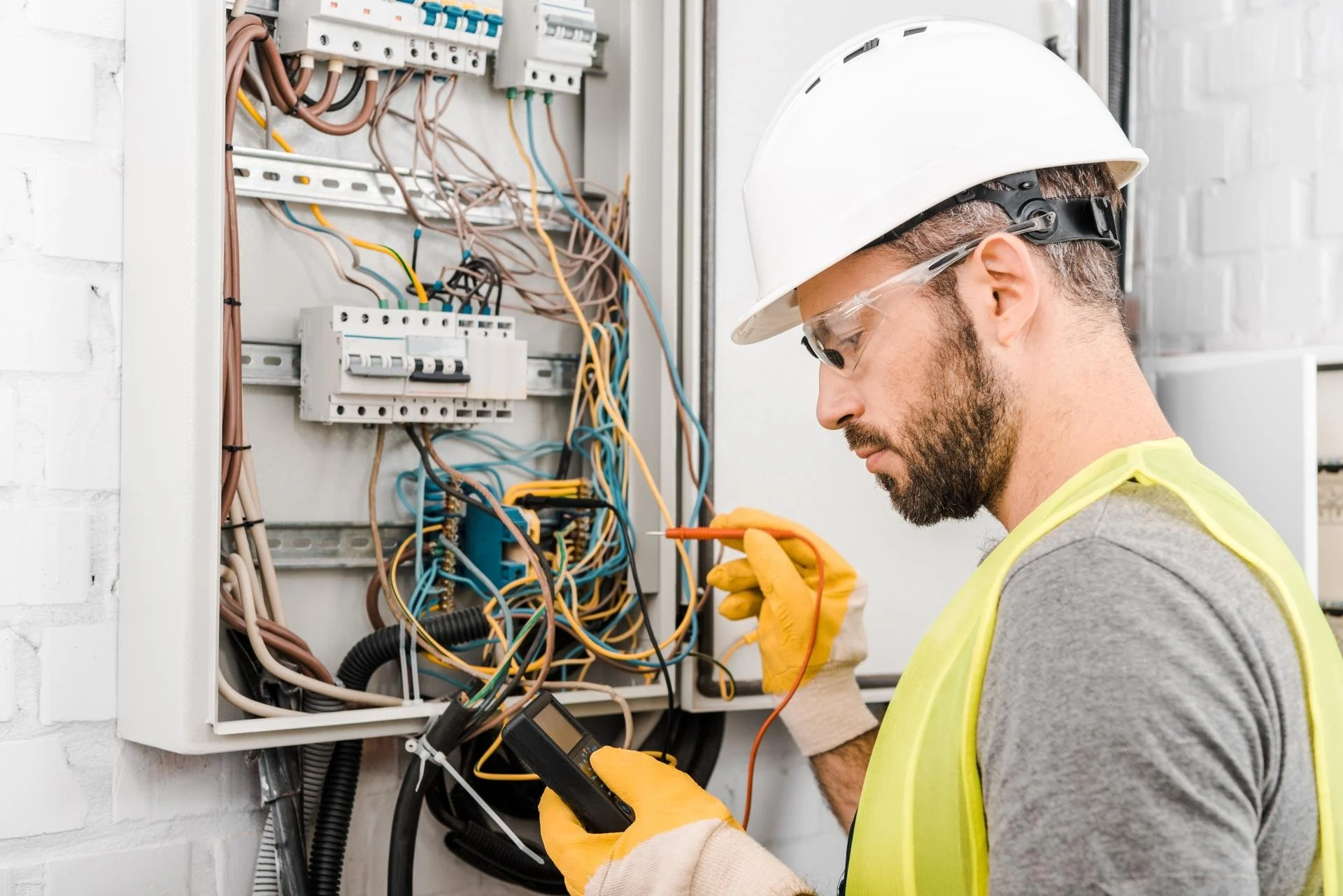
Meet Your Florida Electrical Business Brokers
-

Rajiv Khatri
Managing Partner
-

Sarah Khatri
Managing Partner
-

Franklin Luke
Business Sales Advisor
What Your Electrical Company Is Worth in 2026 – Sell My Electrical Business
An exit-readiness audit for Florida electrical contractors — what your company is worth in 2026, why licensed depth sets the multiple, and who qualifies the business after you leave.
Could your electrical company keep the trucks running for a month if you were suddenly gone? That one question sets your price. A profitable Florida electrical contractor generally sells for about 1.5x to 3.5x SDE at owner-operator scale, and an electrical business broker in Florida spends most of the effort proving the company runs without you — because a bench of licensed journeymen and masters beyond the owner is exactly what lets a buyer keep the work moving after closing.
Sailfish Equity Advisors is a Florida-headquartered M&A advisory and business brokerage, and electrical contracting is a trade we work often. For owners across the state, we assemble a valuation that stands up, put the licensed bench and recurring work buyers pay for on paper, bring the company to market discreetly, test each prospect's ability to close, and guide the deal to funding — with the preparation finished long ahead of the first buyer conversation.
Most electrical owners come to us fixated on revenue. Buyers are fixated on something else: who holds the license, how deep the licensed bench runs, and how much of the work survives the owner's exit. This guide walks that audit — so you can run it first.
Electrical Contractors Are Getting Bought in Florida — Would Yours Qualify?
Electrical contracting is drawing steady acquisition interest across Florida. Private-equity-backed platforms — many built around HVAC and mechanical services and expanding into electrical — plus larger regional contractors are buying established electrical companies to add licensed capacity, commercial relationships, and market density. Florida's construction pipeline, data-center and commercial buildout, and aging residential base make electricians attractive targets.
But not every electrical company is buyable at a strong number, and the dividing line is usually licensing and depth. If you left tomorrow, who qualifies the business? How many licensed electricians do you employ beyond yourself? Could your foremen run jobs without your daily involvement? A company that answers those well qualifies for competitive offers; one where the owner is the sole qualifier, top estimator, and key relationship qualifies for a discount, or a deal structured to keep the owner tied in. Knowing which you are, before a buyer tells you, is the whole point of an exit-readiness audit.
What an Electrical Buyer Weighs Before They Commit
A buyer sizes up a set list before committing: how much licensed depth exists beyond the owner, the blend of service, commercial, and low-voltage work, recurring versus one-off project revenue, concentration across customers and GCs, the cleanliness of the financials, and how much of the operation exits when the owner does. What they're purchasing is the run of years still ahead, which is why dependence on the owner draws a steep markdown.
For an electrical contractor, seller's discretionary earnings — SDE — is the figure a lender underwrites once you strip out the noise: what's left after materials, labor, and job costs, with the owner's salary, vehicle, and personal or one-time charges added back in. But electrical valuation turns on the labor math behind that number. A lender is really asking how many billable licensed hours the company can put on jobs without the owner in the field — so earnings resting entirely on one licensed owner get discounted, while the same earnings backed by a roster of licensed hours get paid up for.
The electrical companies that draw the strongest offers tend to show the same things: licensed journeymen plus at least one master or qualifier who isn't the departing owner; a steady layer of service and maintenance work under the project revenue; foremen who run jobs with the owner off-site; concentration that stays manageable across customers and GCs; and three years of financials that are clean with add-backs already spelled out.
What Florida Electrical Contractors Sell For in 2026
In published estimates, owner-operated service-and-trade businesses cluster around 1.5x to 3.5x SDE, and electrical contractors fall within that range before size and licensed depth adjust it. Per-dollar value rises as the company grows. The published size ladder generally reads: about 2.5x to 3.5x for SDE between $250,000 and $500,000; something like 3x to 4.5x in the $500,000-to-$1-million tier; and, once a business is large enough to be valued on EBITDA — on the order of $1 million to $3 million — commonly near 4.5x to 6.5x. For a cross-trade comparison, HVAC is often cited at about 3x to 5x SDE.
Hold these as published ranges and estimates rather than promises — your real number is only what financeable buyers will stand behind for your specific books. In electrical, licensed depth is the biggest swing factor: two contractors sitting at an identical $600,000 of SDE can be worth wildly different amounts. The one with several licensed electricians, a master who can qualify the business, and foremen running jobs sits near the top; the one where the owner holds the only license and touches every bid sits near the bottom, or draws an offer built around a long, mandatory transition.
Two figures worth filing away: Main Street brokerage commissions commonly sit in the 8%-to-12% range of the sale price, while a prepared-to-closed sale usually runs 6 to 12 months.
Service, Commercial, and Low-Voltage: The Mix Behind Your Multiple
Electrical revenue is not one thing, and buyers price each stream differently. Service and maintenance work — repairs, panel upgrades, recurring commercial service agreements — is the most valued: it recurs, carries steady margin, and does not depend on winning the next big bid. Commercial and project work brings scale but can be lumpy, bid-dependent, and concentrated among a few GCs. Low-voltage work — data cabling, alarm, access control, structured wiring — is increasingly attractive and often recurring, but can require its own licensing and technical staff a buyer will want to keep.
A buyer maps this mix to gauge how predictable your earnings are and how much licensed and technical talent they must retain. A company weighted toward recurring service and steady low-voltage contracts reads as financeable and durable. One that is almost entirely project bids reads as feast-or-famine. If your mix leans hard toward projects, building a recurring service department and documenting maintenance agreements over 12 to 18 months can raise both your earnings and the multiple applied to them.
Who Holds the Master License the Day After Closing?
Here is the Florida detail that trips up electrical sellers who wait until diligence to think about it — and it differs from the other trades. Electrical contractors in Florida are licensed not by the CILB but by a separate board, the Electrical Contractors' Licensing Board (ECLB), under Chapter 489, Part II (see myfloridalicense.com/electrical-contractors). A Certified Electrical Contractor (EC) may work statewide; a Registered Electrical Contractor (ER) is competency-tested locally and limited to the issuing jurisdiction. The business contracts through a qualifying agent — the licensed individual who qualifies the company. And the stakes for getting it wrong are real: unlicensed electrical contracting can draw penalties up to $10,000 per violation under §489.533.
So the buyer leads with a blunt question: the day after the wire clears, who holds the master license and qualifies the business? If it's you alone, the buyer has to bring in their own qualifier, elevate a qualified employee, or keep you aboard long enough to move the license — and that dependency prices straight into the offer and its structure. If a master or qualifier already on staff is staying, the transfer turns routine. Few moves an electrical seller makes before going to market pay back like resolving this one.
Selling Quietly When Your Foremen Are the Relationships
Run the numbers on a leak and confidentiality reads as pure deal protection, because in an electrical shop your foremen and lead electricians frequently *are* the customer and GC relationships. Let them learn the company is for sale before you're ready and the costs stack up fast: your best licensed people take the recruiter's call, GCs start hedging on upcoming jobs, and competitors exploit the doubt to peel off both your accounts and your crew.
A discreet process keeps the whole thing intact. The company is presented as a blind profile — the trade, a broad territory, revenue, SDE, and work mix — carrying nothing that identifies it. A buyer can't learn the name until a non-disclosure agreement is signed, and the delicate material — GC and customer relationships, licensed-staff rosters, the bid pipeline, and pricing — is handed over in stages, only to buyers who've demonstrated they can close. Your crew hears about it once the deal is all but done, not as gossip at the supply house.
Screening Electrical Buyers Who Can Actually Fund It
Plenty who inquire can't actually fund an electrical acquisition, and giving a curious competitor the run of the place is how your pricing, pipeline, and staffing details walk out the door. The discipline is to qualify ahead of disclosing: funds in hand or a lender behind them, operating and licensing experience that fits, an honest timeline, and evidence they can carry a deal to close.
Electrical companies tend to attract three buyer types, and keeping all three in play at once is what generates the competition that lifts price:
● Mechanical consolidators and strategic platforms, buying licensed capacity, commercial relationships, and density in a market
● Owner-operators and searchers, frequently licensed electricians or investor-funded buyers, who want a turnkey company whose licensed bench is already staffed
● Competitors nearby, who prize your crews and contracts yet sit closest to the confidentiality risk and get the tightest handling
A party that can't prove it will fund and close has no claim to the access a qualified buyer earns — and nobody lays eyes on your customer, pipeline, or staffing detail before the deal is genuinely real.
How Sailfish Turns Licensed Depth Into Buyer Confidence
The steepest part of selling an electrical company is showing the earnings outlast your exit — and that showing is assembled before a buyer ever dials in. We lead with a confidential, buyer-backed valuation: your books are recast into a defensible SDE, your licensed depth and recurring work are put on record, the add-back schedule is built to clear a buyer's review, and the service, commercial, and low-voltage mix is measured the way an acquirer's underwriter would.
Backed by better than 25 years in this work and more than a thousand Florida owners guided — and billing nothing until the closing pays us — we list the company blind, screen each buyer for the ability to close, and stage a competitive process so your licensed team and recurring work are valued as the assets they are. The ECLB qualifier question gets mapped up front, so the master-license transfer is settled before it can drag on a deal. The pattern holds across Florida electrical deals: buyers bid with confidence when the license and the talent stay put, and our task is to make that depth impossible to miss.
The Year Before You Sell an Electrical Business
A strong electrical exit takes months to build. Give yourself roughly a year and run the audit in sequence. Separate personal from business and clean the books so your SDE holds up. Grow the recurring service and maintenance base so the earnings aren't all project bids. Develop or keep a master or qualifier besides yourself so the company stays licensed once you're gone. Push authority down to your foremen — buyers discount any company still tethered to the owner's personal cell phone. Study concentration: when one GC or customer pushes past 20% to 30% of revenue, buyers turn cautious. Get your ECLB licensing and qualifier path documented. Then commission a buyer-backed valuation and decide whether to sell now or invest another year building proof.
None of it calls for heroics — only a start made before you're forced into one. A company engineered to outlast its owner's exit is also the calmer, more valuable one to operate while the decision waits.
Selling an Electrical Business in Florida: FAQ
How much is my Florida electrical business worth?
Owner-run electrical contractors generally command roughly 1.5x to 3.5x SDE; the larger and more service-driven ones land higher and, once sizable enough, get assessed on EBITDA. Licensed depth is the biggest swing factor: a company with masters and journeymen beyond the owner, plus recurring service work, earns a fuller multiple than one riding entirely on the owner's license.
Why does licensed depth matter so much to buyers?
Because the license is the company's right to work. If the owner is the sole qualifier, a buyer must supply or retain a licensed qualifier just to keep operating, which adds risk and cost. A bench of licensed electricians who stay after closing lets the buyer keep the trucks running immediately — and they pay more for that certainty.
Does my Florida electrical contractor license transfer when I sell?
No. Electrical contractors answer to the ECLB — a board separate from the CILB — under Chapter 489, Part II, with the company qualified by a licensed qualifying agent. The buyer's options are to install their own qualifier, keep a qualified employee on the payroll, or hold you in place across a transition. And the risk of getting it wrong is concrete: unlicensed contracting runs to $10,000 per violation.
Do I have to tell my foremen I'm selling?
Wait until the transaction is all but sealed. Foremen and lead electricians tend to hold the customer and GC relationships themselves, so a premature leak can strip you of staff and accounts together. The confidential mechanics — a blind profile, signed NDAs, and disclosure fed out in stages — guard your crew and your pipeline until a close is nearly certain.
How long does it take to sell an electrical business in Florida?
Count on something in the range of 6 to 12 months from prep to close, and longer for bigger or more project-driven companies. Buyers will want three years of statements, a clear picture of the license and qualifier, and a read on concentration and recurring work. Groundwork finished before you go to market is usually what shortens diligence.
How does an electrical business broker in Florida help owners sell?
An electrical business broker in Florida builds the buyer-backed valuation, puts licensed depth and recurring work on paper, markets the company under wraps, screens buyers for genuine closing ability, and carries the deal to funding. Sailfish brings more than 25 years in the trade, a thousand-plus Florida owners guided, and no fee until closing pays us — with the ECLB qualifier question mapped early.
Know What Your Electrical Company Is Worth
When electrical acquirers are working your market, the worst place to learn your value is a buyer's opening offer. Begin instead with a confidential, buyer-backed valuation from an electrical business broker in Florida — see how your licensed depth and recurring work drive the number, find out which buyers would compete for your company, and go to market on your own terms. Reach out to Sailfish Equity Advisors to open a confidential conversation.