
Business Broker Fees in Florida: What You'll Actually Pay (And What You Shouldn't)
Understand the Full Cost of Selling a Florida Business
The cost of a Florida business sale includes more than the success fee, so owners should compare retainers, professional expenses, and the services included. To map the likely costs for your transaction, schedule a confidential exit-planning conversation.




Why Business Owners Choose Sailfish Equity Advisors
25+ Years of Proven Deal Experience
1,000+ Businesses Sold Across Florida
Confidential, Strategic Sale Process
Access to a Qualified Buyer Network
Maximized Valuation Through Positioning
Industry Experience Across High-Demand Sectors
Deal Structuring Expertise
Hands-On Guidance From Start to Finish
Deep Local Market Knowledge
Built for Results—Not Just Listings
1,000+ Florida Business Owners Trust Us
Real stories from owners who sold, scaled, and succeeded with Sailfish.
Now is the Perfect Time to Sell Your Business in Florida:





Business Broker Fees in Florida: What You'll Actually Pay (And What You Shouldn't)
On most Main Street deals in Florida — businesses selling for under a few million dollars — business broker fees typically run 8% to 12% of the sale price, paid as a success fee at closing. Larger deals usually scale down through tiered formulas. That's the short answer. The longer answer — what those fees should buy you, which charges you should question before signing, and why the cheapest broker is often the most expensive decision a seller makes — is what this guide covers.
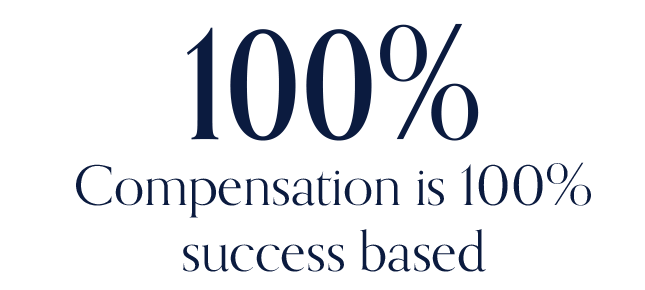
Sailfish Equity Advisors is a Florida business brokerage and M&A advisory firm helping owners across the state value, prepare, confidentially market, and sell their companies — with buyer-backed valuation, buyer screening, confidential marketing, deal positioning, and a structured process before going to market. We work on a 100% success-based fee: no retainers, no monthly charges, nothing owed until your deal closes. So yes, we have opinions about fees. Here they are, with the math behind them.
How Success Fees Work on a Florida Business Sale
A success fee — most owners call it a commission — is a percentage of the final sale price, earned only if the business actually sells. Across the brokerage industry, commissions on Main Street deals often land between 8% and 12%, with 10% the figure you'll hear most often. Many brokers also set a minimum fee so very small transactions still cover the work involved.
Three things matter more than the headline percentage:
When it's paid. A true success fee comes out of closing proceeds. You never write a check from savings, and you never pay for a sale that didn't happen.
What it's calculated on. Most fees are based on total transaction value — which can include seller notes, earnouts, and assumed obligations, not just cash at the table. Before you sign anything, ask exactly how the agreement defines "sale price."
What it covers. A real success fee covers the entire engagement: valuation, deal packaging, confidential marketing, buyer screening, negotiation, and management of the deal to the closing table. If those services appear as separate line items, you're not looking at a success-fee model. You're looking at a fee schedule wearing one as a costume.
What Happens to the Percentage as Deals Get Bigger
A flat percentage stops making sense as deal size grows. Ten percent of a $400,000 sale is fair compensation for months of work. Ten percent of a $12 million sale is not a fee — it's a windfall. So larger transactions generally use scaled structures, the best known being the Lehman formula and its modern descendant, the Double Lehman.
The original Lehman formula charges 5% on the first million of transaction value, 4% on the second million, 3% on the third, 2% on the fourth, and 1% on everything above that. The Double Lehman — more common today, since the original was created decades ago and never adjusted for inflation — doubles each tier: 10%, 8%, 6%, 4%, and 2% on value above the fourth million. Plenty of firms run modified versions of either formula, and exact tiers are negotiated deal by deal. These are industry norms, not regulations — Florida doesn't set broker commission rates.
Here's how the structures generally compare:
Deal size
Common fee structure
What that typically means
Under $1M (Main Street)
Flat success fee
8–12% of sale price, often with a minimum fee
$1M–$5M
Flat fee or a modified/Double Lehman scale
Blended rate steps down as value rises
$5M+ (lower middle market)
Double Lehman or a negotiated tiered scale
Blended single digits, declining with size
The principle behind all of it: as deals get larger, the blended percentage falls — but the work gets harder, with more sophisticated buyers, deeper diligence, and more deal structure. A scaled fee keeps the broker's payday tied to your outcome at every level.
Success Fees vs. Upfront Fees: Where Sellers Get Burned
This is the comparison that actually matters — not which broker quotes 9% versus 10%, but who gets paid only when you do. Some firms charge fees whether or not your business ever sells. Four to look at closely:
Upfront retainers. An engagement fee charged at signing. At the larger M&A end, modest retainers credited against the final success fee are long-standing practice and not automatically a red flag. On a Main Street deal, a large non-refundable retainer deserves hard questions — it pays the firm for signing you, not for selling you.
Monthly fees. Recurring charges "for marketing" or "administration" that continue whether or not qualified buyers ever appear. Ask what happens to a firm's urgency once your monthly payment becomes the business model.
Valuation charges. Some firms charge separately, and substantially, for the valuation that begins the engagement. A formal certified appraisal for litigation or tax purposes is a legitimate paid product. But a market valuation used to price your business for sale is the foundation of the broker's own work — be cautious of a firm that profits from it whether or not the number holds up with buyers.
Cancellation terms and tail periods. Read the exit clauses before the fee schedule. How long is the exclusivity period? What do you owe if you cancel? Most agreements include a tail provision — if a buyer the broker introduced closes within a set period after the agreement ends, the fee is still owed. That's reasonable. A tail that stretches for years, or cancellation penalties that effectively trap you, is not.
The pattern to notice: every upfront dollar shifts risk from the broker to you. A firm paid at signing has been compensated for optimism. A firm paid at closing eats every hour of work on a deal that dies — which is exactly why it will tell you the truth about price before you go to market.
What a Good Fee Should Actually Buy You
If you're going to pay a five- or six-figure success fee, here's the work it should cover — all of it, with no add-on charges:
A buyer-backed valuation. Valuation is not a spreadsheet exercise. The real question is what qualified buyers can support based on cash flow, risk, financing, industry demand, and transferability. A broker who prices your business off a generic multiple — rather than off what buyers in your industry are actually paying and what lenders will actually finance — is guessing with your retirement.
Confidential marketing. Blind listing profiles, NDAs before disclosure, staged release of information, and controlled access to financials. If employees, customers, or competitors learn your business is for sale before a deal is solid, the damage can outrun any fee savings. Confidentiality is not a courtesy. It is deal protection.
Buyer screening. Interest is not ability. Expect proof-of-funds review, financing capacity checks, and real qualification on experience, intent, and timeline. A buyer who cannot show ability should not get the same access as a buyer who can — and you should not spend your evenings entertaining the ones who can't.
Negotiation and positioning. Buyers evaluate risk: owner dependence, customer concentration, the strength of your team, the quality of your books, recurring revenue. Buyers typically want to see around three years of financials, and concentration much above 20–30% in one customer raises questions. A good advisor anticipates those objections and answers them before buyers raise them — that's where price gets defended.
Deal management to closing. A typical sale runs 6 to 12 months: diligence, lender coordination, attorneys, landlords, license transfers, and the dozen small fires that kill unmanaged deals. The fee buys someone whose job is keeping the transaction alive while you keep running the business.
Why the Cheapest Fee Is Usually the Most Expensive Mistake
Now the math that most fee-shopping sellers never run.
Many small businesses sell on a multiple of SDE — Seller's Discretionary Earnings, the cash flow a full-time owner-operator could reasonably expect, before owner-specific and discretionary expenses are added back. Owner-operated service businesses often trade somewhere around 1.5x to 3.5x SDE. Where your business lands inside that range depends on risk, transferability, recurring revenue, team depth, and how well the deal is positioned and competed.
Take a pool service company with $500,000 of SDE. The gap between selling at 2.4x and 2.8x is $200,000 of price. Now compare the fee savings from hiring the cheapest broker available: two percentage points on a $1.2 million sale is $24,000. The positioning gap is more than eight times the fee gap — and that's before considering deal terms, which can move real value as much as headline price does.
What moves a business up the multiple range? Documented add-backs instead of hand-waved ones. Recurring revenue made visible — route density in pool or pest control, maintenance agreements in the trades, contracts in distribution. A trained manager instead of an owner who does everything. And more than one qualified buyer at the table, because competition is the only negotiating lever that never weakens. Sellers value the past. Buyers pay for the future — and creating buyer confidence in that future is skilled, time-consuming work.
The cheapest fee usually buys a listing. A listing is not a strategy.
How Sailfish's 100% Success-Based Fee Works
We built Sailfish's fee model around one idea: our incentives should be indistinguishable from yours.
There is no retainer. There are no monthly fees. There is no charge for the valuation. We earn our fee at closing, out of proceeds, when you get paid — and not before. Over 25+ years of building, buying, and selling businesses, and after helping more than 1,000 Florida owners, we've found this does two things a fee schedule never advertises.
First, it makes our valuations honest. We have zero incentive to flatter you with an inflated number to win the engagement — our valuations are buyer-backed, grounded in what qualified, financeable buyers will actually support.
Second, it makes us selective. We invest months of unpaid work in every engagement, so we tell owners the truth up front, including when the right answer is "prepare for 12 more months, then sell." If you want to understand what working with a Florida business broker on a fully success-based model looks like in practice, that page walks through our process end to end.
Questions to Ask Any Broker About Fees Before You Sign
Take this list into every conversation:
What is your total fee, and is any portion of it payable before closing?
Exactly how do you define the transaction value my fee is calculated on?
Are valuation, marketing, and buyer screening included — or billed separately?
If my business doesn't sell, what will I have paid you?
How long is the exclusivity period, and what does cancellation cost me?
How long is your tail provision after the agreement ends?
How do you screen buyers before they see my financials?
How is my confidentiality protected while you market the business?
Any broker worth a success fee will answer all eight without flinching.
Wondering what your business is worth — and what selling it would actually cost? Start with a confidential, no-obligation valuation conversation. You'll get a buyer-backed view of value and a straight answer on business broker fees for your Florida sale before you commit to anything. Book a confidential call.
Frequently Asked Questions
How much do business brokers charge in Florida?
On Main Street deals, business broker fees in Florida typically run 8–12% of the sale price as a success fee paid at closing, with 10% the most common quote. Larger deals generally use tiered structures, such as Lehman-style formulas, where the blended percentage declines as transaction value rises.
Do business brokers charge upfront fees?
Some do — retainers, monthly marketing fees, or separate valuation charges. Others, including Sailfish, work entirely on success fees and charge nothing before closing. Upfront fees aren't automatically abusive, especially on larger M&A engagements, but always ask what you'll have paid if the business never sells.
Who pays the broker's fee — the buyer or the seller?
In a standard engagement, the seller pays the success fee out of closing proceeds, since the broker represents the seller's interests. The fee is deducted at closing, so the seller never pays out of pocket.
What is the Lehman formula for broker fees?
The Lehman formula is a tiered fee scale: 5% on the first million of transaction value, 4% on the second, 3% on the third, 2% on the fourth, and 1% above that. The Double Lehman, more common today, doubles each tier — 10%, 8%, 6%, 4%, and 2% — to account for decades of inflation since the original was created.
Are business broker fees negotiable?
Often, yes — especially the structure: minimum fees, tail length, exclusivity period, and how transaction value is defined. But negotiating to the cheapest possible fee can backfire: a few points of price improvement from better positioning and buyer competition is worth far more than a point of commission savings.
How does Sailfish Equity Advisors help Florida business owners?
Sailfish is a Florida business brokerage and M&A advisory firm with 25+ years of experience and more than 1,000 Florida owners helped. We provide buyer-backed valuation, exit preparation, confidential marketing, buyer screening, negotiation, and deal management — all on a 100% success-based fee with no retainers, no monthly charges, and nothing owed until your sale closes.
For statewide guidance on valuation, confidentiality, buyer qualification, and closing, visit our Florida business broker guide.