
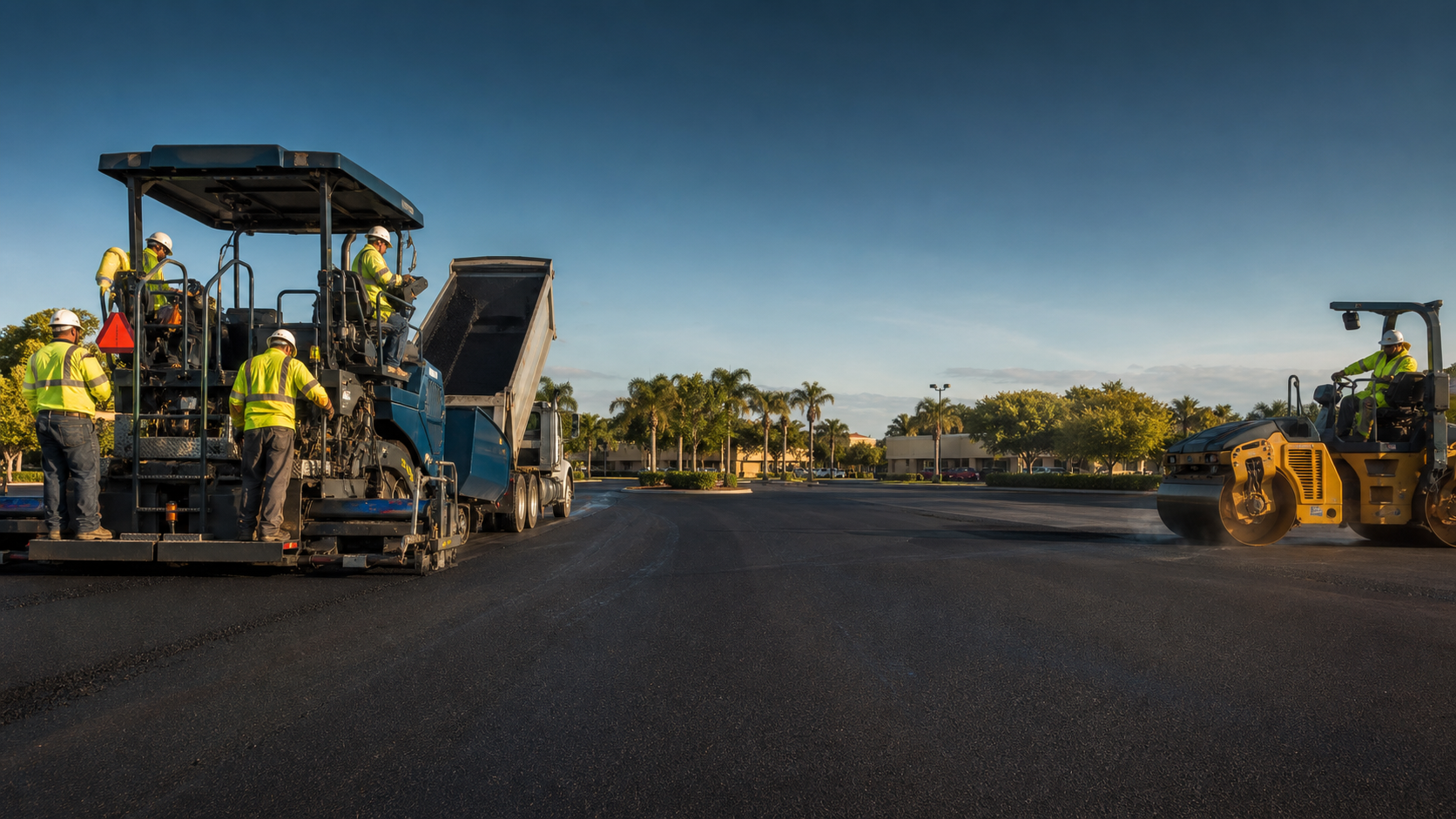
Sell My Paving Business in Florida
Your paving company may combine municipal resurfacing, commercial parking lots, asphalt repair, sealcoating, striping, and residential work. The question is how buyers will price each revenue stream—and what the fleet and FDOT prequalification do to the deal.
Sailfish Equity Advisors helps Florida paving and asphalt owners separate durable commercial and municipal earnings from lower-barrier maintenance work, document fleet condition and margins, and pursue a confidential sale without exposing crews, customers, or active bids.



You Can Start Before Every Job-Cost and Fleet Record Is Perfect
Many paving owners delay requesting a valuation because job-cost reports, fleet appraisals, backlog schedules, escalation clauses, FDOT records, customer concentration, or financial statements are not fully organized. That does not have to stop the first conversation. A confidential valuation can identify which records matter most, what each buyer pool will test, and where focused cleanup can strengthen your position before going to market.
What Makes a Florida Paving Business Attractive to Buyers?
Commercial and Municipal Work Mix
Buyers reward shopping-center, industrial, city, county, and resurfacing work that carries real barriers to entry, supported margins, and a credible pipeline.
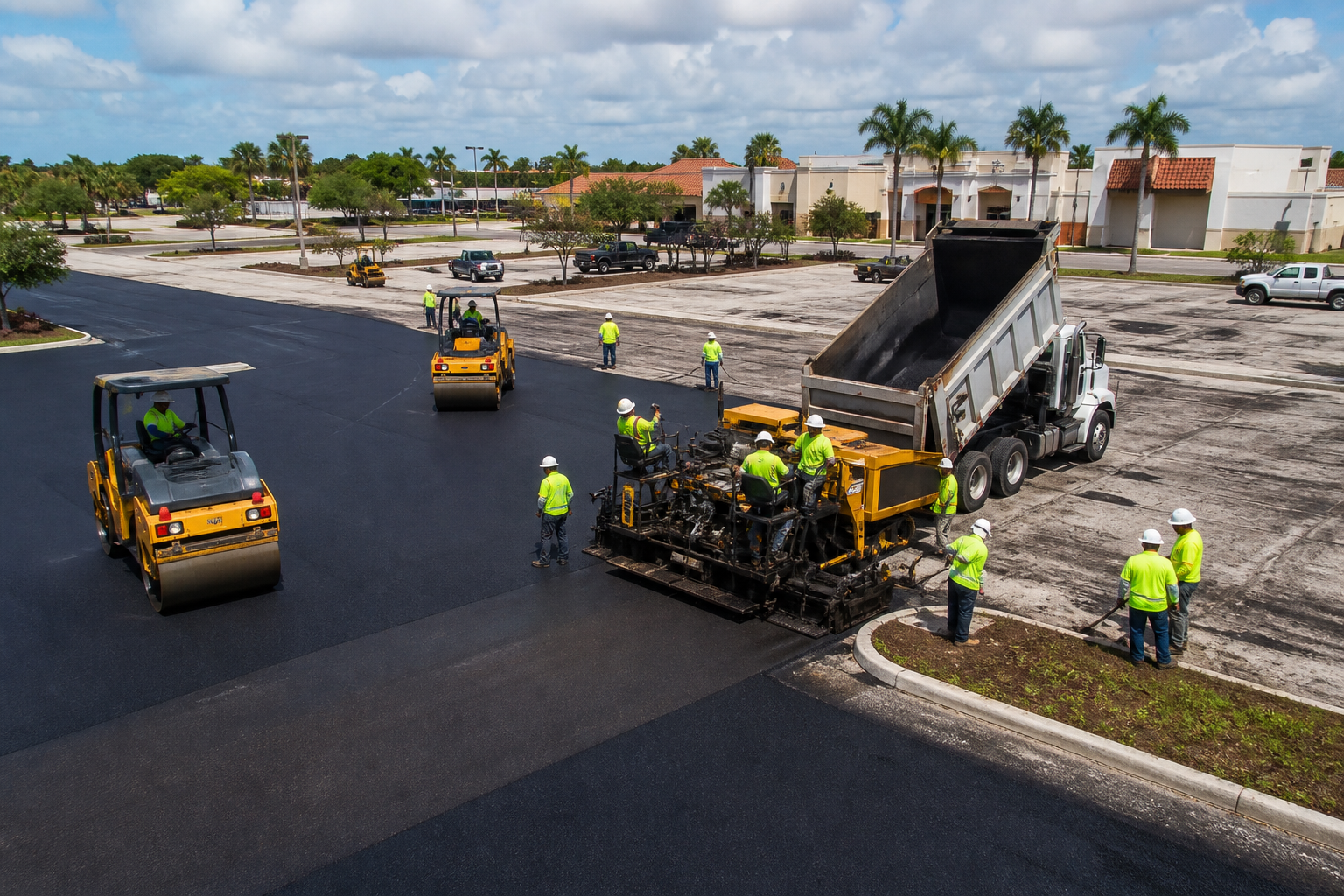
Fleet Condition and Bidding Capacity
Current appraisals, maintenance records, hour meters, and equipment with useful life help buyers understand both replacement risk and the balance-sheet support behind FDOT capacity.
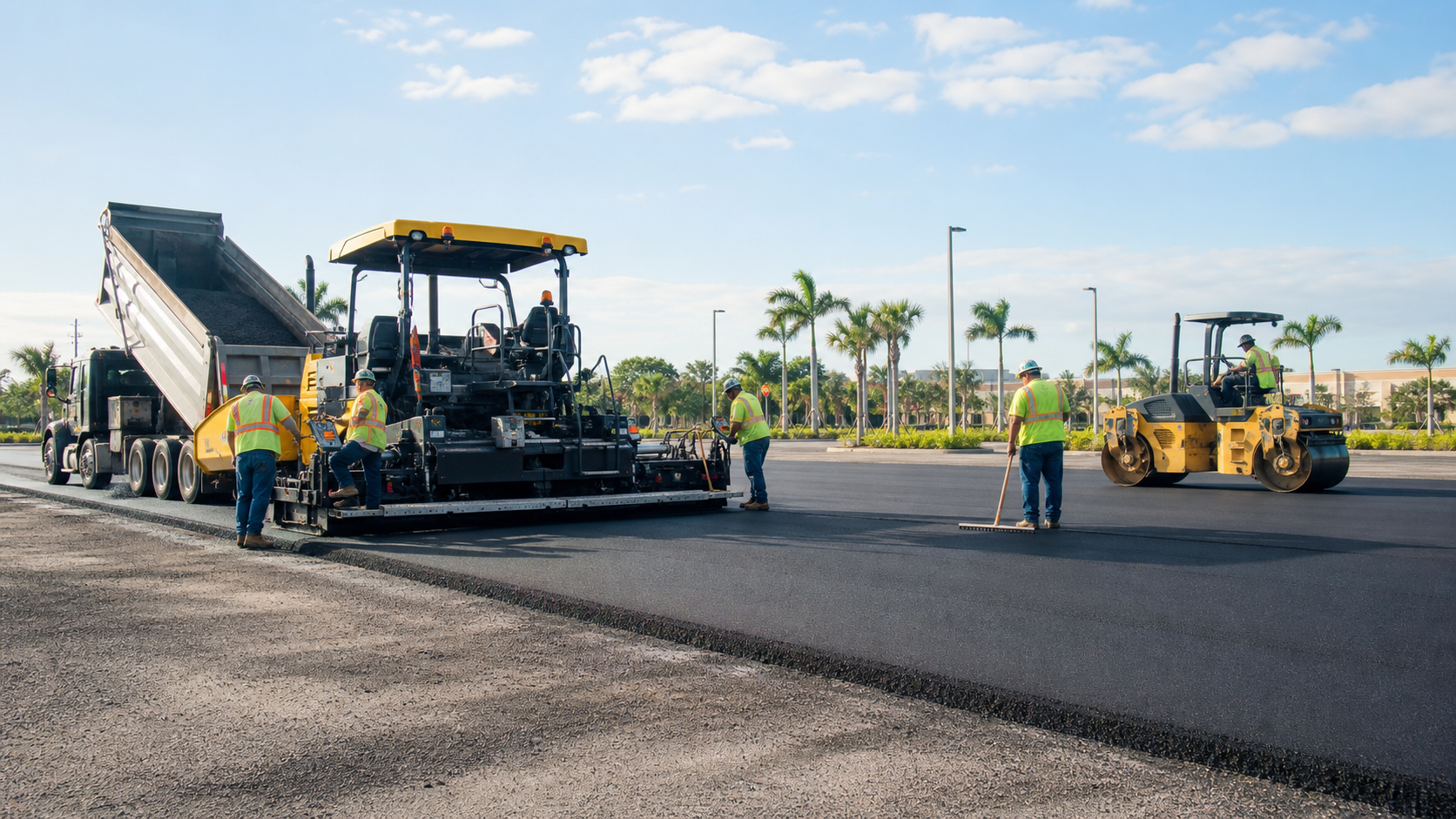
Estimators and Crews Beyond the Owner
A second estimator, experienced superintendents, and crews that can bid, schedule, produce, and close jobs without the owner reduce transition risk and support a stronger valuation.
Understand What Your Florida Paving Business May Be Worth
-

Know What Drives Your Paving Business Value
We review normalized earnings, commercial and municipal share, sealcoat and residential mix, backlog quality, fleet condition, FDOT prequalification, contract escalation terms, customer concentration, estimator depth, and owner dependence to determine what qualified buyers may support.
-

Prepare Before Paving Buyer Due Diligence
We organize job-level margins, fleet lists and appraisals, backlog and bid logs, FDOT records, escalation clauses, customer concentration, crew roles, and financial add-backs before buyers review them.
-

Success-Based Support Through Closing
Our compensation is success-based. We stay involved as your paving business moves from preparation and confidential outreach through negotiations, due diligence, financing, and closing.
Why Choose Sailfish as Your Paving Business Broker?

Selling a Florida paving or asphalt company requires a valuation that separates commercial and municipal work from residential, sealcoat, and striping revenue, while accounting for fleet condition, FDOT prequalification, and owner-controlled estimating. Sailfish brings more than 25 years of transaction experience and insight from more than 1,000 business transactions to every engagement.
We help owners normalize earnings, package the fleet and backlog, surface prequalification and concentration issues early, market confidentially, screen buyers for the ability to close, and stay hands-on from valuation through due diligence and closing.
Trusted Through High-Stakes Business Sales
Paving Business Sale and Valuation Insights
Meet the Team Advising Florida Paving Business Owners
-

Rajiv Khatri
Managing Partner
-

Sarah Khatri
Managing Partner
-

Franklin Luke
Business Sales Advisor
Sell My Paving Business in Florida: What Your Work Mix Is Really Worth
Sell my paving business Florida: how work mix, iron value and FDOT prequalification set the price.
On May 19, 2026, Sterling Group's Pavement Preservation Group bought Asphalt Paving Systems — a microsurfacing outfit with a Zephyrhills yard. If you want to sell your paving business in Florida, that deal explains the split: commercial and municipal work carries the multiple, and heavy-construction sellers averaged 2.71x owner earnings.
That average hides everything interesting. Across 220 sold heavy-construction businesses (BBS heavy-construction valuation benchmarks), the multiple ran from 1.82x at the lower quartile to 3.27x at the upper. Same category, nearly double the money — and what separates them is work mix and what the fleet does to the balance sheet.
Sailfish Equity Advisors runs sell-side processes for Florida owners, and asphalt is one we price carefully. For a paving contractor that means restating earnings around the iron, testing the price against what separate buyer pools can finance, controlling who sees the fleet list and contract schedule, and positioning the work mix so your strongest revenue does the arguing. Sarah Khatri signs that work under Florida broker license BK3531707, after twenty-five years of Florida closings.
Your Sealcoat Route and Your Municipal Backlog Are Not Worth the Same Money
Most Florida paving companies are two businesses stapled together. One side lays and mills asphalt for shopping centers, industrial parks, cities and counties: big tickets, bonded jobs, a bid calendar, real barriers to entry, lumpy cash. The other seals, stripes, patches and does driveways: small tickets, fast money, repeat customers, almost no barrier to entry.
Buyers do not blend those into one number. Published broker estimates for 2026 put sealcoat-and-striping-only shops near 4.0–4.5x EBITDA, commercial paving that buys its mix at 5.0–6.5x, and an integrated, DOT-prequalified platform at 7.5–9.0x (2026 paving business valuation guide). Those are EBITDA figures on far larger companies; a $3M-revenue Florida shop where the owner still writes bids gets priced on SDE, closer to the 1.5x–3.5x band owner-operated service businesses live in. The direction holds at every size.
The uncomfortable part: the sealcoat side funds the yard, and it is also the side a buyer discounts hardest, because anyone with a truck, a tank and a squeegee competes with it next spring.
Why Your FDOT Prequalification May Not Survive Your Closing
This is the most expensive thing paving owners get wrong, and it rarely surfaces before diligence. Florida law requires a contractor to be certified by the Department of Transportation before bidding any department contract over $250,000, and the certificate of qualification runs 18 months from the date of the financial statement behind it (Florida Statute 337.14). It belongs to a legal entity — not to a yard, a reputation, or a phone number.
Sell the entity and the certificate stays where it is — but the ownership change starts its own clock. Rule 14-22.005(3), F.A.C. requires a qualified applicant to "submit a new application with financial statements … within four months from the date a change of ownership (FDOT ownership-change rule) … occurs." The rating gets recomputed on the post-closing balance sheet.
Sell the assets — the more common Main Street structure — and the buyer's new entity holds no certificate at all. Prequalification is not a line on a bill of sale; the buyer applies in its own name, from a standing start.
Then the math that decides whether that hurts. FDOT sets the Maximum Capacity Rating as ability factor × current ratio factor × adjusted net worth (FDOT maximum-capacity rule). Goodwill and intangibles are eliminated entirely from adjusted net worth, so the premium a buyer pays for your name adds nothing to their bidding capacity. The ability score, meanwhile, rests partly on the documented experience of the applicant's principals and construction supervisors. Your people carry points. Your goodwill does not.
So a buyer who buys assets, borrows to do it, then lets your senior superintendent walk can end up qualified for a fraction of your capacity — and current capacity is the maximum less uncompleted work, regardless of who holds that work (FDOT current-capacity rule). If real revenue depends on that certificate, structure is not a tax question. It is a valuation question.
The Iron Cuts Both Ways: Fleet Value, Bidding Capacity and SDE
Start your seller's discretionary earnings with the iron, because in paving the iron is the argument. Draw a line down the middle of the yard. On one side, what stays: pavers, rollers, the milling machine, the distributor truck, the lowboy. On the other, what you have run through the business that leaves with you — the personal pickup, the family fuel card, a spouse on payroll, the boat. SDE is what the business threw off after the first column was fed and before the second came out. That second column is your add-back schedule, and every line needs a receipt.
Then there is the half owners never expect. FDOT counts equipment at book value or 50 percent of appraised value, whichever is greater (FDOT equipment-valuation rule), so a fully depreciated paver with real market value still works for your rating.
What we see across Florida deals: sellers treat the fleet as a premium, buyers treat it as a liability offset, and both are half right. Iron with life in it supports the price and the bidding capacity. Iron a season from a rebuild becomes a deduction taken dollar for dollar, before anyone discusses a multiple.
What Three Competing Buyers Would Each Pay for Your Paving Company
Valuation is not one number. It is the highest one that survives a specific buyer's financing.
The local strategic. A contractor two counties over who wants your crews, customer list and density. They pay for backlog and geography, refuse to pay twice for goodwill they believe they could build, and almost always want an asset purchase — which puts your prequalification back in play.
The SBA-financed operator. An individual buying on SDE, underwritten around 9–11.5% on variable-rate 7(a) money. The deal must service debt after a manager's salary, so owner dependence hits hardest here. They also cannot bid work they cannot qualify for.
The platform. A private-equity-backed preservation group of the type that took Asphalt Paving Systems. They buy EBITDA, want a plant or a prequalification or a maintenance annuity, are comfortable buying equity, and will ask you to roll a slice.
Three buyers, three structures, three prices for one company. A live process tells you which one pays most. - construction business brokers
If You Price Every Job, You Are the Discount
Paving has a specific owner-dependence problem, and it is not the license. It is the estimate. In most Florida paving companies one person knows what a job really costs: the tonnage a lot actually takes, what the subgrade does after two weeks of August rain, which general contractor pays in 45 days and which fights every change order. That person is usually the owner, and none of it is written down. A buyer reads that as one estimator, no backup, no system, and published estimates put the haircut for founder-controlled bidding at roughly a quarter-turn of the multiple. It usually costs more, because it also caps growth after closing.
The fix takes a year and it is boring: a second estimator producing bids, takeoff assumptions and unit costs written down, a bid log showing win rates and margin by job type. Let the buyer see the pricing brain in a system, not in your head.
Asphalt Volatility: The Margin Question Buyers Open First
Every experienced buyer asks the same thing on the first diligence call: what happens to your margin when binder moves? It moves plenty. FDOT publishes a monthly Fuel and Bituminous Average Price Index (FDOT Fuel and Bituminous Average Price Index), a primary source you can hand a buyer. Unmodified binder (PG 67 and lower) ran $2.4036 per gallon in March 2026 and $3.1365 in June — roughly 30% in one quarter. Modified binder (PG 76 and higher) went $3.0298 to $3.7752 over the same stretch.
On department work the index absorbs part of that: FDOT states contracts let January 2007 forward receive a bituminous adjustment for polymer PG 76-22. On private commercial work, nothing adjusts unless your contract says so.
So the buyer's question is narrow. Which agreements carry escalation or index pass-through language, and which left you holding a fixed unit price into a rising market? A company with documented pass-through terms is a different risk, and it gets priced differently.
Selling Without the Crew, the Customers or the Competition Finding Out
Confidentiality in paving is not abstract. Your yard is visible from the road, your trucks are branded, and a competitor's estimator drives past on his way to a job. Treat disclosure as a funnel with gates. A blind teaser goes first: revenue band, county-level geography, work mix in percentages, no name and no recognizable photograph. A signed NDA opens the second gate — real financials, the add-back schedule, the customer base without customer names. The third holds the specifics: fleet list by unit and hour meter, contract schedule, backlog, bid log, key employees.
Screening decides who clears each gate. A name on a web form sees the blind teaser. A verified buyer with an SBA pre-qualification letter and proof of funds sees the fleet list. Meetings happen off-site, never at the yard. Paving crews are poachable in a tight Florida labor market, and a foreman who hears you are selling has three competitors' numbers in his phone by Friday. A leak rarely kills a deal. It kills the price.
Timing the Sale Around Season and the Bid Calendar
Two Florida clocks shape when you go to market.
Season is first: wet-season months slow production and distort a trailing twelve, so a buyer reading your numbers in September sees a softer quarter than they will inherit. The bid calendar is second, and public demand is durable — FDOT's five-year work program for FY2026–2030 totals $66.1 billion, $7.5 billion of it resurfacing (FDOT Five-Year Work Program) — and buyers want a live pipeline, not a company coasting on completed work.
Heavy-construction businesses sat a median of 220 days on market before selling, with lender underwriting behind that. Your prequalification application is also due within four months of fiscal year end, so a sale straddling that date needs a plan for who files it.
How Sailfish Prices a Florida Paving Company Against Real Buyer Money
Going to market is the last step, not the first one. Before we take a paving company out, we build the number the way the buyer's lender will read it.
That means recasting three years of financials into SDE or EBITDA with a defensible add-back schedule, pricing commercial and municipal revenue separately from residential and sealcoat revenue, valuing the fleet against both market comparables and the prequalification math, testing concentration (one account above 20–30% of revenue draws questions), and modeling what each buyer pool can support at today's financing costs. Then we position the story — work mix, backlog, crew depth, escalation language — so buyers meet the strongest parts first. Sell-side fees on Main Street run 8–12%, earned back in the spread between the first offer and the best one.
Paving sits inside our construction and trades practice, alongside site work and concrete — different trades, different buyer pools, different diligence. To see how we run these deals, start with our Florida construction business brokers (Florida construction business brokers) page and ask for a confidential valuation. If you are twelve to twenty-four months out, the highest-return work is not finding a buyer. It is making the commercial side of your revenue bigger, more contractual and less dependent on you.
Sell My Paving Business in Florida: Owner FAQs
What is my paving business worth in Florida?
Sold heavy-construction businesses averaged 2.71x owner earnings from 2021 to 2025, quartiles near 1.82x and 3.27x, median sale price $945,541. Where you land depends on commercial and municipal share, fleet condition, contract quality, and whether the company runs without you.
Does my FDOT prequalification transfer when I sell my paving company?
Not automatically. The certificate belongs to the legal entity. In an equity sale it stays there, but Rule 14-22.005(3), F.A.C. requires a new application with financial statements within four months of a change of ownership. In an asset sale the buyer's entity holds none and qualifies on its own financials and personnel.
Do I need a Florida state contractor license to run a paving or sealcoating business?
Generally no for driveway, sealcoat and striping work. Section 489.117(4)(a), F.S. names driveway installation among scopes needing no state registration or certification, and bars local governments from licensing scopes that do not correspond to a statutory or board category. Sitework, drainage and underground utilities are separately licensed.
Should I sell my asphalt business as an asset sale or a stock sale?
It depends how much revenue rides on prequalification and contract assignment. Buyers prefer asset purchases for the liability shield and depreciation step-up. Sellers with heavy municipal exposure often net more from an equity sale, because contracts and the certificate stay with the entity. Price both before you negotiate.
What is a realistic timeline for selling a paving company in Florida?
Heavy-construction businesses sat a median of 220 days on market before selling, before lender underwriting and closing. Add a quarter of preparation ahead of launch — clean financials, a documented add-back schedule, a second estimator producing bids — and time it so dry-season production lands in the underwritten numbers.
How does Sailfish Equity Advisors help Florida paving business owners?
We price the company against what real buyers can finance rather than a rule of thumb, value commercial and residential revenue separately, run a staged confidential process that keeps crews and competitors out of it, screen for proof of funds and lender pre-qualification before anyone sees the fleet list, and manage the asset-versus-equity question around your prequalification exposure.