
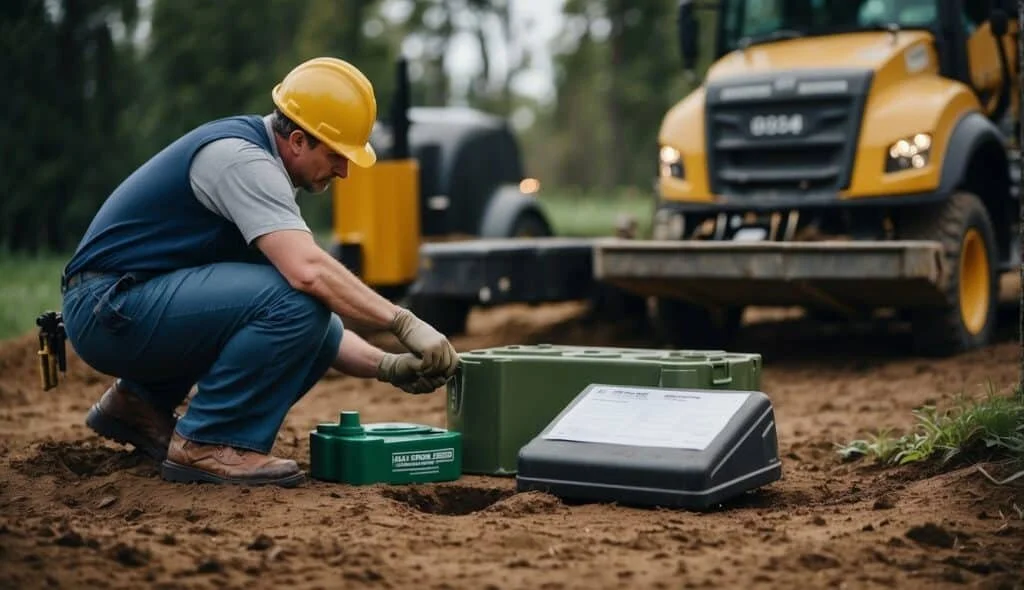
Sell My Septic Business in Florida
Your septic route may include dense recurring service, permit-tied maintenance, valuable equipment, and years of customer history. The question is how much of that value a buyer can support after you step away.
Sailfish Equity Advisors helps Florida septic and portable sanitation owners document recurring revenue, prepare for permit and registration scrutiny, and pursue a confidential sale without exposing customer lists, employees, or day-to-day operations.



You Can Start Before Every Route Record Is Perfect
Many septic owners delay requesting a valuation because customer lists, route history, permit records, disposal agreements, fleet files, or financial statements are not fully organized. That does not have to stop the first conversation. A confidential valuation can identify which records matter most, what a buyer will test, and where focused cleanup can strengthen your position before going to market.
What Makes a Florida Septic Business Attractive to Buyers?
Dense, Documented Service Routes
Buyers pay for recurring stops that return on a schedule, especially when addresses, last-pumped dates, pricing, and service cycles are cleanly documented within a tight territory.
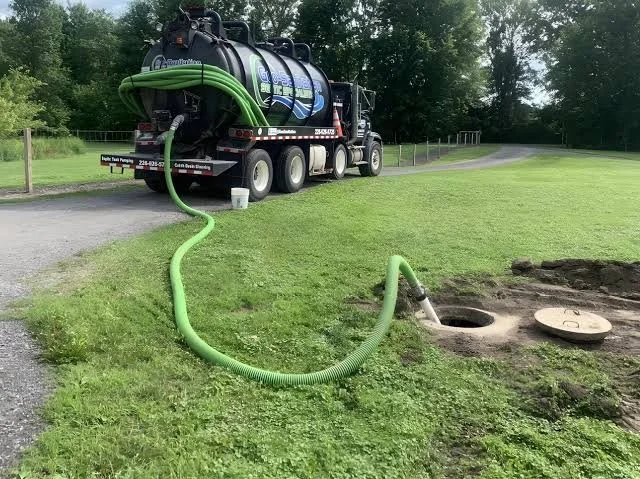
ATU and performance-based maintenance agreements create required repeat service. Transferable contracts and current permit records help buyers underwrite that revenue with confidence.
Permit-Tied Recurring Revenue
A Team That Runs Without the Owner
A second registered qualifier, trained dispatcher, documented estimating, and dependable field leadership reduce transition risk and show that the routes can keep moving after closing.
Understand What Your Florida Septic Business May Be Worth
-

Know What Drives Your Septic Business Value
We review normalized earnings, route density, recurring and permit-tied revenue, customer cycles, fleet condition, disposal arrangements, qualifier coverage, and owner dependence to determine what qualified buyers may support.
-

Prepare Before Septic Buyer Due Diligence
We organize the customer database, service agreements, operating permits, registration standing, disposal terms, fleet documentation, and add-back support before buyers review them, reducing surprises and retrades.
-

Success-Based Support Through Closing
Our compensation is success-based. We stay involved as your septic business moves from preparation and confidential outreach through negotiations, due diligence, financing, and closing.
Why Choose Sailfish as Your Septic Business Broker?

Selling a Florida septic or portable sanitation company requires an accurate valuation, qualified buyers, and a process that protects your customer list. Sailfish brings more than 25 years of transaction experience and insight from more than 1,000 business transactions to every engagement.
We help owners document recurring and permit-tied revenue, market confidentially, screen buyers for the ability to close, and stay hands-on from valuation through due diligence and closing.
Trusted Through High-Stakes Business Sales
Septic Business Sale and Valuation Insights
Meet the Team Advising Florida Septic Business Owners
-

Rajiv Khatri
Managing Partner
-

Sarah Khatri
Managing Partner
-

Franklin Luke
Business Sales Advisor
Sell My Septic Business in Florida: What Route Density Is Worth in 2026
How permit-tied recurring work — not truck count — sets the price.
Since July 1, 2021, Florida's onsite sewage program has answered to the Department of Environmental Protection, not the Department of Health — and that regulatory file is now part of your sale. A Florida septic business typically trades at roughly 2.0x to 4.5x SDE, set by route density, not truck count.
That spread is not a rumor. BBS's sold-transaction data puts waste-services businesses at a 3.14x median SDE multiple, and two septic companies with identical revenue routinely land at opposite ends of the range.
Sailfish Equity Advisors is a Florida sell-side advisory practice. For route-based owners our work is narrow: prove the recurring half of your revenue is real, get it priced as recurring, and keep your customer list off a competitor's desk while we do it. The license on the wall reads FL BK3531707, with a quarter-century of Florida closings behind it.
Your Truck Count Is Not the Price. Your Pumping List Is.
Owners almost always open with the fleet. Four trucks, two vacuum units, a backhoe, a yard on two acres. It is the part you can see, so it feels like the value.
A buyer runs the other direction. Iron sets a floor, not a price — a five-year-old vacuum truck has a resale number anyone can look up, and nobody pays a multiple for what they could buy at auction. What they cannot buy at auction is 1,400 addresses inside a 25-mile radius, each with a last-pumped date, each due again on a schedule.
That is route density: how many stops you service per drive-hour, and how reliably they come back. It is why the same $600,000 of SDE is worth a full turn more in a tight Pasco County service area than spread across four counties. Windshield time is margin you give away for free, and every buyer's model prices it.
Florida's Permit File Is Now Part of the Asset
Senate Bill 712, the Clean Waterways Act, moved Florida's onsite sewage treatment and disposal system program from the Department of Health to DEP effective July 1, 2021. The permitting counters have moved in phases: sixteen Panhandle counties, Escambia east to Jefferson, on January 2, 2025, Marion County on July 1, 2025, with the rest still permitted by county health department staff under DEP direction.
That is not trivia for a seller. Standards live in Chapter 62-6, F.A.C. and section 381.0065, Florida Statutes, and a buyer's counsel will pull your permit history, enforcement records and registration standing before funding anything. Florida runs about 2.6 million onsite systems — roughly 30% of the state's population and 12% of every septic system in the country. In fiscal 2023-24 it issued 38,627 new construction permits and 22,044 repair permits: about one repair per 120 systems a year, and that is the demand engine under your drainfield work.
What a Florida Septic Route Actually Sells For
Published broker estimates put demand-only residential pumping — no contracts, older equipment, owner running dispatch — at about 2.0x to 2.8x SDE. A mid-sized operation with several trucks and some recurring base lands near 3.0x to 3.8x. Contracted routes with a real management layer and documented processes reach 4.0x to 4.5x SDE and above.
Against that, BizBuySell's closed waste-management transactions show a 3.14x median SDE multiple (average 3.31x), a $525,000 median sale price and $176,635 median discretionary earnings across 2021 through 2025. The 4x-plus outcomes are real, and they are earned by structure.
The number that survives due diligence is the only one that matters. A spreadsheet produces any multiple you like; a buyer's lender produces one, built on how much of your revenue arrives without a sales call.
The Contracts Florida Law Writes For You
This is the part most owners undersell, and it is the strongest argument in a septic sale. Under section 381.0065(4)(f), Florida Statutes, an aerobic treatment unit cannot legally operate without a current operating permit and a maintenance service agreement with a department-permitted maintenance entity, inspected at least twice each year with quarterly reporting. Performance-based systems carry the same obligation under 381.0065(4)(j). Operating permits renew every two years.
In fiscal 2023-24 Florida issued 19,913 operating permits — 10,366 ATU, 1,479 performance-based, plus commercial and industrial-zone systems — against 735 permitted ATU maintenance entities statewide. If your company holds a stack of those agreements, you are not selling pumping work. You are selling revenue the state requires your customer to keep buying, from someone, twice a year, for the life of the system.
So a serious buyer ages your customer list against last-pumped and permit-renewal dates before price comes up. What we see across Florida deals: owners who produce that list cleanly — sortable by service type, cycle and permit status — get paid a turn more than owners describing the same book from memory.
The Florida Risk a National Buyer's Checklist Will Not Catch
A buyer of a Florida septic route is buying a customer base a municipality may convert away. National septic guides skip this. Every serious Florida buyer knows it.
Section 373.469, Florida Statutes — the Indian River Lagoon Protection Program — requires existing onsite systems in the program area to connect to central sewer where available, or upgrade to at least 65% nitrogen reduction, by July 1, 2030. That area covers parts of Brevard, Indian River, St. Lucie and Volusia counties. Separately, HB 1379 amended section 403.067 to require enhanced nutrient-reducing systems on new installs on lots of one acre or less inside every BMAP, RAP and PRP area from July 1, 2023.
Read that as a buyer would. In a conversion corridor, part of your residential pumping base has a legislated end date — and part of your install and repair work has a legislated tailwind, because somebody has to put in thousands of nitrogen-reducing systems. Which side of that ledger your route sits on is a valuation question. Have the answer before a buyer's environmental counsel does.
Registration, Relationships, Repair Estimates — and Who Holds Them After Closing
Florida does not license septic contractors the way it licenses electricians. It registers them, under Chapter 489, Part III, Florida Statutes, now administered by DEP. Registration takes three years and 6,000 hours of documented experience, a criminal history check, and a Certificate of Authorization for any corporation, LLC or fictitious-name entity. Statewide in fiscal 2023-24: 664 registered contractors, 69 master contractors, 596 authorized companies — a genuinely fragmented field, which is why platforms are buying.
Now the uncomfortable question. If you are the registered qualifier, what happens the day after the wire clears? In septic the exposure lands in three places at once: the registration, the relationships, and the repair estimates. If a buyer needs you to hold the entity's registration, keep county inspectors and builders warm, and walk every failed drainfield before a price goes out, what they are acquiring is a route that only runs when you are on it. That lands in the first offer, and it does not land as a footnote.
The fix is unglamorous and it works: register a second qualifier, move estimating into a documented template with published pricing tiers, and let a dispatcher own the schedule for two full quarters before you list.
Restating the Return: Where Septic SDE Comes From
Start with the bottom line of the tax return. Add back your own compensation, the personal-use pickup, the health plan, the cell line, a relative drawing a paycheck for part-time help, and one-time items — the vacuum truck bought outright, the yard paving, the easement legal fee. What is left is SDE, and it is what a lender underwrites.
Two disciplines matter more here than in most trades. Disposal cost is not an add-back: land application of septage has been prohibited in Florida since January 1, 2016 under section 381.0065(6), so every load goes to a receiving facility at a real, recurring price, and a buyer will test whether your disposal arrangement transfers and at what rate. And if the yard or shop sits in a related entity, restate the rent to market. Buyers catch below-market related-party rent every time, and the correction comes out of your multiple.
Who Sees the Customer List, and When
An NDA is not ceremony. It is the valve that keeps your pumping list out of a competitor's dispatch software the day a deal falls apart. Your list — addresses, cycles, pricing — is the most copyable asset you own.
So disclosure runs in stages. What goes out first is a stripped teaser — service mix, general territory, revenue, SDE, recurring percentage, and not one detail that names you. Access is earned, not requested — proof of funds first, tax returns second, the customer file last, and only to a buyer under exclusivity or deep in confirmed diligence.
That ordering protects your crew too. Drivers know the routes and the customers. A technician who hears a rumor in March is a competitor's hire in May, and the accounts follow the truck. Your people should hear it from you, after the deal is essentially done.
How Sailfish Prices a Florida Septic Route Before a Buyer Does
Consolidators are already working this state. Septic Blue, backed by Georgia Oak Partners, acquired Superior Septic of Dade City on June 22, 2026 — its third Florida acquisition in under a year, after A-1 Septic Services in Orlando in September 2025 and Advanced Septic that October. The stated logic was dispatching efficiency across a tightening Central Florida service area. That is route density, priced by a professional.
Our work starts long before that conversation. We recast the return into a defensible SDE with a documented add-back schedule, then segment the book the way an acquirer's underwriter will — recurring service agreements, permit-tied maintenance, commercial and grease accounts, portable sanitation rentals, one-time repair and install — because each line earns a different multiple. We map permit history, registration standing, disposal arrangements and conversion exposure so none of it surfaces as a discovery. Then we go to market blind and run qualified buyers in parallel, so competition sets the price rather than whoever called you first.
Three Stages, Not One Long Wait
Owners want a date. Think in stages instead.
Preparation runs two to three months: financial recast, add-back documentation, customer-list segmentation, qualifier and estimating fixes. Market runs four to six months: blind profile out, screening, management meetings, offers. Diligence and closing takes another sixty to ninety days, and runs long in septic under SBA financing — the lender wants disposal contracts, permit history and fleet documentation before funding.
Preparation is the only stage you fully control, and the only one that moves the number. Books cleaned in the year before a sale earn a multiple; books cleaned during diligence earn a retrade.
Septic and Portable Sanitation Sale FAQ: What Florida Owners Ask
How much is my Florida septic business worth?
Published broker ranges run about 2.0x to 2.8x SDE for demand-only pumping and 4.0x to 4.5x or more where routes are contracted and managed. BizBuySell's closed waste-services transactions from 2021 to 2025 show a 3.14x median. Recurring mix and route density explain most of that spread.
Does my Florida septic contractor registration transfer when I sell?
No. Registration under Chapter 489, Part III is personal to the qualifier, and the entity's Certificate of Authorization depends on having one. A buyer must bring a registered contractor, retain a qualified employee, or keep you registered through a transition. Registering a second qualifier before you list takes this off the critical path.
Will septic-to-sewer conversion hurt what my business is worth?
It depends where your route sits. Inside the Indian River Lagoon Protection Program area, existing systems must connect to sewer or upgrade to 65% nitrogen reduction by July 1, 2030. That shortens some residential pumping revenue and expands nitrogen-reducing install and repair work. Buyers price both, so document your exposure first.
How do I sell my portable sanitation business in Florida without losing accounts?
Run it blind and stage the disclosure. Portable sanitation revenue is contract-driven and easy to copy, and OSHA's construction sanitation standard at 29 CFR 1926.51(c) puts facilities on every jobsite, so your contractor accounts are worth poaching. Release unit counts and territory early; names and pricing only under NDA.
What records will a septic buyer ask for in due diligence?
Accrual-basis financials by service line, a customer database with last-pumped and next-due dates, service agreements and operating-permit records, fleet documentation with ages and DOT status, disposal-facility contracts and pricing, an anonymized roster showing who holds registration, and three years of tax returns.
How does Sailfish Equity Advisors help Florida septic business owners?
We build a confidential, buyer-supported valuation, recast the financials into a defensible SDE, and segment the book so recurring and permit-tied work is priced as recurring. We market blind, screen buyers on capacity before disclosure, and manage the process to closing — including the permit, registration and disposal questions that stall unprepared deals.
Sell My Septic Business in Florida: Start With the Number
Platform buyers are pricing Florida routes right now with better data than most owners have on their own companies. That is fixable, and fixing it beats any negotiating tactic.
Start with a confidential valuation from a Florida business broker who reads your customer list the way an acquirer will. Know what the recurring base is worth, know where your conversion exposure sits, and go to market on your schedule instead of answering someone else's offer. Reach Sailfish Equity Advisors to start a confidential conversation.
Written by Sarah Khatri, Managing Partner, Sailfish Equity Advisors — Florida Broker License BK3531707, a quarter-century advising Florida owners through sell-side transactions.