
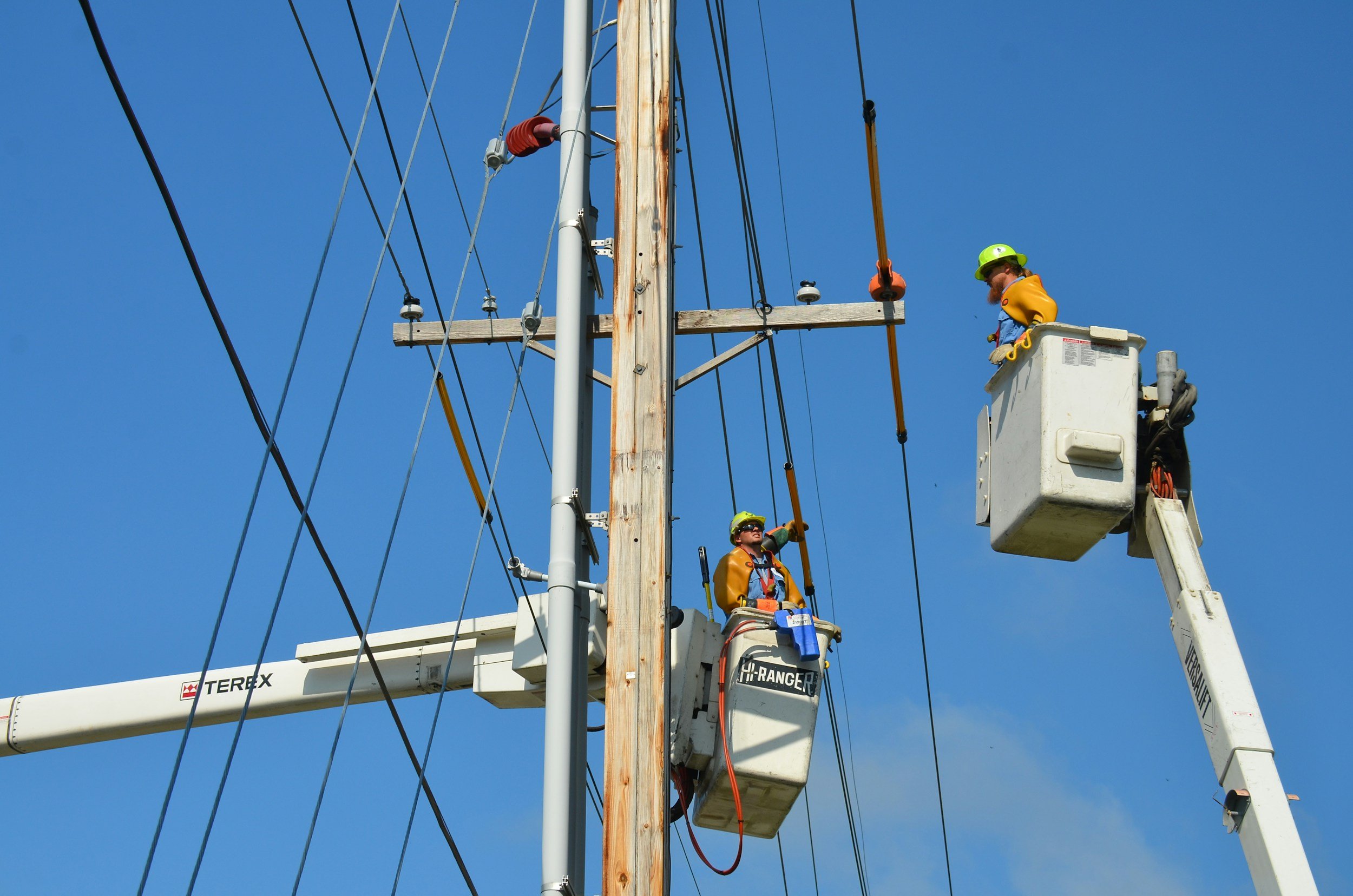
Utility Contractor M&A Advisor in Florida
Sell a Utility Contractor Business in Florida
Infrastructure private equity platforms and national utility services companies are buying Florida line, substation, underground and storm hardening contractors to win a decade of required grid work. Each buyer prices your utility MSAs, storm revenue, safety record and fleet differently. We help you see what your company is worth to each buyer and close without losing crews, customers or qualifications.
Utility contractors with $1 million or more in EBITDA work with our mergers and acquisitions consultants. Smaller crews and subcontractors work with our Florida business brokers. Either way, you start with a confidential conversation about what you want next.
Two Ways to Sell a Utility Contractor Business in Florida. We Match the Process to Your Company.
Your MSAs, your mix of planned and storm work, your safety record and the buyers active in your markets decide which path fits.
Mergers and Acquisitions Consultant
Utility Contractors Valued Around $5M and Above
For line, substation, underground and storm hardening contractors hearing from infrastructure platforms and national utility services companies. Work directly with a mergers and acquisitions consultant who runs a competitive process and puts every offer on the same page.
- Split planned from storm work. Show three to five years of hardening, maintenance and construction revenue apart from restoration so a big season does not distort your price.
- Build the MSA schedule. Show term, renewal history, rate terms and assignment language for every utility, co-op and municipal customer.
- Compare the whole offer. Weigh cash at closing against rollover equity, earn-outs tied to MSA renewals and your role after the sale.
- Protect value through closing. Line up the safety file, fleet diligence and key-crew retention alongside your legal and accounting advisors.
Business Brokerage
Smaller Crews and Subcontractors
Our brokerage team helps vegetation management subcontractors and single-crew line and underground contractors sell to owner-operators, SBA-backed buyers and regional competitors, with the confidentiality a utility relationship demands.
- Price on real earnings. Present seller’s discretionary earnings, customer mix and equipment value so a buyer and their SBA lender can say yes.
- Reach qualified buyers confidentially. Screen buyers and their financing before anyone learns which company is for sale.
- Show the crew stays. Document foremen, lineworkers and qualifications so buyers see a team that keeps working.
- Plan the handover. Script customer, crew and utility contact communication and your transition period before closing.
Not sure which path fits your company? Start with a conversation →
M&A Advisory Services for Utility Contractors at Every Stage
From the first “should I sell my utility contracting company?” conversation to the wire at closing, and the years of preparation in between.
Sell-Side M&A Advisory for Utility Contractors
Preparation, MSA and storm revenue review, confidential outreach to infrastructure platforms and national utility services companies, and a competitive process through diligence and closing.
See our M&A advisor services →Exit Planning for Utility Contractor Owners
For owners one to five years out. We identify what a buyer will pay for, what they will discount, and the steps that raise value: a second utility or co-op customer, a documented safety file, a realistic fleet plan and leaders who carry the utility relationships.
Learn more →MSA, Safety and Fleet Review
Revenue by utility and work type, MSA terms, incident and EMR history, fleet age and replacement cost and a realistic working capital target, so the price you agree to is the price you receive at closing.
Learn more →Utility Contractor Valuation
A defensible view of what your company is worth to each buyer type, with storm years normalized, the drivers behind that number, and what would move it. Delivered as part of an advisory or exit planning engagement.
Learn more →Unsolicited Offer Review
Received a letter of intent from a platform or national contractor? We assess the buyer, the structure, the MSA consent risk and the market before you respond, so a single offer does not set your price.
Learn more →Smaller Crews and Subcontractors
A licensed, confidential sale process for smaller line, underground and vegetation management contractors, with the same care we bring to larger transactions.
Meet our Florida business brokers →


PERSONAL. ON PURPOSE.
People you know.
Advice you can
talk through.
Rajiv Khatri
Managing Partner
Sarah Khatri
Managing Partner
We’ve built and sold businesses ourselves. We understand why selling a utility contractor reaches far beyond the deal: the linemen you trained and brought home safe, the utility supervisors who call your crews first when a storm hits, and the trucks and equipment you bought on faith.
Sailfish is boutique by intention. We take time to understand your priorities, explain the tradeoffs between an infrastructure platform, a national utility services company and a strategic contractor, and help you make informed decisions through an important transition.
Our faith informs how we serve: with integrity in our advice, stewardship of what you’ve built, and care for the people a transition touches.
The Credentials Behind Every Closing
Sailfish advisors are trained, certified, and licensed by the industry's most respected associations.



A clear path from your first question to the sale of your utility contracting company.
Discuss your goals. Prepare your company. Move forward with guidance. Our process gives a utility contractor sale structure, and we tailor the work for exit planning, a partner buyout or an offer already on the table.
Discuss your goals
Spend about 30 minutes with a managing partner discussing your company, your timing and what you want your role to be after a sale. We help identify a useful next step.
Agree on the approach
Decide whether a brokerage sale to an individual or regional buyer, or an advisory process with infrastructure platforms and national utility services companies, fits. Clarify scope, responsibilities and expectations before the engagement begins.
Prepare the company
Split planned from storm revenue, build the MSA schedule, digitize the safety file, list the fleet and rebuild adjusted EBITDA before any buyer sees terms.
Engage suitable buyers
Present the business confidentially to screened buyers who want your crews, your utility relationships or your storm hardening backlog.
Navigate the transaction
Compare offers on the same page, then work through negotiation, MSA consents, key-crew retention, fleet and safety diligence, working capital and closing alongside your legal and tax advisors.
Grid contractor knowledge. Real buyer relationships.
Every segment of utility work has its own buyers, its own margin profile and its own reasons a deal falls apart. We work in the categories where we know all three: who is acquiring right now, what they pay for, and what they walk away from. With 3,500 qualified buyers, PE platforms and national utility services companies already in our network, your company goes to the people most likely to value it.
Overhead · Underground · Vegetation→ Overhead Distribution Line→ Transmission Line Construction→ Substation Construction→ Underground Electric→ Storm Restoration→ Vegetation Management→ Directional Boring→ Solar & Battery Interconnection→ Co-op & Municipal Systems→ Commercial & Industrial ElectricalSeparate guide for electrical contractors→ Water & Sewer PipeSeparate guide for water and wastewater contractors→
700+ Florida Business Owners Trust Us
Real stories from owners who sold, scaled, and succeeded with Sailfish.
We’re listening. Not sure what your next step is? That is a good place to start.
“I’m thinking
about selling my utility contracting company.”
“I want to step back
in a few years.”
“A competitor just
made me an offer.”



Selling a utility contractor business in Florida: your questions answered.
You don’t need every answer before starting a conversation.
-
A strong base of planned hardening, maintenance and construction work under long-running MSAs, more than one utility, co-op or municipal customer, a documented safety record, a well-kept fleet and foremen and superintendents who carry the utility relationships. Buyers pay most when the planned base stands on its own and storm revenue is upside.
-
It depends on the business. Utility contractors worth about $5 million or more belong in a structured M&A process aimed at infrastructure platforms and national utility services companies. Single-crew contractors and subcontractors usually sell to regional competitors and individual operators through a Florida business broker.
-
Florida law requires public electric utilities to maintain 10-year storm protection plans covering hardening, undergrounding and vegetation management, with costs recovered through a dedicated charge. That creates long-term demand for qualified crews. Utilities also outsource a growing share of transmission and distribution work, and buyers want to own the contractors doing it.
-
Usually as a one-time boost. Buyers separate storm restoration from planned hardening, maintenance and construction work and value the planned base more highly. Presenting several years of revenue split between planned and storm work makes your earnings more credible and reduces the room for a buyer to discount them.
-
It is a risk buyers will price. They review each master service agreement’s term, renewal history, rate terms and assignment language. Heavy dependence on one utility can lower the multiple or shift value into earnouts. Adding even one more utility, cooperative or municipal customer before a sale can help.
-
Expect requests for several years of incident rates, your experience modification rate, training and qualification records for lineworkers under OSHA’s power transmission and distribution standard, and results of utility safety audits. Organized, digital records reassure buyers and speed diligence.
-
It can add value, but buyers price it differently from grid hardening and maintenance because it depends more on policy and project financing. Show it as a separate segment with its own customers and backlog so buyers can value each part of your business on its own risk.
-
That is often the best time to talk. Adding a second utility or co-op customer, digitizing the safety file, building a realistic fleet plan and handing utility relationships to your foremen and superintendents all take time, and each one changes what buyers will pay.

Thinking about selling your utility contracting company?
For 25+ years, we’ve helped Florida owners protect what they built and get the full value of it. The crews, utility relationships and safety record you earned deserve the same care.
Selling Your Utility Contracting Company: Expert Guides & Insights

Stewardship, legacy, and the next chapter.
A utility contracting company is more than a balance sheet. It is years of storm deployments far from home, linemen you trained and brought home safe, bucket trucks bought on faith, and utility supervisors who call your crews first when the lights go out. We treat the sale as stewardship: honest advice even when it is not what you hoped to hear, a pace set by your goals rather than our calendar, and the willingness to tell you when a buyer or a deal is the wrong fit. We believe this work is a calling, and we try to do it the way we would want it done for our own family.
Sell a Utility Contractor Business in Florida: Seven Mistakes That Cost Grid Contractors Money
By Rajiv Khatri, Managing Partner, Sailfish Equity Advisors
Florida Wrote a 10-Year Work Order Into Law. Buyers Read It Before You Did.
Under Florida law, every public electric utility must file a storm protection plan covering a 10-year planning period, update it at least every three years and recover the approved costs through a dedicated charge on customer bills, separate from base rates (Fla. Stat. § 366.96). The plans cover hardening overhead lines, moving distribution lines underground and vegetation management. If you want to sell your utility contractor business in Florida, understand what a buyer sees in that statute: a decade of required work with its own funding mechanism, and a short list of crews qualified to do it.
Sailfish Equity Advisors works with Florida line, substation, underground and storm hardening contractors who want to sell into that demand on their terms. In a quarter century and more than 700 closings, we have learned that the deals that go sideways in this sector usually go sideways for the same handful of reasons. None of them is a lack of buyers. If your crews do commercial, industrial or data center electrical work rather than utility line work, our electrical contractor M&A page is the better guide.
Utilities have been handing more of this work to outside contractors for years. A 2024 Lincoln International analysis estimated that about 45% of electric transmission, distribution and gas distribution work was outsourced, and projected that share would pass 50% within five years (Lincoln International). Buyers want to own the crews that work gets outsourced to.
Here are the seven mistakes we see most, and how to avoid them.
Mistake 1: Counting Storm Restoration as Normal Revenue
A big hurricane season can make a utility contractor's year. Mutual-aid and restoration work pays well, crews run long hours and the income statement looks fantastic.
Buyers know that. They will separate storm restoration revenue from your recurring hardening, maintenance and construction work, and treat the storm portion as a windfall unless you can show a pattern. Lead with a storm-heavy trailing twelve months and expect a buyer to quietly normalize it back down, often while letting you believe the higher number is in play until late in the deal.
The fix: Present three to five years of revenue split into planned work and storm response. Show the planned base on its own and treat storm revenue as upside. Buyers trust a seller who does that math first.
Mistake 2: Treating Your Biggest Utility MSA as Permanent
Most utility contractors live on master service agreements with one or two utilities or electric cooperatives. Those relationships can last decades. They are also concentration risk by definition.
A buyer will ask how much of your revenue comes from each utility, when each MSA expires or rebids, how your rates are set and whether the agreement can be assigned to a new owner or needs the utility's consent. If one utility is most of your business, a buyer will price in the chance of losing it.
The fix: Build a schedule of every MSA with term, renewal history, rate adjustment terms and assignment language. If you can add a second utility customer, a co-op or municipal electric system, or a private developer before you sell, do it. Even modest diversification changes the conversation.
Mistake 3: Letting Your Safety and Training Records Live in a Filing Cabinet
Utility work is among the most heavily regulated in construction. OSHA's electric power generation, transmission and distribution standard sets specific training, qualification and work-practice requirements for line work (29 CFR 1910.269). Utilities also run their own contractor safety reviews.
A buyer will want three to five years of incident rates, your experience modification rate, training and qualification records for every lineworker and the results of utility safety audits. A strong safety culture you cannot document is worth much less than one you can.
The fix: Digitize the file. Qualification records by person, refresher training dates, audit results and corrective actions. Buyers who see a clean, organized safety file assume the rest of the company runs the same way.
Mistake 4: Ignoring the Fleet Bill Hiding in Your Yard
Bucket trucks, digger derricks, pole trailers, directional drills and specialty equipment are expensive and wear out on schedule. Buyers will estimate the capital needed to keep your fleet current and subtract deferred replacement from the price.
The fix: Prepare a fleet list with year, hours, condition, replacement cost and planned replacement dates. If you have been stretching equipment to save cash, know the number before a buyer calculates it. Showing a realistic capital plan beats having a buyer invent a pessimistic one.
Mistake 5: Being the Only One the Utility Calls
Utility relationships tend to be personal. The owner knows the distribution operations manager, has worked storms with the restoration lead and gets the first call when new work is coming.
That is a discount. A buyer wants to see general foremen, superintendents and an operations leader who carry those relationships and can bid, plan and run work without the founder.
The fix: Start handing relationships to your leaders now. Put them in the planning meetings and on the storm calls. Sign retention agreements with the key people before you go to market, so a buyer is not asked to pay for a team that might leave.
Mistake 6: Pricing Solar and Battery Work Like Grid Work
Many Florida utility contractors added solar, battery storage or interconnection work in the last few years. That can be valuable revenue. But buyers price it differently from storm hardening and distribution maintenance, because it depends more on policy, incentives and developer financing.
The fix: Show solar and battery revenue separately, with customer mix and backlog, and explain how much of it comes from utility-scale projects versus commercial or residential installs. A buyer can value a diversified contractor fairly when the risk in each segment is visible. When it is all blended together, they assume the worst.
Mistake 7: Running the Sale Like a Listing
Utility contractors with real scale do not sell by posting a listing and waiting. The buyers who pay most, including infrastructure-focused private equity platforms, national utility services companies and large electrical contractors expanding into utility work, are reached through a targeted, confidential process with competing offers.
Run it as a single conversation with the first buyer who calls and you give up the competition that sets price and terms. You also risk word reaching your utility customers and crews before you are ready.
The First Data Request: What to Have Ready
When a serious buyer signs an NDA, the first diligence list for a utility contractor looks remarkably similar from deal to deal. Having these ready before you go to market shortens the process and keeps the buyer focused on value instead of gaps.
Revenue by customer and work type for three to five years, split into planned hardening, maintenance, construction, storm restoration and solar or battery work.
Every MSA and unit-price schedule, with expiration dates, rate adjustment terms and any consent or assignment language.
Crew roster showing each lineworker, apprentice, foreman and operator, with qualification level, tenure and training dates.
Safety file: incident rates, experience modification rate letters, OSHA logs and utility audit results.
Fleet and equipment schedule with age, hours, condition, lender and payoff.
Backlog and work authorizations from each utility, with expected timing.
Insurance and claims history, including any open claims from storm work.
Financial statements, ideally reviewed or audited, with monthly job-cost reporting.
Contractors who can deliver this package inside a week tend to keep competitive tension in the process. Contractors who need two months to assemble it give the buyer time to find reasons to lower the price.
Cooperatives and Municipal Systems: The Customers Owners Overlook
Florida's investor-owned utilities get most of the headlines, but the state also has electric cooperatives and municipal electric systems that hire contractors for line work, storm restoration and vegetation management. For a contractor heavily tied to one large utility, adding a cooperative or municipal customer is often the fastest way to reduce concentration before a sale. These relationships take time to build, so start well ahead of going to market. A buyer reading your customer schedule will notice the difference between one customer and four.
What Buyers Pay For, and How They Structure It
Grid contractors sell on adjusted EBITDA, and the factors above decide where in the range a buyer lands: share of planned versus storm work, utility customer diversity, safety record, fleet condition and leadership depth. We will not quote a multiple before we see your numbers. We will tell you exactly which of these factors is helping and which is costing you.
Structure carries real money here too. Expect discussions about rollover equity in a platform, earnouts tied to MSA renewals and holdbacks for fleet or safety issues found in diligence. The headline price matters. What you actually take home matters more.
Which Path Fits a Utility Contractor
Sailfish is one firm with two paths. Utility contractors valued at about $5 million or more are best served by a mergers and acquisitions consultant who can reach the national and platform buyers and negotiate structure.
Smaller crews, such as vegetation management subcontractors or single-crew underground contractors, often find the right buyer among regional competitors and individual operators. For that market, a Florida business broker is the better fit. The mistakes above still apply at every size.
How Sailfish Prepares a Utility Contractor for Sale
We split your revenue into planned and storm work, rebuild adjusted EBITDA around a normal year and build the MSA, safety and fleet files buyers ask for in the first weeks of diligence. Then we identify the buyers who want Florida crews right now.
We maintain relationships with roughly 3,500 acquirers, and in utility services the useful list is short and specific. Every buyer signs an NDA and demonstrates capacity to close before learning your name. Your utility customers and your crews hear about the sale when it is done.
See What a Decade of Storm Hardening Makes You Worth
The work is mandated and funded. Make sure the price reflects it. Our sell-side M&A practice can walk you through value, likely buyers and timing, in confidence.