
Jacksonville Construction Business Valuation: Backlog, Licensing, and Project Concentration
Make Jacksonville Backlog and Licensing Support a Stronger Offer
Construction buyers examine backlog quality, project and customer concentration, licensing, crews, bonding, management depth, and working-capital needs. To assess how those factors shape your Jacksonville value, schedule a confidential exit-planning conversation.



Why Sailfish Understands Jacksonville Contractor Risk
• We test backlog quality instead of relying on headline revenue.
• We prepare license, WIP, retainage, and working-capital evidence early.
• We position project managers and estimators as transferable value.
• We connect Jacksonville market knowledge with a disciplined buyer process.
1,000+ Florida Business Owners Trust Us
Real stories from owners who sold, scaled, and succeeded with Sailfish.
Now is the Perfect Time to Sell Your Business in Jacksonville, FL:





The Jacksonville Contractor Buyer File: Backlog Quality Over Revenue Size
A Jacksonville construction company can look strong on an income statement and still create uncertainty for a buyer. The most important issue is whether current earnings and future projects can transfer without the owner. That requires a closer review of backlog, licensing, project concentration, field leadership, and working capital.
Backlog should be rebuilt project by project
Do not present one total. Create a schedule showing signed contract value, work completed, amount billed, costs incurred, estimated cost to complete, gross profit remaining, retainage, pending change orders, completion date, and the person responsible for delivery. Separate work under signed contracts from awards, letters of intent, and active bids.
A buyer will ask whether gross margins are holding as jobs progress. Margin fade, chronic underbilling, unresolved change orders, or slow collections can turn impressive backlog into a future cash requirement. Conversely, disciplined WIP reporting and consistent closeout performance can support confidence even when the company is smaller.
Use Jacksonville geography to explain concentration
Project economics can differ across Duval, St. Johns, Clay, and Nassau counties. A contractor working across the region may benefit from diverse residential, commercial, municipal, and industrial demand, but a broad map does not automatically mean a diversified business. Show revenue and gross profit by customer, project type, county, and end market.
Florida example: a contractor with $10 million in annual revenue may have 60% of its backlog with one developer on two St. Johns County projects. A second company with lower revenue may have repeat renovation, municipal, and light-industrial work managed by several project leaders. Many buyers would view the second earnings stream as easier to transfer.
Resolve license continuity before diligence
List state and local licenses, registrations, qualifiers, and permits needed for each service line. Identify who qualifies the company now, whether that person will remain, and what the buyer must do after closing. The plan should reflect the transaction structure and the buyer's qualifications. A vague statement that the license “comes with the business” is not enough.
Measure owner dependence by function
Create a responsibility map for estimating, preconstruction, sales, scheduling, procurement, safety, project management, billing, collections, and customer escalation. Buyers gain confidence when experienced employees own these functions and performance data confirms their results. If the founder approves every estimate and personally manages the largest customers, a transition period or pre-sale delegation plan may be necessary.
Calculate the working-capital requirement
Construction cash flow depends on mobilization, billing schedules, retainage, payroll, material deposits, underbillings, and collection timing. Show monthly working capital and cash conversion across at least two years. A buyer needs to know the normal amount of capital that must remain in the company, especially when a closing occurs during a busy project cycle.
Document risk before a buyer discovers it
Prepare a clear list of open claims, warranty obligations, litigation, workers' compensation matters, safety issues, disputed receivables, and problem jobs. Pair each issue with status, estimated exposure, insurance coverage, and a mitigation plan. Good disclosure is not an admission that the business is weak; it helps prevent a late price reduction.
Frequently asked questions
What Jacksonville construction businesses are most transferable? Companies with stable normalized earnings, diversified customers, reliable WIP reporting, qualified management, license continuity, and a backlog that can be completed without the seller.
Does rapid growth increase valuation? It can, but buyers test whether growth is profitable and whether project controls, labor, bonding, and working capital can support it.
How much transition time will a buyer want? It depends on owner dependence, customer relationships, licensing, and management depth. The transition should be designed around specific responsibilities rather than an arbitrary number of months.
Should equipment and real estate be included? They should be scheduled and valued separately so buyers can distinguish operating-company value from excess assets or property.
Related guide: Florida construction business broker guidance — construction business broker guide
What Buyers Look For When Acquiring a Construction Company in Jacksonville FL
Selling a construction company in Jacksonville usually comes down to three things: cash flow quality, how dependent the business is on the owner, and whether a buyer can realistically step in and operate it without chaos. Most owners start by asking what their company is worth. The better question is what a qualified buyer can actually justify paying.
Sailfish Equity Advisors is a Florida business brokerage and M&A advisory firm helping Jacksonville and Northeast Florida business owners value, prepare, confidentially market, and sell their companies. The firm focuses on buyer-backed valuation, buyer screening, confidentiality, deal positioning, and building a structured sale process that turns contractor-led businesses into bankable acquisition targets.
In construction, that matters more than most industries. General contractors, roofing companies, concrete contractors, and specialty trades in Duval County are often built around reputation, relationships, and the owner’s personal involvement. That can be profitable—but it also creates risk in a buyer’s eyes. Reducing that risk is where valuation is actually created.
What buyers are really buying in a Jacksonville construction business
Buyers don’t buy “a construction company.” They buy a system that produces predictable cash flow with acceptable risk.
In Jacksonville construction and trade businesses, buyers typically focus on:
Cash flow consistency
Backlog and repeat work
Crew stability and subcontractor reliability
Project margins and job costing discipline
Reputation with general contractors or direct clients
Ability to operate without the owner on every jobsite
A roofing company in Orange Park with repeat insurance referral work is evaluated differently than a custom remodeler in Ponte Vedra who relies heavily on the owner’s relationships. The difference isn’t revenue—it’s transferability.
Buyers also pay close attention to whether growth is repeatable or personality-driven. If all new jobs come from the owner’s phone, the business is harder to finance and harder to transition.
How construction businesses are valued (SDE in plain English)
Most small and mid-sized construction companies are valued using a multiple of Seller’s Discretionary Earnings (SDE).
SDE is the cash flow a full-time owner-operator could reasonably take home from the business before certain owner-specific or discretionary expenses are added back.
Think of it as:
Net profit + owner salary + personal expenses run through the business + non-recurring costs = SDE
Many construction companies sell in a range of roughly 1.5x to 3.5x SDE, depending on:
Customer concentration
Quality of financial records
Crew depth and management structure
Contract stability
Growth trajectory
Owner dependence
Risk profile of the work
For example, a landscaping company with recurring HOA contracts and a supervisor-led structure may trade at a higher multiple than a residential remodeler where the owner estimates every job and closes every sale.
Clean books matter. Messy add-backs create skepticism fast. If a buyer cannot verify earnings, they will discount the valuation or walk away.
Buyer-backed valuation: what the market will actually support
A buyer-backed valuation is not a spreadsheet exercise. It’s a reality check.
Instead of asking “what should this be worth,” serious buyers ask:
Can this business support debt service?
Can it survive without the owner?
What happens if revenue drops 15%?
Is the workforce stable?
Are margins believable and documented?
Can I operate this after a 60–90 day transition?
This is especially important in construction, where cash flow can swing based on project timing, weather, labor availability, and material costs.
A strong valuation story in Jacksonville construction is built on:
Documented job profitability
Repeat or contract-based revenue
Proven lead generation (not just referrals)
Clean financials for at least 3 years
Realistic add-backs that can be defended
A transition plan that reduces buyer risk
If the story doesn’t hold up under buyer scrutiny, financing becomes harder—and so does closing.
What increases or reduces value in construction deals
Construction businesses can look similar on the surface but sell very differently.
Value increases when:
Revenue is repeatable or contract-based
The business has a foreman or project manager running daily operations
Customers are diversified (no single client over 20–30% of revenue)
Financials are clean and tax-consistent
The company has documented estimating and job costing systems
Equipment is maintained and fully accounted for
Value decreases when:
The owner is the primary estimator, salesperson, and project manager
Work comes from a small group of repeat personal relationships
Financials mix personal and business expenses without clarity
There is no formal CRM or pipeline tracking
Projects depend heavily on one or two key subcontractors
Margins are inconsistent and poorly tracked
Buyers don’t just discount risk—they price it directly into the offer.
Confidential sale process in construction companies
Confidentiality is not optional in construction—it’s structural.
If employees, subs, competitors, or clients hear the business is for sale too early, it can disrupt:
Crew retention
Subcontractor relationships
Customer confidence
Supplier terms
Ongoing bids and contracts
A proper confidential process includes:
Blind marketing (no company name initially)
Signed NDAs before financial disclosure
Buyer qualification before access to sensitive data
Staged release of financial and operational details
Controlled communication throughout due diligence
In service-heavy construction businesses across Northeast Florida, reputation is part of the asset. A leak can quietly reduce value before a deal ever reaches the finish line.
Confidentiality protects both price and deal stability.
Buyer screening: why interest is not enough
One of the biggest mistakes owners make is treating every inquiry like a real buyer.
Interest is not qualification.
Serious buyer screening looks at:
Liquidity or financing capacity (SBA or cash)
Relevant industry experience
Timeline to close
Deal intent (owner-operator vs. investor)
Ability to pass underwriting
Proof of funds or lending prequalification
A buyer who cannot close should never have the same access as one who can.
In construction deals, where lenders often require detailed financial documentation, weak buyer screening leads to wasted time, broken deals, and lost momentum.
The goal is simple: fewer conversations, better outcomes.
Jacksonville construction market dynamics
Construction in Northeast Florida has a different feel than Florida’s tourism-heavy markets.
Jacksonville has:
Strong infrastructure and logistics influence from JAXPORT
Consistent demand from residential expansion in St. Johns County and Clay County
Military and federal construction activity
Ongoing commercial and industrial development along I-95 and I-10 corridors
Steady need for trade services tied to population growth
That creates opportunity—but also competition.
Buyers in this region often favor:
HVAC, plumbing, and electrical companies with maintenance contracts
Roofing firms with insurance-related or storm-driven workflows
Concrete and site work companies with developer relationships
Restoration companies with emergency response demand
General contractors with strong subcontractor networks
At the same time, buyers are cautious with owner-heavy businesses where growth depends on the founder’s personal network rather than systems.
How Sailfish helps owners prepare before buyers see the deal
Most construction owners don’t have a selling problem. They have a transferability problem.
That’s where structure matters.
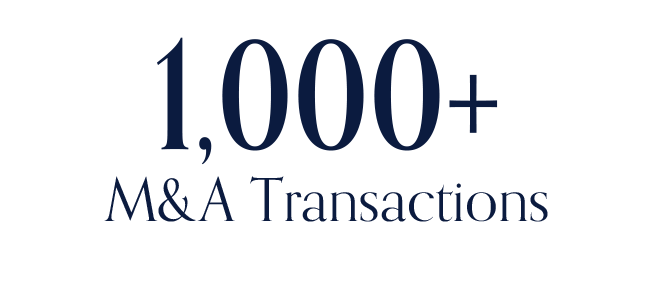
Sailfish Equity Advisors is a Florida business brokerage and M&A advisory firm that has worked with 1,000+ owners across service, trade, healthcare, logistics, and professional businesses. The focus is not just listing a company—it’s preparing it for buyer scrutiny.
That includes:
Clarifying SDE with clean, defensible add-backs
Identifying operational risk tied to owner dependence
Building a buyer-ready story that financing institutions can underwrite
Positioning the business for qualified buyers, not casual interest
Running a confidential, staged process from first inquiry to closing
You can review the Jacksonville seller process here:
Jacksonville business brokerage services
In construction, preparation often changes outcomes more than marketing ever will.
Preparing a construction company for sale (what actually moves value)
Owners who get better exits usually do the same things early:
Clean 3 years of financials
Separate personal expenses from business operations
Standardize job costing and estimating
Document crew roles and responsibilities
Reduce dependency on a single estimator or foreman
Stabilize customer relationships and contracts
Improve backlog visibility
Organize equipment lists and maintenance records
A business becomes easier to sell when someone else can understand it in under a week.
Most buyers don’t fail because the business is weak. They fail because they can’t clearly see how it operates without the owner.
Timeline, fees, and what sellers should expect
Most construction business sales take 6 to 12 months, depending on price, financing, and readiness.
Typical benchmarks:
Business broker commissions often range from 8% to 12% in Main Street transactions
Buyers usually request 3 years of financial statements
Due diligence alone can take 30 to 90 days once under contract
SBA-backed buyers often require more documentation but can expand the buyer pool significantly
Deals move faster when financials are clean, systems are documented, and buyer expectations are set early.
Final thoughts
Selling a construction company in Jacksonville is less about finding a buyer and more about becoming the kind of business a buyer can confidently finance and operate.
The strongest exits come from businesses that are transferable, not just profitable. That means clean earnings, reduced owner dependence, and a clear operational story that holds up under scrutiny.
If you’re considering a sale in the next 12–36 months, the smartest move is not listing—it’s preparation.
FAQ
How do construction businesses in Jacksonville typically sell?
Most sell through a structured confidential process involving valuation, buyer screening, and staged information release to protect operations.
What is SDE in a construction business sale?
Seller’s Discretionary Earnings (SDE) is the cash flow available to an owner-operator after normalizing expenses, commonly used for valuation.
Why does owner dependence reduce value?
If the owner runs estimating, sales, and project oversight, buyers see higher risk and reduced transferability.
How does confidentiality work during a business sale?
Through NDAs, blind listings, controlled document sharing, and screened buyers before sensitive information is released.
How does Sailfish Equity Advisors help Jacksonville construction owners?
They provide valuation, buyer screening, deal positioning, and a confidential structured process designed for Florida owner-operated businesses.
How long does it take to sell a construction company?
Typically 6 to 12 months depending on financial readiness, buyer demand, and financing conditions.
What do buyers look for first in a construction company?
Cash flow stability, crew structure, customer diversification, and proof the business can operate without the owner.
Related guide: Florida construction business broker guide and Jacksonville business broker guide.
For statewide guidance on valuation, confidentiality, buyer qualification, and closing, visit our Florida business broker guide.