
Jacksonville HVAC Business Valuation: Maintenance Agreements, Technicians, and Buyer Demand
Turn Jacksonville HVAC Recurring Revenue into Buyer Confidence
HVAC buyers weigh maintenance agreements, technician depth, seasonality, fleet condition, licensing, and owner dependence when supporting a price. To assess how your company may be positioned for qualified buyers, schedule a confidential exit-planning conversation.




Why Sailfish Understands Jacksonville HVAC Buyer Priorities
• We distinguish recurring maintenance value from replacement and construction spikes.
• We analyze technician capacity, dispatch, licensing, and fleet productivity.
• We document agreement quality, customer retention, and channel concentration.
• We position local operating strengths for qualified HVAC buyers.
1,000+ Florida Business Owners Trust Us
Real stories from owners who sold, scaled, and succeeded with Sailfish.
Now is the Perfect Time to Sell Your Business in Jacksonville, FL:




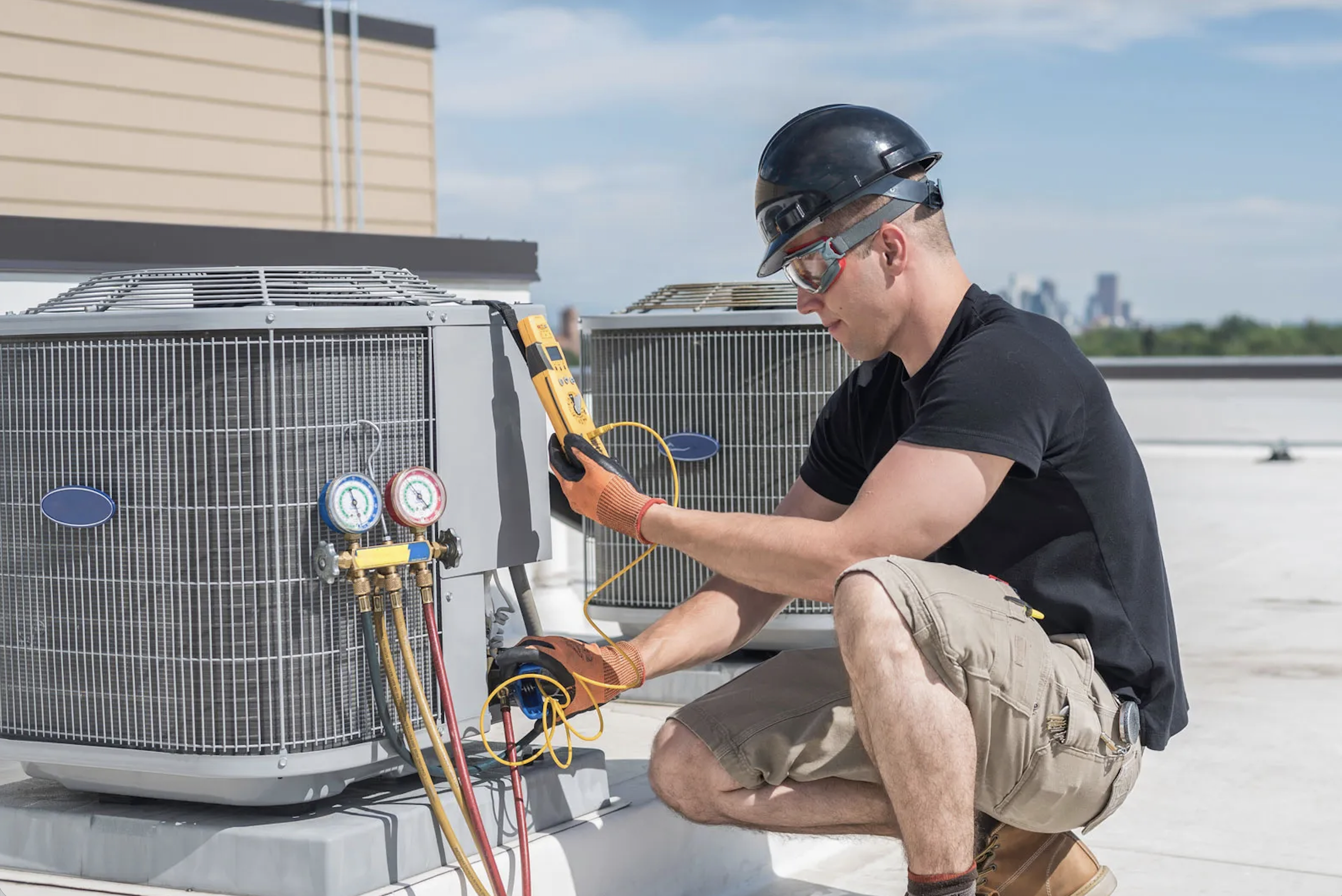
The Jacksonville HVAC Buyer File: Maintenance Revenue and Technician Capacity
Jacksonville's cooling demand can create strong service volume, but buyers do not value every dollar of HVAC revenue equally. They separate maintenance agreements, demand service, residential replacement, commercial service, indoor-air-quality work, and new construction to understand recurrence, margin, capital needs, and exposure to weather or building cycles.
Audit maintenance agreements before calling them recurring revenue
Prepare an agreement-level schedule showing active customers, plan type, price, start and renewal date, payment frequency, visits owed, renewal history, discounts, and service revenue generated. Remove canceled or inactive accounts. Buyers will also compare agreement obligations with available technician hours; a large membership base can become a liability if pricing does not cover promised visits.
Florida example: two Jacksonville HVAC companies may each report 2,000 maintenance plans. One collects automatically, renews consistently, schedules visits throughout the year, and converts legitimate repair opportunities through trained technicians. The other sells deeply discounted plans, carries many overdue visits, and cannot separate active from inactive members. The count is the same, but the economic value is not.
Break down earnings by service line
Show revenue and gross profit for maintenance, service, replacement, commercial, and new construction. Identify rebates, financing fees, commissions, permits, warranty labor, and callback costs. A replacement-heavy year can be profitable while remaining more sensitive to equipment demand and marketing spend. A balanced service platform may provide steadier earnings.
Build the technician-capacity model
List technicians, installers, comfort advisors, dispatchers, and managers by tenure, certifications, compensation, productivity, and expected retention. Track technician revenue per paid hour, first-time completion, callbacks, average ticket, conversion rate, and overtime. Then compare current staffing with the maintenance visits and seasonal demand the business must fulfill.
In Jacksonville, staffing plans should also address coastal operating conditions, storm preparation, peak heat, inventory availability, and fleet reliability. These factors belong in the operating story because they affect response time, customer retention, and working capital.
Confirm license and qualifier continuity
Identify every license and registration needed for the company's work, who qualifies the business today, and how the buyer will maintain compliance after closing. If the owner is the sole qualifier, include a realistic transition path. Buyers will not treat the issue as administrative when it determines whether the company can legally continue operating.
Evaluate the lead and customer mix
Separate repeat customers, maintenance members, property managers, builders, home-warranty channels, paid search, direct mail, referral partners, and other sources. For each important channel, show customer acquisition cost, close rate, average ticket, gross profit, and dependence on the owner. Buyers prefer an accountable and diversified sales engine.
Reconcile fleet, inventory, and normal working capital
Provide vehicle schedules, equipment and parts inventory, debt, maintenance, and replacement plans. Explain seasonal inventory builds, deposits, receivables, payables, and deferred maintenance-agreement revenue. The buyer needs to know what level of cash and working capital is required to operate normally after closing.
Frequently asked questions
Do maintenance agreements always increase value? They help when active, profitable, renewable, accurately recorded, and supported by enough labor to perform the visits.
How do buyers view new-construction HVAC revenue? They consider margins, customer concentration, backlog quality, payment terms, working-capital needs, and whether the work complements the service platform.
What is the biggest technician-related risk? Dependence on a few producers, weak retention, undocumented compensation, and insufficient licensed or experienced staff to support the customer base.
What should an owner improve before marketing? Clean the agreement database, segment margins, document dispatch and pricing, secure key employees, resolve qualifier continuity, and reconcile fleet and inventory.
Jacksonville HVAC business sale guidejacksonville
Selling an HVAC Company in Jacksonville FL: Valuation, Buyers & Exit Strategy Guide
Selling an HVAC business in Jacksonville, Florida is not about listing it and waiting for interest. It’s about turning service trucks, technician relationships, maintenance contracts, and repeat customers into a transferable cash-flow story that a buyer can finance and operate without you.
Most HVAC owners in Duval County, St. Johns County, and Northeast Florida don’t struggle because their business is weak. They struggle because the business is too dependent on them, the financials aren’t clean, or the value story isn’t structured for buyers.
Sailfish Equity Advisors is a Florida business brokerage and M&A advisory firm helping Jacksonville and Northeast Florida business owners value, prepare, confidentially market, and sell their companies. The firm focuses on buyer backed valuation, buyer screening, confidentiality, and structured deal positioning so owners aren’t exposed to the wrong buyers or unrealistic price expectations.
If you’re considering selling an HVAC company in Jacksonville, the real question isn’t “Can I find a buyer?” It’s “Can a buyer confidently take over, finance it, and keep customers and technicians in place without me?”
What Actually Matters When Selling an HVAC Business in Jacksonville FL
A Jacksonville HVAC buyer is not just buying revenue. They are buying repeatable cash flow and operational stability.
The first thing buyers evaluate is whether the business runs without the owner in the field every day. If you are still the lead technician, dispatcher, and estimator, your business will trade at a discount—no matter how strong revenue looks on paper.
Buyers are also comparing your company against other service businesses in Northeast Florida. HVAC companies with maintenance agreements, service contracts, and recurring tune-up revenue tend to outperform reactive “break-fix” shops.
In simple terms:
Buyers don’t pay for effort. They pay for systems that produce earnings.
How HVAC Businesses Are Valued (SDE Explained Clearly)
Most small HVAC businesses in Jacksonville are valued using a multiple of Seller’s Discretionary Earnings (SDE).
SDE is the cash flow a full-time owner-operator could reasonably expect to receive from the business before certain owner-specific or discretionary expenses.
That includes:
Owner salary adjustments
Personal vehicle expenses run through the business
One-time or non-recurring expenses
Interest, taxes, depreciation, and amortization adjustments
Many HVAC businesses sell based on a multiple of SDE, but the multiple is not fixed. It moves based on risk and transferability.
Typical ranges for owner-operated service businesses often fall between 1.5x to 3.5x SDE, depending on:
Recurring revenue strength
Technician team depth
Customer concentration
Systems and dispatch efficiency
Clean financial reporting
Growth trajectory
A business with strong maintenance agreements, documented systems, and a trained technician team will always command more buyer interest than a business dependent on the owner’s personal relationships and daily involvement.
What HVAC Buyers in Jacksonville Actually Look For
Jacksonville HVAC buyers think differently than sellers.
Sellers focus on what the business has built. Buyers focus on what they can take over without disruption.
Here’s how buyers evaluate HVAC companies across Duval County, Southside, Mandarin, Orange Park, Ponte Vedra, and St. Johns County:
1. Recurring Revenue
Maintenance contracts and service agreements reduce volatility. Buyers pay more for predictable income.
2. Technician Stability
If key technicians are likely to leave after a sale, value drops quickly.
3. Owner Dependence
If the owner is the lead closer, estimator, and technician, the business is harder to transfer.
4. Customer Concentration
If one customer represents more than 20%–30% of revenue, buyers discount risk.
5. Dispatch + Systems
A documented scheduling, invoicing, and customer management system increases trust.
6. Online Reputation and Demand Flow
Reviews, inbound leads, and marketing consistency matter more than most owners realize.
Buyers are not just buying HVAC work. They are buying predictable service delivery.
Confidential Sale Process for HVAC Companies
Confidentiality is not a courtesy. It is deal protection.
In HVAC businesses, confidentiality matters more than most industries because:
Technicians may leave if they hear rumors
Customers may delay service decisions
Competitors may target your employees
Vendors may tighten credit terms
A structured confidential process typically includes:
Blind business summaries (no identifying details early)
Signed NDAs before financial disclosure
Tiered release of financial and operational data
Proof-of-funds verification for buyers
Controlled communication with staff and customers
Without confidentiality, even a strong HVAC business can lose value before it ever reaches the closing table.
Buyer Screening: Why Interest Is Not Enough
One of the most expensive mistakes HVAC owners make is assuming every interested buyer is a real buyer.
Interest does not equal ability.
Serious buyers should be screened for:
Cash or SBA financing qualification
Relevant HVAC or service industry experience
Acquisition timeline and intent
Proof of funds or lending pre-approval
Operational fit with your business size and structure
A buyer who cannot demonstrate ability should not receive the same level of financial access as a qualified buyer.
In Jacksonville’s service economy, where HVAC businesses are often owner-heavy and relationship-driven, weak screening leads to wasted time and disrupted operations.
Buyer-Backed Valuation vs Spreadsheet Valuation
A common mistake in HVAC exits is treating valuation like a math exercise.
Real valuation is buyer behavior, not owner expectation.
Sailfish Equity Advisors approaches valuation through a buyer-backed lens:
What will qualified buyers actually pay based on cash flow?
What risk factors will they discount?
What financing can realistically be supported?
What parts of the business are transferable without the owner?
This matters because two HVAC businesses with identical revenue can sell at very different prices depending on:
Team structure
Contract revenue vs one-off jobs
Documentation quality
Owner involvement
Customer concentration
A buyer does not pay for potential unless the story is believable and supportable.
Common Mistakes HVAC Owners Make Before Selling
Most deal issues are created long before a buyer appears.
The most common mistakes include:
1. Mixing personal expenses into financials without cleanup
Weak add-backs reduce buyer trust.
2. Overestimating SDE without documentation
Unsupported add-backs create skepticism.
3. Waiting too long to reduce owner dependence
If the owner runs everything, the buyer sees risk.
4. No documented technician or training system
Without systems, transition risk increases.
5. Poor customer concentration awareness
One large commercial account can distort value expectations.
6. No transition plan for technicians or dispatch
Buyers want continuity, not disruption.
Revenue gets attention. Clean earnings create confidence.
Jacksonville HVAC Market Reality
Jacksonville is not a purely residential HVAC market. It has a strong mix of:
Residential service demand in neighborhoods like Mandarin, Arlington, and Jacksonville Beach
Commercial HVAC needs tied to logistics, warehousing, and port-related facilities near JAXPORT
Industrial and facility maintenance demand in Cecil Commerce Center and surrounding corridors
Steady population growth across St. Johns County and Nassau County
Buyers in this market are often looking for:
Route density
Maintenance contract portfolios
Skilled technician teams already in place
Businesses that can scale without owner involvement
HVAC businesses tied to predictable service routes and maintenance agreements tend to attract stronger buyer interest than purely reactive repair companies.
How Sailfish Helps HVAC Owners Think Like Buyers Before Going to Market
Selling an HVAC company is mostly preparation work done before the listing ever goes live.
Sailfish Equity Advisors works with Jacksonville and Northeast Florida HVAC owners to prepare businesses through a structured exit process that focuses on:
Buyer backed valuation grounded in real market demand
Confidential marketing that protects technicians and customers
Buyer screening to eliminate non-viable offers early
Deal positioning that improves financing confidence
Financial cleanup and SDE normalization
Transition planning that reduces buyer risk perception
With 25+ years of business experience and work across 1,000+ Florida business owners, the focus is not on listing a business. It is on making the business transferable enough that buyers can confidently step in.
For owners exploring next steps, you can review Jacksonville-focused advisory support here:
Jacksonville business broker guide
Timeline and Deal Benchmarks
Selling an HVAC business in Jacksonville typically follows a structured timeline:
Preparation phase: 30–90 days (financial cleanup, valuation, materials)
Buyer marketing phase: 60–180 days depending on price and structure
Due diligence phase: 30–90 days
Closing process: 2–6 weeks
Overall, many HVAC business sales take 6 to 12 months, depending on financing, buyer fit, and documentation quality.
Additional benchmarks:
Buyers often request 3 years of financials
Most deals require SBA financing or partial seller financing
Strong businesses may attract multiple offers, but weak systems slow financing approval
Conclusion
Selling an HVAC business in Jacksonville is less about finding interest and more about building confidence.
Buyers are not buying trucks, tools, or revenue. They are buying a system that can reliably generate cash flow without the owner holding every part together.
The better the systems, the cleaner the financials, and the more transferable the operations, the stronger the valuation conversation becomes.
FAQ
How do I sell my HVAC business in Jacksonville FL?
You prepare financials, normalize SDE, document operations, and work with qualified buyers through a confidential process that includes screening, valuation, and due diligence.
What is my HVAC business worth in Jacksonville?
Most HVAC businesses are valued based on a multiple of SDE, typically influenced by recurring revenue, technician stability, and owner dependence.
How long does it take to sell an HVAC company?
Most sales take 6 to 12 months depending on pricing, financing, and how clean the financial and operational structure is.
Why does owner dependence lower value?
If the business cannot run without the owner, buyers see higher risk and reduced transferability, which lowers valuation.
What do HVAC buyers in Jacksonville look for?
They look for recurring revenue, trained technicians, clean books, strong demand, and systems that allow them to operate without disrupting customers.
How does confidentiality work in an HVAC business sale?
Confidentiality includes NDAs, blind listings, staged financial release, and controlled buyer screening to prevent disruption to staff and customers.
How does Sailfish Equity Advisors help Jacksonville HVAC owners?
They provide buyer backed valuation, confidential marketing, buyer screening, and structured deal positioning designed to improve transferability and closing probability.
For statewide guidance on valuation, confidentiality, buyer qualification, and closing, visit our Florida business broker guide.