
How Much Is My Miami Business Worth? A 2026 Valuation Guide
What Your Miami Business Is Worth—and What Comes Next
A Miami valuation begins with verifiable earnings, the buyer pool for your industry, transfer risk, and financing that supports the price. When you are ready to carry that number into a confidential sale, visit our Miami business broker guide for positioning, buyer screening, negotiation, and closing.





Thinking About Selling Your Business?
Find Out What Your Business is Worth!
25+ Years of Success: Exclusive Buyers. Maximum Value. Zero Upfront Fees.
- ✓92% Success Rate – Proven expertise in closing efficiently.
- ✓Sell in as Fast as 90 Days – A streamlined, efficient process.
- ✓100% Confidential Sales – Protecting your business.
- ✓Multiple Competitive Offers – Serious buyers waiting.

Why Miami Business Owners Choose Sailfish Equity Advisors
Local Insight. Statewide Reach.
Deep command of Miami’s fast moving market, powered by a Florida wide buyer network that creates real competition.
1,000 Plus Exits. Zero Guesswork.
Documented results for Florida founders with premium outcomes delivered through a repeatable playbook.
Built for Confidentiality.
A discreet, hands on process that protects your brand, your team, and your timeline from first teaser to closing.
Real World Operators.
We have owned, scaled, and sold companies, so we prepare and negotiate like owners.
Buyers Who Close.
Not leads. Qualified acquirers with funding and fit who move from interest to LOI to wire.
Mission Driven. Owner Focused.
Every sale is personal. Your legacy matters, and so does the next chapter you are building.
1,000+ Florida Business Owners Trust Us
Real stories from owners who sold, scaled, and succeeded with Sailfish.
Now is the Perfect Time to Sell Your Business in Miami, Florida:




The forces behind a Miami company's 2026 price tag — its cash flow, the multiple that cash flow earns, and the risk an acquirer prices in — plus how to pin down your figure before someone else names one.
How much is my Miami business worth in 2026? For a profitable, owner-run company, the figure usually lands between 2.5 and 3.5 times seller's discretionary earnings once those earnings clear about $250,000, then stretches past 4.5x as the company grows and stops leaning on its founder. Sailfish Equity Advisors, a Florida M&A advisory and business-brokerage firm, guides Miami-Dade owners — the Coral Gables consultancy, the Doral freight forwarder, the Hialeah production shop — through pricing, preparation, discreet marketing, and the sale itself, anchoring every step to what financeable buyers will actually pay rather than to a rule of thumb.
Owners tend to fix their asking price to something secondhand — a figure a peer mentioned, or the old "one-times-revenue" shorthand that bears no relationship to how acquirers write checks. The truer number is sitting in your own records, and it seldom matches the one you carry in your head.
The Buyers Circling Miami Set Your Price — From a Brickell Fund to the Operator Across Doral
A valuation is not the reward you feel you have earned after years of building the thing. It is the ceiling a qualified buyer can stand behind once financing, risk, and how well the company transfers are all weighed. Few Florida markets pull a buyer pool as broad as Miami's: a Brickell private-equity platform adding a bolt-on, a Latin American family office parking capital in a U.S. operating company, a search-fund principal hunting a first acquisition, or the rival two bays down in Doral who wants your contracts and your loading dock. Every one of them keeps circling the same two questions — how much steady cash does this business generate, and how much of it keeps flowing once the current owner is gone.
That is the reason two Miami companies posting the same revenue can be worth dramatically different sums. Value sits in the earnings, in the risk attached to them, and in how smoothly the operation changes hands — not in the headline sales figure, and not in the sweat you poured into it.
Start With the Bottom Line of Your Return — That's Where SDE Begins
Buyers and the lenders behind them do not price a small company off the profit printed on your return. They price it off seller's discretionary earnings — SDE — and the simplest way to reach that figure is to begin at the very line your accountant treated as the finish: reported net profit.
From there, layer back the items that belong to you instead of to the enterprise. Return your own wages to the pile, the family health plan the company underwrites, the personal-use vehicle carried on the books, the cell phone, and any one-off or elective spending the next owner would simply drop. What remains is the genuine income a single working owner clears in a year — and that reconstructed figure, not the tax-minimizing one, is what an acquirer multiplies. A Miami company showing $300,000 of book profit can carry defensible SDE nearer $430,000 once pay and personal costs are added back in.
Nailing SDE off the return is the highest-return move you can make ahead of a sale, since every legitimate dollar you route into it is multiplied at the table. Leave dollars out and you gift them to the buyer. Pad the schedule with add-backs you cannot support and buyers start distrusting all of it.
Why a Bigger Miami Business Earns a Bigger Multiple
With SDE fixed, price becomes SDE multiplied by a factor, and that factor is really a report card on risk and transferability. Among the sturdiest patterns in the deal data is that it rises with size. A rough ladder recurs in published figures: companies carrying between $250,000 and $500,000 of SDE change hands near 2.5x to 3.5x; the $500,000-to-$1-million tier leans toward 3x to 4.5x; and past the $1-million-to-$3-million band of adjusted EBITDA, the published estimates settle into a 4.5x-to-6.5x zone, with the $3-million-to-$10-million bracket higher again.
Why does heft command more? A larger operation almost always runs on managers, systems, and bench strength the owner is not personally propping up, so its earnings look safer to a buyer and finance more cheaply for a lender. BizBuySell's Q2 2026 report recorded 2,117 closed transactions, a $349,250 median sale price, and an average cash-flow multiple near 2.7x — but an average is only the center of a broad spread, and where you sit within it is something you can shape well before you ever list.
SDE or EBITDA? Which Yardstick Fits Your Company
Owners in Coral Gables and Brickell routinely hear a banker talk in EBITDA multiples while a broker talks in SDE multiples, and assume one of the two has it wrong. Neither is; they simply govern different sizes. Small, owner-run companies get measured on SDE because the owner's own labor and perks make up a big share of the cash flow. Once a company pushes past roughly $1 million in earnings and staffs a full management team, buyers move to EBITDA, which leaves an owner's salary out — because a salaried executive already occupies that chair.
In plain terms: a one-owner shop clearing $600,000 of SDE on an import-distribution book near PortMiami gets valued on SDE. A founder who has grown a $5-million-revenue firm with a president handling the day-to-day should plan on EBITDA math and, as a rule, a stronger multiple. Knowing which lane holds your company stops you from grading it against the wrong yardstick.
Trade, Finance, and Hospitality: How Miami's Mix Bends the Multiple
"Worth" is never blind to industry, and few American metros run as mixed as Miami — so identical profit buys a different multiple depending on your line of work. Buyers pay up wherever revenue recurs, sits under contract, or is hard to reproduce, and Miami overflows with those models.
Trade and logistics operators routing cargo through PortMiami and MIA — the country's leading gateway for international air freight — attract buyers who prize locked-in lanes, customs relationships, and warehouse capacity. Hialeah and Medley manufacturers get valued on machinery, order backlog, and workforce depth, and probed on how much of the process sits only in the founder's head. Brickell and Coral Gables professional-services and cross-border finance shops are priced on client stickiness and how much leaves when the founder does. Miami Beach hospitality and restaurant operators are read on lease terms, seasonality, and management bench. And the region's construction and real-estate service trades ride a hot market yet get pressed on how repeatable the pipeline really is. The takeaway is not that some industry is inherently "better." It is that buyers pay for predictability, and the work before a sale is to make your revenue look as durable and transferable as it genuinely is.
The Relationships, the Estimates, the License — If They're All You, That's the Discount
Here is the quietest markdown on a Miami main-street business: owner dependence. When the client relationships, the pricing calls, the vendor terms negotiated in Spanish and English, and the qualifying license all route through you personally, a buyer is not acquiring a company at all — they are taking on a role that functions only while you personally stand in it. Lenders read that fragility identically, and they advance less against it.
The remedy is unglamorous and effective. Slot a manager or lead between yourself and the daily grind. Migrate customer relationships onto company systems and company email, off your own memory and handset. Write down how work gets quoted and how the calendar gets built. If a professional or trade license qualifies the business, make certain there is a route for it to transfer or for a credentialed employee to carry it. Each task you can offload without the company teetering is a task the buyer stops discounting — and it often adds more at closing than a full year of revenue growth. A company that hums along without its owner is plainly worth more than the same company that seizes up without them.
One Big Account Can Quietly Cap Your Price
Plenty of Miami companies were built on a handful of anchor relationships — one cruise-line supply contract, a single large Latin American distributor, a dominant homebuilder client during the run-up. That very success can mask a valuation flaw. Once a single customer accounts for north of 20% to 30% of the top line, buyers and the lenders behind them turn wary fast, because losing that account after the sale could erase the very earnings they just underwrote. Concentration rarely sinks a deal outright, but it usually redraws it: a softer multiple, more dollars parked in an earnout, or a longer handoff tied to holding the account in place.
If a lone client rules your book, the pre-sale assignment is to widen it — or, failing that, to document the relationship's depth, its contract length, and its history so a buyer can settle in. What you cannot do is look away and bet that diligence misses it. It never does.
The Earnings Your Return Hides — and How to Recover Them
Most owner-run Miami companies look thinner on paper than they really are, because the books were built to keep the tax bill down rather than to market the company. Add-backs restore that value honestly. Above-market owner pay, a personal vehicle, a relative drawing a paycheck without being essential to the work, one-off legal or equipment outlays, and genuinely discretionary spending all come back in to reveal real earning power.
Discipline counts as much as arithmetic here. Clean add-backs you can back up with a check register and a one-line reason build buyer trust and lift SDE dollar for dollar. Loose or inflated ones do the reverse — the moment a buyer's accountant cannot tie out a single add-back, they begin second-guessing the whole list. Put together a documented, single-page add-back schedule ahead of going to market — not in the thick of a diligence standoff.
How Sailfish Builds a Miami Owner's Price Buyers Can't Argue Down
Most of the work that fixes your price happens before a single buyer dials in. Sailfish Equity Advisors opens with a confidential, buyer-backed valuation: we reconstruct your books into a defensible SDE or EBITDA drawn straight from the returns, build the add-back schedule buyers will genuinely accept, and pressure-test the figure against live Miami buyer appetite and today's financing costs — exactly as an acquirer's underwriter would. Then comes the honest read on what the company would fetch now versus what another year of groundwork could add.
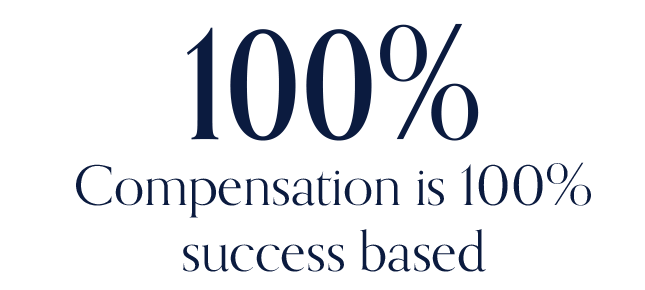
Over 25-plus years and more than 1,000 Florida owners taken through a sale, we have run this without upfront fees — our pay arrives only at closing — which keeps our interest fixed on your result. When the time is right, we take the business to market quietly, vet buyers for genuine capacity to close, and orchestrate a competitive process so your price gets set by buyers bidding against each other rather than one buyer dictating terms. To understand what drives your particular figure, open with a confidential valuation of your Miami company (Miami business broker guide) instead of a rule of thumb.
The Year of Work That Moves Your Number
The distance between a middling price and a strong one usually comes down to preparation, and most of it runs about twelve months. Tidy and separate the financials so your SDE proves out on the return. Cut owner dependence by seating a manager and shifting relationships onto company systems. Broaden a concentrated customer base or document the anchor accounts thoroughly. Lift recurring or contracted revenue wherever the model permits. Confirm any license can pass to a new owner. Build the add-back schedule. Then commission a buyer-backed valuation and choose from evidence — not instinct — whether to sell now or invest one more year lifting the figure. Owners who begin before they feel ready almost always clear more, because a company engineered to be sold is a better company to run in the meantime.
Miami Business Valuation FAQ
How much is my Miami business worth in 2026?
Expect a profitable, owner-run Miami company to trade somewhere in the range of 2.5 to 3.5 times seller's discretionary earnings once that SDE gets past about $250,000, with bigger firms drawing more — commonly north of 4.5 times EBITDA once earnings pass roughly $1 million. Where you land depends on recurring revenue, how much rides on you, customer concentration, and appetite in your niche.
How is SDE calculated from my tax return?
Start at the profit on the bottom line, then add back the costs that are really the owner's: your pay, the family health plan, a personal vehicle, your phone, and any one-time or elective spending a new owner would drop. What you end up with is the actual cash a single working owner pockets in a year — the figure an acquirer applies a multiple to.
How do SDE and EBITDA differ?
SDE rolls an owner's pay and personal perks back into the earnings and fits smaller, owner-run shops. EBITDA excludes owner pay and suits larger firms already carrying a full management team. Nearly every Miami main-street business gets measured on SDE; past roughly $1 million in earnings, the yardstick usually switches to EBITDA.
Does customer concentration lower my valuation?
As a rule, yes. Once a single customer runs past 20% to 30% of the top line, buyers and lenders start to worry the earnings could disappear if that account walks after closing. It rarely sinks a deal outright, but it commonly drags the multiple down, adds a holdback or earnout, or stretches the transition to keep the relationship intact.
How does Sailfish Equity Advisors help Miami business owners?
Sailfish handles the whole arc — financial recasting, a confidential and buyer-backed valuation, add-back prep, blind marketing, buyer vetting, and deal management right through closing — behind 25-plus years, 1,000-plus Florida owners served, and zero upfront fees. We set the number the way a lender will underwrite it, then run a competitive process so the deal closes on your terms.
Can I raise my valuation before selling?
Usually yes, and a year is often enough to move it a lot. Tidying the financials, seating a manager so the company stops depending on you, spreading revenue across more customers, and building recurring income all push your SDE up and the multiple with it — and lifting both at once is where the real gains hide.
Find Out What Your Miami Business Would Actually Command
Learning your company's value from a buyer's opening bid is the worst possible way to find out. Line up a confidential, buyer-backed valuation first — pin down your real figure, learn which Miami buyers would fight over it, and step into the market on your own terms rather than reacting to someone else's move. Contact Sailfish Equity Advisors to start a private conversation about what your Miami company would command and what it would take to push that figure higher before you sell.
Review the Miami business-sale timeline before choosing a target closing date.
For statewide guidance on valuation, confidentiality, buyer qualification, and closing, visit our Florida business broker guide.