
Do I Need a Business Broker to Sell in Miami? FSBO vs. Broker
Decide Whether a Miami FSBO Sale Can Protect Your Outcome
Miami owners considering FSBO should weigh the apparent fee savings against confidentiality, qualified-buyer access, valuation, negotiation, and closing risk. To compare both paths for your company, schedule a confidential exit-planning conversation.





Thinking About Selling Your Business?
Find Out What Your Business is Worth!
25+ Years of Success: Exclusive Buyers. Maximum Value. Zero Upfront Fees.
- ✓92% Success Rate – Proven expertise in closing efficiently.
- ✓Sell in as Fast as 90 Days – A streamlined, efficient process.
- ✓100% Confidential Sales – Protecting your business.
- ✓Multiple Competitive Offers – Serious buyers waiting.

Why Miami Business Owners Choose Sailfish Equity Advisors
Local Insight. Statewide Reach.
Deep command of Miami’s fast moving market, powered by a Florida wide buyer network that creates real competition.
1,000 Plus Exits. Zero Guesswork.
Documented results for Florida founders with premium outcomes delivered through a repeatable playbook.
Built for Confidentiality.
A discreet, hands on process that protects your brand, your team, and your timeline from first teaser to closing.
Real World Operators.
We have owned, scaled, and sold companies, so we prepare and negotiate like owners.
Buyers Who Close.
Not leads. Qualified acquirers with funding and fit who move from interest to LOI to wire.
Mission Driven. Owner Focused.
Every sale is personal. Your legacy matters, and so does the next chapter you are building.
1,000+ Florida Business Owners Trust Us
Real stories from owners who sold, scaled, and succeeded with Sailfish.
Now is the Perfect Time to Sell Your Business in Miami, Florida:




You Can Count the Commission. You Can't Count the Buyers Who Never Called.
Do you need a business broker to sell in Miami? Legally, no — you can sell the business yourself. But the honest question is whether you'll net more alone. Brokers typically charge 8% to 12% on Main Street deals, yet owners who go it alone often reach a fraction of the buyer pool, take longer to close, and settle for the first offer instead of the best one. The fee is visible. The FSBO discount usually isn't.
Sailfish Equity Advisors is a Florida business brokerage and M&A advisory firm that helps Miami-Dade owners — Brickell service firms, Doral trade and logistics companies, Hialeah manufacturers, Coral Gables practices, Miami Beach hospitality — value, prepare, confidentially market, and sell their businesses. Buyer-backed valuation, buyer screening, confidential marketing, and a competitive process built before going to market. This guide lays out both paths honestly, so you can run the numbers for yourself.
You Can Count the Commission. You Can't Count the Buyers Who Never Called.
The FSBO case is built on one line: keep the commission. It is real money, and it is easy to picture. What is hard to picture is everything on the other side of the ledger — the buyers who never saw the business, the offers that never got made, the price you agreed to because you had one interested party instead of five.
That is the trap in FSBO math. The cost of going alone is invisible precisely because it never appears as a bill. You do not see the strategic buyer in Bogotá who would have paid a premium but never learned the business existed. You do not see the second and third offers that would have lifted the first. You just see a closed deal and assume it was the best available. It usually wasn't.
What Selling Alone Really Costs a Miami Owner
Run the numbers honestly. Say a broker's fee lands in the 8% to 12% range. The FSBO owner "saves" that — but studies of how businesses actually sell, and the plain logic of a market, point the same way: a single, well-run competitive process usually produces a higher gross price than a quiet one-buyer sale, and the lift routinely exceeds the fee.
Here is why. Price is set by competition, not by a listing. When several qualified buyers know they might lose the deal to someone else, they bid toward the top of what they can support. When one buyer knows they are the only party at the table — and they can tell, because a solo seller can't hide it — they bid toward the bottom and probe for reasons to go lower. On a Miami business worth, say, a mid-single-digit multiple of earnings, a difference of even half a turn dwarfs any commission. The commission is a known, fixed cost. The FSBO discount is an unknown, open-ended one — and it comes straight out of your pocket at closing.
One Buyer Is a Conversation. Five Is a Market.
The single most valuable thing a process buys you is competition. A lone buyer negotiating with a lone seller is not a market; it is a standoff, and the party with more patience and more information wins. In a private sale, that is rarely the seller.
A real process inverts it. The business goes out to a screened field of buyers at once — local operators, out-of-state search funds and private equity, and Miami's steady flow of international acquirers. When those parties know they are competing, leverage moves to your side of the table. You are choosing among offers instead of defending your only one. That is the mechanism behind the higher price, and it is nearly impossible to build alone, because you cannot run five buyer conversations, keep them confidential, and operate your business at the same time.
Reaching Buyers a Yard Sign Never Will — Including the Ones Overseas
Miami is a city where a mid-sized business can genuinely attract a buyer from Latin America or Europe — PortMiami and MIA make it the U.S. front door for a lot of foreign capital looking for an American platform. A private FSBO sale almost never reaches those buyers. They are not scanning local classifieds; they work through advisors, networks, and screened processes.
This is where selling alone quietly costs the most. The international or out-of-market strategic buyer is often the one willing to pay the highest price, because they are buying access to the U.S. market, a bilingual customer base, or a bridge into the Americas — not just your cash flow. Reaching that buyer takes a marketed, confidential process and a network built over years. A for-sale sign in the window and a listing on a single site reach the local bargain-hunter. They rarely reach the buyer who would pay the premium.
The Confidentiality You Can't Protect From Your Own Inbox
Selling alone means fielding inquiries yourself, which means your identity is exposed from the first email. In Miami's tight, bilingual business circles, that is dangerous. The moment a competitor, a supplier, or an employee connects the dots, the leak is loose — and a leak is expensive. Employees who think you're selling start job-hunting and can leave with customer relationships; customers who hear "for sale" shop their renewals; competitors who find out call your accounts and recruit your people.
A broker sells the business blind — a profile that names nothing, NDAs before any detail changes hands, staged disclosure only to screened buyers. You cannot easily do that from your own inbox, because every reply you send reveals who you are. Protecting confidentiality is not a luxury add-on to the process; in this market it is a core reason the process exists.
Diligence: Where the Solo Miami Deal Comes Apart
Even FSBO sellers who find a buyer often lose the deal in diligence. This is the phase where the buyer's team verifies everything — three years of financials and tax returns, contracts, licenses, the lease, customer and employee detail — and it is unforgiving of a seller who is improvising.
Your seller's discretionary earnings — the money that actually reaches your pocket each year, before your own salary and the personal costs that leave when you do — has to survive that scrutiny. If your books commingle personal spending, if your add-backs aren't documented, if one customer quietly carries more than 20% to 30% of revenue, a solo seller discovers it in the diligence room, at the worst possible moment, while the buyer chips the price. And Miami-specific friction — a license or certified-operator transfer, a landlord who must consent to assign the lease — trips up owners who didn't map it in advance. A prepared process answers these before a buyer asks. A private sale usually finds out the hard way.
A Company, or a Job You Happen to Own?
Here is a test a broker forces early and a solo seller often avoids: is this a business, or a job? If the company runs through your cell phone — if the key accounts are your relationships, the estimates are your judgment, the whole thing pauses when you take a week off — then a buyer isn't purchasing a company. They're purchasing your job, and they'll discount it hard or tie the price to an earnout that keeps you working for years.
Confronting that before you list is worth real money. There's time to put a manager between you and daily operations, move key accounts onto contracts, and document what lives in your head — every one of which lifts both the price and the odds of a clean close. Selling alone, most owners never run this test until a buyer runs it for them, in the form of a lower offer.
How Sailfish Builds Competition Around a Miami Business
The value of a broker isn't paperwork — it's the competitive, confidential process that a solo seller can't build. Sailfish Equity Advisors starts with a buyer-backed valuation grounded in what real, financeable buyers can actually support, then prepares the business so it survives diligence without surprises. We take it to market blind, screen buyers for genuine capacity to close, and run several qualified parties in parallel so price is set by competition instead of by a single conversation.
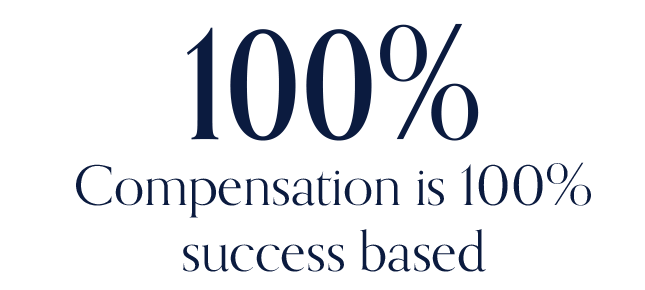
With more than 25 years of experience, over 1,000 Florida owners helped, and no upfront fees — our compensation comes only when you close — we reach the buyers a private sale never touches, including the out-of-market and international acquirers who often pay the most. We manage confidentiality, coordinate cross-border diligence, and resolve license and lease transfers before they can stall a close. The commission is the visible cost. The invisible cost of not running this process is usually the larger number.
Running the Real Math Before You Go It Alone
FSBO can make sense in narrow cases — a business already sold, a family transfer, a buyer standing in the room with financing arranged. Outside those, the math tends to favor a process, and the reason is not effort. It is leverage. A prepared, competitive, confidential sale reaches more buyers, protects your price, and survives diligence — and the price lift routinely clears the fee.
So don't decide from instinct or a round number. Decide from your actual figures: your defensible earnings, the buyer types your business would attract, and what a competitive process would realistically produce versus a quiet one. That is a comparison worth making before you commit to selling alone, because the FSBO decision is easy to make and hard to undo.
FSBO vs. Business Broker in Miami FAQ
Do I need a business broker to sell my business in Miami?
No law requires one — you can sell yourself. But most Miami owners net more with a broker, because a competitive, confidential process usually produces a higher price than a single-buyer private sale. On Main Street deals brokers typically charge 8% to 12%, and the price lift from real buyer competition often exceeds that fee.
How much does a business broker cost in Miami?
Main Street brokerages commonly charge a success-based commission in the 8% to 12% range, paid at closing, with no legitimate reason for large upfront fees. The question isn't the percentage in isolation — it's whether the process delivers a higher net price than selling alone. A broker who only lists, rather than markets and competes buyers, isn't worth the fee.
Will I really get a higher price using a broker?
Usually, because price is set by competition. A field of screened buyers bidding against each other pushes toward the top of what they can support; a lone buyer bids toward the bottom. On a business worth a multiple of earnings, even a modest lift from competition typically outweighs the commission. The FSBO "savings" is often an invisible discount.
Can I keep the sale confidential if I sell it myself?
It's very hard. Fielding inquiries from your own inbox exposes your identity from the first reply, and in Miami's tight, bilingual industries a leak spreads fast — costing you employees, customers, and ground to competitors. A broker sells blind, with NDAs and staged disclosure, which is difficult to replicate as a solo seller.
Why does an international buyer matter for a Miami sale?
Miami attracts foreign acquirers using the city as a U.S. platform, and they often pay the highest price — but they buy through advisors and screened processes, not local listings. A private FSBO sale rarely reaches them. Reaching that buyer pool is one of the clearest advantages of a marketed, confidential process.
How does Sailfish Equity Advisors help Miami business owners?
Sailfish provides a buyer-backed valuation, financial preparation, blind marketing, buyer screening, and a competitive process managed through closing — with 25-plus years of experience, 1,000-plus Florida owners helped, and no upfront fees. We reach local, national, and international buyers, protect confidentiality, and manage diligence and license or lease transfers so the deal closes.
Run the Miami Numbers Before You Sell Solo
Before you sell your Miami business alone to save the fee, find out what a competitive process would actually produce. Start with a confidential, buyer-backed look at what your Miami-Dade business could command — your real number, the buyers who would compete for it, and an honest read on FSBO versus a managed sale. Reach Sailfish Equity Advisors to talk it through.
For statewide guidance on valuation, confidentiality, buyer qualification, and closing, visit our Florida business broker guide.