
Sell My HVAC Business in Pensacola: What It's Worth in 2026
Service Agreements, Installed Base, and Buyer Demand
Pensacola HVAC buyers evaluate recurring maintenance agreements, installed equipment, technician depth, license continuity, and normalized earnings before pricing a company. This guide explains what raises value and how to prepare for a confidential sale.


Thinking About Selling Your Business?
Find Out What Your Business is Worth!
25+ Years of Success: Exclusive Buyers. Maximum Value. Zero Upfront Fees.
- ✓92% Success Rate – Proven expertise in closing efficiently.
- ✓Sell in as Fast as 90 Days – A streamlined, efficient process.
- ✓100% Confidential Sales – Protecting your business.
- ✓Multiple Competitive Offers – Serious buyers waiting.
Now is the Perfect Time to Sell Your Business in Pensacola, Florida:
Let Us Help You Get the Best Price


Why Pensacola Business Owners Choose Sailfish Equity Advisors
Proven Strategy. Trusted Results. A Legacy That Lasts.
Selling your business is more than a transaction—it’s a turning point in your life. At Sailfish Equity Advisors, we understand that deeply. For over 25 years, we’ve walked alongside business owners across Pensacola, helping them exit with purpose, profit, and peace of mind.
We’re not just brokers—we’re strategic partners who know how to get deals done right. From family-run shops to multi-location service businesses, we’ve sold thousands of Florida companies by delivering clear guidance, strong valuations, and the right buyer connections—locally and nationwide.
Pensacola is booming—and so is buyer demand. But even in a hot market, getting the best outcome takes more than luck. It takes a team who knows how to position your business, protect your interests, and close with confidence.
Let Sailfish Equity Advisors handle the complexities while you stay focused on your next chapter. We’ll help you exit on your terms and leave a legacy that reflects everything you’ve built.




How Service Agreements and Installed Base Shape HVAC Value
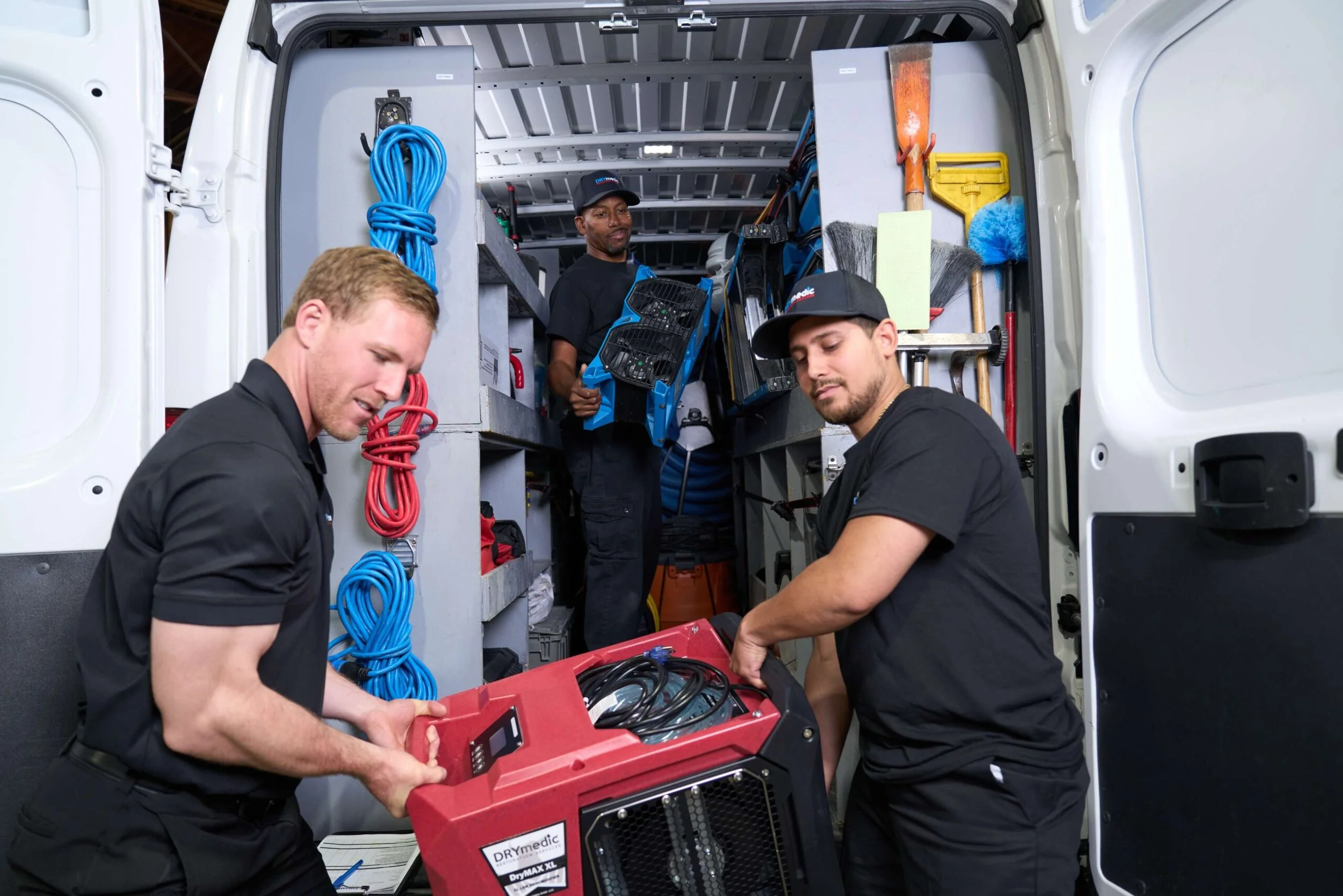
The trucks aren't the asset. When we take an HVAC company to market, the first file we ask for is the maintenance agreement book — how many agreements, what each one bills, and how many renewed last year. The equipment list comes later, and it rarely moves the price much.
That order matters more in Pensacola than it does in Orlando. Escambia County pulled 1,398 building permits in 2025; Lee County pulled 13,547. You can't sell an HVAC business in Pensacola on a new-construction story, because the new construction isn't there at the volume a peninsula buyer is used to underwriting.
What you sell it on is the installed base and the agreements attached to it. Escambia is an old-housing, military-anchored, slow-growth county — and that combination is worth more than most owners here expect.
What is an HVAC business in Pensacola worth in 2026?
Most Pensacola HVAC companies price off a multiple of seller's discretionary earnings. The ranges we underwrite from in 2026 run about 2x to 2.5x SDE for an owner-run shop, and 2.5x to 3.25x where there's a service manager, a licensed qualifier who isn't the owner, and a real agreement book.
One honest caveat before the numbers: every published 2026 HVAC multiple table we could verify was produced by a firm that sells businesses for a living, including us. No government dataset or independent research series reports transaction multiples for HVAC companies in Escambia County, or in Florida generally. The bands above are our underwriting view, labeled 2026, not market data.
Seller's discretionary earnings is your net profit plus your own salary and anything else the business pays for that a new owner wouldn't. It's the number a buyer finances against. If it's never been calculated properly, the multiple conversation is premature.
What lets a Pensacola shop hold those ranges without a new-construction story sits underneath the houses. Of Escambia County's 149,217 housing units, 43.7% were built in 1979 or earlier, and the county's median home dates to 1984 against Florida's 1988 (ACS 5-Year 2020–2024, tables B25034 and B25035). Old houses in a Gulf Coast climate mean change-outs, not new installs. That's a replacement annuity, and it doesn't need permits to keep running.
> Want the number for your own shop? We'll build the SDE, show you the range it supports, and tell you what's holding it down — no cost, no listing agreement. Book a call.
What pushes a Pensacola HVAC multiple up or down?
Four things move the number here more than anywhere else in Florida: the share of revenue under maintenance agreement, who holds the contractor license, how much of your best year was Hurricane Sally, and whether any of your work sits on federal property. Each is worth real multiple, up or down.
Agreement revenue. A shop where 15% of revenue is recurring and 85% is one-off change-outs is a job, not a business. Buyers pay for renewal rates and the change-out leads agreements generate. Bring the count, the average annual billing and three years of renewal percentage — that table does more for your price than a new truck.
The license. Florida classes air conditioning contractors as A, B or C under Fla. Stat. § 489.105 — Class A unlimited, Class B capped at 25 tons of cooling and 500,000 BTU of heating in any one system, Class C limited to service. If you're the qualifying agent, the company's permit authority leaves when you do. Fla. Stat. § 489.119 gives a business 60 days to bring on a replacement. Put that in front of your attorney early.
Hurricane years. Sally came ashore at Gulf Shores on September 16, 2020 as a Category 2 and did $7.3 billion in regional damage. Ivan hit the same stretch on nearly the same date in 2004. Storms produce a change-out surge, and a good buyer strips it out. If 2020 and 2021 were your best years, expect to defend the baseline underneath them.
Federal and base-adjacent work. Defense activity accounts for $4.0 billion and 31,651 jobs in Escambia County — 19.5% of the county economy. But a federal contract generally doesn't follow an asset sale; it typically requires a novation, and the government isn't obliged to grant one. If any revenue comes off federal property, have your attorney map how it survives a change of ownership.
What lowers the number, plainly: you doing the quoting and selling yourself, one property-management group above 20% of revenue, unrecorded cash work, and an agreement book nobody has ever counted.
Compare that local math with Sailfish's Florida HVAC business broker guide. For the wider transaction framework, see how we work with Florida business owners preparing for a sale.
Who is buying HVAC businesses in Pensacola right now?
Three buyer types work this market, and the private-equity platform is the least likely of them. We cannot point to a verified PE-backed HVAC platform acquisition in Escambia County, and we won't invent one to make the page read better. The consolidators have concentrated on the I-4 corridor and South Florida, where population density and permit volume support a roll-up.
The most common real buyer here is an individual using SBA 7(a) financing, and Pensacola has an unusual supply of them. There are 33,582 veterans in Escambia County, plus a steady flow of officers and senior enlisted retiring out of the commands at NAS Pensacola. A retiring chief with maintenance management experience and a pension is a serious buyer for a $600K-to-$1.5M SDE service company — and he cares far more about your renewal rate than your brand.
The second is the regional operator. Gulf Coast companies expanding out of Mobile and Baldwin County, Alabama, or east from Santa Rosa and Okaloosa, buy Pensacola shops for density they lack. These buyers usually bring their own licensed qualifier, which removes your biggest structural risk.
The third is the local competitor — the one you'd rather not know you're selling. That's a confidentiality problem, and it's covered below.
Worth saying out loud: your buyer pool here is thinner than a Tampa seller's. That doesn't cost you the sale. It costs you the luxury of a wide auction, which is why preparation matters more.
What do buyers check during diligence in an HVAC sale?
Six things, in this order: the licensing chain, the agreement book, customer concentration, three years of clean financials, the fleet and equipment schedule, and the crew. Diligence on a $1M-SDE HVAC company usually runs 45 to 75 days, and licensing is what stalls it most often in Florida.
On licensing, a buyer's counsel traces who the qualifying agent is, what class the license carries, and what the plan is on day one after closing. If your answer is "me, and I'll stay 90 days," that's a structure question, not a footnote.
On the agreement book, expect a line-level export: customer, start date, renewal date, annual billing, visit history. If your software can't produce it, start that project now rather than during a 60-day exclusivity window.
On the crew, buyers count EPA 608 and NATE-certified techs and ask how many have been with you five years. He is modelling what happens if two senior techs walk the month after closing.
How do you sell without your techs or your competitors finding out?
Confidentiality holds by controlling what leaves the building and when. We market a Pensacola HVAC company as a blind profile — county geography, revenue and SDE bands, revenue mix, no name, no photos — and release the identity only after a signed NDA and financial qualification. In a market with 104 contracting establishments, that discipline isn't optional.
Escambia is small enough that a careless process gets back to your techs by the weekend. The two specific risks here are the local competitor who signs an NDA to go fishing, and the supply house counter, where everyone in this trade eventually talks.
We handle the first by qualifying buyers on proof of funds and SBA pre-qualification before the name goes out, and by holding direct competitors back until late. We handle the second by keeping the deal off any local advisor's desk until it's under LOI. That's the same approach we use across our Pensacola practice.
How long does a Pensacola HVAC sale take?
Plan on 7 to 11 months from engagement to funded closing, with the marketing period usually the shortest stretch and SBA underwriting the longest. Buyer pool depth is the variable that stretches a Pensacola timeline past a Tampa one — fewer qualified buyers means fewer parallel conversations.
Roughly: 3 to 6 weeks to build the recast and the confidential memorandum, 6 to 14 weeks in market, 2 to 4 weeks to a negotiated LOI, then 45 to 75 days of diligence and SBA underwriting. Licensing transitions and any federal-contract novation sit inside that last block and are the two items most likely to add a month.
Sellers who start with three clean years and a countable agreement book close at the fast end. Sellers who start by reconstructing 2023 don't.
Which improvements raise a Pensacola HVAC valuation within 18 months?
Five moves, and the first one is worth more than the rest combined: get a licensed qualifier in the business who isn't you. Everything else on this list raises the number; that one protects the deal from collapsing at diligence.
Then: count the agreement book and report renewal rate monthly, since that's what a buyer underwrites. Move personal expenses off the books a full fiscal year out, so your CPA presents clean statements instead of a long add-back schedule — and ask your CPA about structure, because asset-versus-stock changes what you keep.
Third, cut any single account below 20% of revenue. Fourth, hand the quoting and selling to a service manager, so the business isn't buying your relationships. Fifth, get a written opinion of value now, so you have 12 months to act on what it says.
One note if Perdido Key or Pensacola Beach condos are on your route. Escambia's tourist development tax collections were $22,048,835 in FY2025 against $22,023,172 in FY2024 — flat. That's a stable base, not a growth story, and dressing it up as one loses a buyer in week two.
> Start where it's cheapest. A no-obligation valuation tells you what your HVAC company is worth today and what 12 months of preparation would add. Book a call.
Pensacola HVAC sale FAQ
What is my Pensacola HVAC business worth if I still hold the CAC license myself?
It's still sellable, but the range compresses. Buyers discount for the risk that permit authority leaves with you, and lenders ask how the business operates on day one — Florida gives a company 60 days to replace a departing qualifying agent under Fla. Stat. § 489.119. Getting a second qualifier in place before you market is the highest-return preparation step there is.
Do my maintenance agreements transfer to a buyer when I sell?
Usually yes in a stock sale, and case-by-case in an asset sale depending on your assignment language. Buyers price the book on renewal rate, not count — a 400-agreement book renewing at 62% is worth less than a 250-agreement book renewing at 88%. Pull the assignment clause and three years of renewal history before you market.
Does work on Naval Air Station Pensacola or other federal contracts transfer to a buyer?
Not automatically. Federal contracts generally require a novation agreement recognizing the new owner, and the government isn't required to approve one. Defense activity drives 19.5% of Escambia County's economy, so this comes up here more than in most Florida markets. If federal work is material to your revenue, have your attorney map the transfer path before a buyer asks.
Will a buyer pay for my Hurricane Sally revenue?
No — not at full multiple. Sally made landfall on September 16, 2020 and produced a regional change-out surge, and any competent buyer normalizes storm years out of the earnings base. Show it clearly and separately, with the pre-storm and post-storm baselines beside it. Sellers who bury a spike inside a trend line lose credibility in diligence.
Does it hurt that my shop works across the Escambia–Santa Rosa county line?
It helps, if you can show it. Santa Rosa County grew 12.3% between 2020 and 2025 against Escambia's 3.7%, so a book with real Gulf Breeze, Navarre and Pace density carries a growth argument that a purely Escambia route doesn't. Break your agreement book out by county before you market — most owners here have never done it.
Can I sell a Pensacola HVAC business with SBA financing?
For most deals in this size range, that's the expected path. SBA 7(a) financing supports the individual buyers who make up the largest share of this market, including the retiring military population — Escambia County has 33,582 veterans. Lenders want three years of tax returns, clean books and a licensing plan. Underwriting typically adds 45 to 75 days.
For statewide guidance on valuation, confidentiality, buyer qualification, and closing, visit our Florida business broker guide.