
Selling a Restoration Business in Tampa: What Storm and Water Work Is Worth in 2026
Separate Repeatable Restoration Value from Storm-Driven Revenue
Restoration buyers examine referral sources, insurance relationships, response capacity, equipment, certifications, crew depth, job mix, and storm volatility. To position your Tampa company around durable value, schedule a confidential exit-planning conversation.





Thinking About Selling Your Business?
Find Out What Your Business is Worth!
25+ Years of Success: Exclusive Buyers. Maximum Value. Zero Upfront Fees.
- ✓92% Success Rate – Proven expertise in closing efficiently.
- ✓Sell in as Fast as 90 Days – A streamlined, efficient process.
- ✓100% Confidential Sales – Protecting your business.
- ✓Multiple Competitive Offers – Serious buyers waiting.

Why Tampa Business Owners Work With Sailfish Equity Advisors
Tampa Market Knowledge That Creates Leverage. We understand the buyers, industries, and deal activity shaping Tampa Bay, then combine that local perspective with access to qualified buyers throughout Florida and beyond.
A Process Refined Through Experience. With more than 1,000 completed transactions, we know how to anticipate challenges, maintain momentum, and guide owners through each stage of the sale.
Your Business Stays Protected. We carefully control how information is shared, who receives it, and when conversations move forward, helping safeguard employees, customers, and day-to-day operations.
Advice From People Who Understand Ownership. Our team brings firsthand operating and transaction experience, allowing us to evaluate opportunities and negotiate from a business owner’s point of view.
Serious Buyers, Not Casual Inquiries. We focus on identifying buyers with the financial ability, strategic fit, and commitment required to complete a transaction.
A Sale Strategy Built Around Your Priorities. Whether your goal is maximizing value, preserving your company’s reputation, supporting your employees, or planning your next chapter, the process is shaped around what matters most to you.
1,000+ Florida Business Owners Trust Us
Real stories from owners who sold, scaled, and succeeded with Sailfish.
Now is the Perfect Time to Sell Your Business in Tampa, Florida:




Why Tampa Bay's Water Exposure Makes Restoration So Buyable
A profitable Tampa restoration business commonly changes hands at roughly 1.5x to 3.5x SDE for an owner-run shop, with published estimates placing larger, well-diversified operations near the top of the small-business size ladder — the figure turns on how much of your work flows through steady carrier and TPA channels rather than one-off retail jobs. Sailfish Equity Advisors is a statewide Florida M&A and business-brokerage firm; we take Tampa restoration owners from valuation through preparation, confidential outreach, and a completed sale, leaning on financing-grade numbers, buyers we have qualified in advance, and a structure assembled before the company reaches the open market.
Restoration is not a recurring-revenue business the way pest control or janitorial is. It is demand-driven — and in Tampa Bay, the demand rarely takes a year off. That steady flow is exactly what a buyer is trying to buy.
Why Tampa Bay's Water Exposure Makes Restoration So Buyable
Tampa Bay is one of the most flood-exposed metros in the country. Low elevation, storm-surge vulnerability along the coast, and an aging housing stock in South Tampa, Hyde Park, and the older bungalow neighborhoods mean water finds its way inside more often than in most markets. The 2024 storm season drove that home for the whole region, sending water- and flood-mitigation demand surging across Hillsborough and Pinellas. Even in a quiet hurricane year, everyday pipe bursts, roof leaks, and humidity-fed mold keep the phones ringing.
To a buyer, that demand profile reads as durability. A restoration company in Tampa is not betting on a single catastrophe — it is positioned in a market where water damage is a structural feature of the geography and the weather. That is why acquirers, from regional platforms to individual operators, look at Tampa Bay restoration books seriously. The work is coming; the question a buyer asks is whether your company is built to capture it without you personally answering every 2 a.m. call.
What the Buyer's Lender Underwrites in a Restoration Deal
Because a financed buyer is the norm in Tampa restoration deals, the person whose opinion decides your price is a lender's credit analyst. That analyst re-states the company's profit on a single-owner, full-time basis, subtracts personal and one-time items, and weighs a simple test: can this cash flow both repay the purchase loan and support a new owner's pay? The re-stated result is called seller's discretionary earnings — SDE — and it underpins everything that follows.
For a restoration operation, SDE is the remainder once crews, equipment upkeep, and job costs are covered, but ahead of your own draw, your vehicle, your phone, and the personal spending that exits with you. Timing is the wrinkle in restoration: revenue arrives in bursts and receivables drag, so the credit analyst studies not only the earnings but the quality and predictability behind them. A shop with steady carrier volume and tidy collections underwrites smoothly. One that surges after a storm and goes hungry between events draws a harder look and a more cautious number.
What Tampa Restoration Companies Sell For in 2026
Owner-run Tampa restoration companies usually change hands at roughly 1.5x to 3.5x SDE, and the size ladder counts — published estimates put businesses generating $250,000 to $500,000 of SDE near 2.5x to 3.5x, with larger, better-diversified operations toward the top and, once earnings scale into seven figures, moving to EBITDA multiples instead. These are ranges, not commitments; the credit analyst fixes the actual figure.
What moves you up or down inside the range is diversification and the durability of demand. A company with a balanced spread of water, fire, and mold work, several carrier and third-party-administrator (TPA) relationships, and around-the-clock response that runs without the owner sits high. One that is a single carrier relationship, a single large commercial account, or one owner's phone away from collapse sits low — and commonly watches a portion of its price ride on future results until the buyer trusts the work outlasts the handoff.
Carrier Receivables: The Aging Report a Buyer Reads Line by Line
Restoration runs on insurance money, and insurance money is slow money. That makes your accounts-receivable aging report one of the most scrutinized documents in the entire sale. A buyer and their lender will pull it apart to see how long carrier and TPA invoices sit before they pay, how much is over 90 or 120 days, and how much has quietly become uncollectible.
This is where many restoration deals get repriced. Fat, aging receivables signal working-capital risk — the new owner has to fund payroll and materials for months before the carriers pay, and any write-offs come straight out of value. Before you go to market, clean the aging report: collect what you can, document disputes, and be honest about what is truly collectible. A tight receivables profile is not just good housekeeping; in restoration it is one of the biggest levers on the price a buyer will support.
IICRC Certifications, TPA Programs, and the Mold License
Three credentials shape how a Tampa restoration company transfers, and each one belongs on the table before a buyer asks.
● IICRC certifications signal that the crew — not just the owner — is qualified across water, fire, and mold categories. Certifications that live with a broad team transfer far more cleanly than expertise that lives only in the owner's head.
● TPA and carrier program relationships are a real asset and a real risk. Program status brings steady volume, but if the relationships run through the owner personally, a buyer worries they leave when the owner does. Documenting how work is assigned and who the carrier actually contracts with makes the difference.
● The Florida mold license. Under Chapter 468, mold assessment and mold remediation are licensed activities in Florida, and — unlike some trades — a general contractor's license does not cover them. A buyer must be able to hold or employ the qualifying mold license to keep that revenue stream. Confirm how your mold authority is held and whether it transfers, well before closing.
Selling Quietly When the Business Runs on Referrals
Restoration runs on referrals — carrier adjusters, TPAs, plumbers, property managers, and repeat customers all feed the pipeline. That is why confidentiality here protects the deal itself, far more than it is a matter of good manners. If word gets out that you are selling, adjusters may route work elsewhere while they wait to learn who ends up owning the company, and a competitor can begin courting your referral sources at precisely the wrong moment. Either one damages the pipeline a buyer is paying for.
A blind-profile process shuts that down. Your company is presented as an unnamed opportunity — the service mix, a broad Tampa Bay territory, a revenue band, the SDE, and the carrier-to-retail split — carrying nothing that would reveal it. No prospect learns who you are before an NDA is signed, and the confidential items — carrier ties, referral sources, crew rosters, and receivables detail — release gradually, only to buyers who have demonstrated they can reach a closing. Your referral network and your crews hear about it once the transaction is effectively done, not from talk on a job.
Screening Buyers Who Can Carry Slow Carrier Money
A restoration buyer needs more than eagerness — they need the working capital to carry slow carrier money and the operational depth to staff around-the-clock response. That is exactly why qualification carries so much weight here. A real process confirms the capital, the track record, an honest timeline, and the ability to reach closing — with proof of funds or lender backing — before any confidential detail moves.
Qualifying also builds leverage. With a regional restoration platform, a lone operator or search fund, and possibly a competitor eyeing your carrier ties all active in parallel, you have a genuine market rather than one conversation. A buyer who cannot show both the capital to float receivables and a path to closing should not get the same access as one who can — and none of them should see your carrier and referral detail if they might exploit it to skim your pipeline.
How Sailfish Turns Storm Work Into a Defensible Number
Selling a restoration business well comes down to showing the demand is durable and the earnings outlast the handoff — and that is what we do before a buyer ever calls. Sailfish Equity Advisors opens with a confidential, buyer-backed valuation: we rebuild your financials into a defensible SDE, assemble an add-back schedule a credit analyst will accept, and pressure-test your receivables aging, carrier concentration, and response capacity the way an acquirer will.
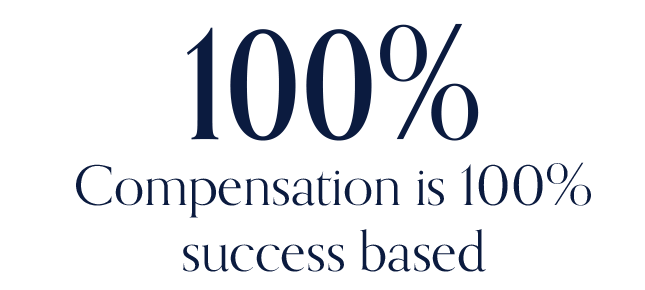
Twenty-five-plus years of Florida deals stand behind that work, over 1,000 owners guided through their exits, and we never bill upfront — our compensation arrives at closing, aligned with yours. We sort your mold-license and TPA questions early, tidy the receivables story, list the company blind, and stage a competitive process so demand-driven work is priced for its durability instead of discounted for its lumpiness. The point is to get you paid for a business that keeps producing after the storm passes and after you hand over the keys.
Getting a Tampa Restoration Business Ready to Sell
Restoration exits that command a premium are built deliberately, never improvised. Give yourself twelve months and take the steps one at a time.
● Clean up both the books and the receivables so your SDE and your collectible AR survive underwriting.
● Spread demand across water, fire, and mold, and across several carrier and TPA relationships, so no one source is make-or-break.
● Document the mold license and IICRC certifications and confirm how each one transfers or is replaced.
● Cut owner dependence — when the 2 a.m. call, the estimates, and the carrier ties all route through you, the buyer is taking on your job instead of a self-running business, and the price reflects it.
● Check concentration — if any one carrier, TPA, or commercial account tops 20% to 30% of revenue, expect a buyer to press on it.
● Get a buyer-backed valuation and use it to judge whether to sell now or spend another year strengthening the case.
None of this calls for heroics — only for starting before the next storm season forces your hand.
Tampa Restoration Sale FAQ
How much is my Tampa restoration business worth?
Most owner-run Tampa restoration companies change hands at roughly 1.5x to 3.5x SDE, with better-diversified operations toward the top of the small-business size ladder and larger companies trading on EBITDA, per published estimates. The biggest drivers are demand durability, a diversified carrier and TPA mix, clean receivables, and how little the business leans on the owner.
Why do buyers care so much about my receivables?
Because restoration is paid by insurers, and insurers pay slowly. A buyer and their lender read your AR aging closely to gauge working-capital risk and write-off exposure. Heavy, aging carrier receivables lower the price a buyer will support, so cleaning up collections before you sell is one of the highest-return moves you can make.
Does the Florida mold license transfer when I sell?
Not automatically. Under Chapter 468, mold assessment and remediation are separately licensed in Florida, and a general contractor's license does not cover them. A buyer must hold or employ the qualifying mold license to keep that revenue. Confirm how your mold authority is held and whether it transfers before you go to market.
Do I have to tell my crews and referral sources I'm selling?
Typically not until the transaction is essentially final. Restoration lives on referral relationships, and a premature leak can push carrier and adjuster work elsewhere. Anonymous listing, NDA gating, and staged disclosure protect your pipeline and your crews until the closing is nearly assured.
How long does it take to sell a Tampa restoration business?
As a rule, service-business sales run six to twelve months from preparation through closing. Restoration can stretch longer when receivables and carrier relationships need cleanup, or go faster when the books, certifications, and demand mix are already tidy. Because buyers normally want three years of financials, early preparation steers the timeline.
How does Sailfish Equity Advisors help Tampa restoration owners?
Sailfish covers the entire engagement — a confidential buyer-backed valuation, recast financials, add-back and receivables prep, anonymous go-to-market, buyer qualification, and deal management all the way to close — drawing on 25-plus years, over 1,000 Florida owners guided, and no upfront fees. We tackle your mold-license and carrier questions early and steer a competitive process so demand-driven work is priced for its durability.
Find Out What Your Tampa Restoration Company Would Command
Restoration demand in Tampa Bay is not going anywhere — but the moment to learn your company's value is before the next storm, not in the thick of one. Get a confidential, buyer-backed read on the business through the restoration company sale resource — pin down your number, learn which buyers would compete for your carrier work, and go to market prepared. Connect with Sailfish Equity Advisors to begin a confidential conversation.
For statewide guidance on valuation, confidentiality, buyer qualification, and closing, visit our Florida business broker guide.