

General Contractor Business Broker in Florida
You built a concrete company around demanding schedules, skilled crews, valuable equipment, and relationships earned one project at a time. Sailfish Equity Advisors helps Florida concrete contractors understand what their business may be worth, prepare for buyer scrutiny, and pursue a confidential sale without disrupting the work already in progress.


You Can Start Before the Books Are Perfect
Many concrete business owners contact us before their financials, WIP schedules, equipment records, or exit plans are completely organized. Some are still estimating every project, managing key GC relationships, or supervising the field themselves.
That does not mean you should wait to understand your options.
We can begin with the records you already have, identify what buyers will eventually need, and show you which improvements could have the greatest effect on value. A confidential review gives you a practical path forward without committing you to sell.
What Makes a Concrete Company Attractive to Buyers?

Backlog With Margin, Not Just Volume
A large backlog is valuable only when buyers can verify its expected profitability. Accurate WIP reporting, realistic cost-to-complete estimates, repeat GC relationships, and signed work with documented margins give buyers greater confidence in future earnings.
A Crew That Can Run the Pour
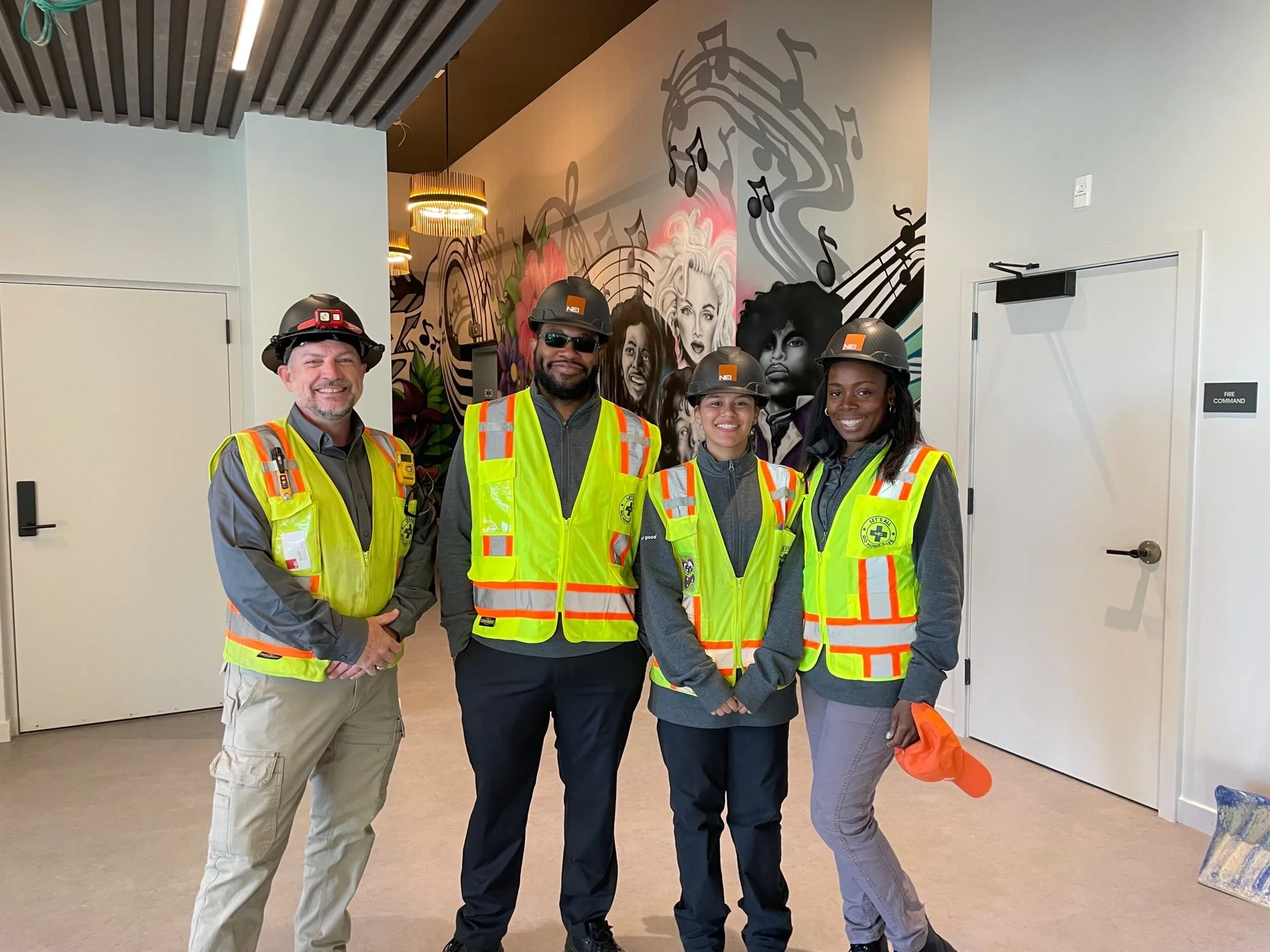
Experienced superintendents, foremen, finishers, estimators, and project managers reduce dependence on the owner. Buyers pay closer attention when the company has people who can manage schedules, crews, quality, and customer relationships without constant supervision.

Equipment Records That Hold Up in Diligence
Buyers will examine what equipment is owned, what is financed, where liens exist, how the fleet has been maintained, and what may need replacement. Clear titles, organized maintenance records, and dependable equipment can reduce uncertainty during the sale.
Work With a Concrete Business Broker Who Understands the Whole Deal
-

Understand the True Value of Your Concrete Company
We evaluate normalized earnings, owner add-backs, backlog quality, WIP reporting, customer concentration, management depth, equipment, debt, and growth opportunities. The result is a valuation that reflects the complete operating company rather than relying on revenue or equipment value alone.
-

Prepare Before Buyers Start Digging
Your records do not need to be perfectly organized before you contact us. We help identify gaps in the financials, WIP schedules, equipment records, customer agreements, licensing structure, bonding, and owner responsibilities before those issues create delays or weaken buyer confidence.
-

No Upfront Concrete Business Broker Fees
Our compensation is success-based. You do not pay a large upfront brokerage fee simply to bring your concrete business to market. We remain actively involved throughout the process—from preparing the company and identifying qualified buyers to managing negotiations, due diligence, financing, and closing. Because we are paid when the transaction closes, our interests remain aligned with yours.
Why Choose Sailfish as Your Concrete Business Broker?

Selling a concrete company requires experienced representation, qualified buyers, and a process built to reach closing. Sailfish brings decades of transaction experience and hands-on guidance to every business we represent.
25+ Years of Experience
Our team brings more than 25 years of experience helping business owners navigate valuations, negotiations, due diligence, financing, and closing.More Than 1,000 Transactions
With experience across more than 1,000 completed business transactions, we understand how to anticipate obstacles, protect deal momentum, and keep buyers engaged.Concrete Business Expertise
We understand how backlog margins, WIP reporting, equipment, bonding, customer concentration, field leadership, and owner dependence affect buyer confidence and value.Qualified Buyers Who Can Close
We connect your company with screened individual buyers, strategic contractors, family offices, search funds, and private equity-backed groups with the experience and financial capacity to complete an acquisition.Hands-On From Valuation to Closing
We remain actively involved throughout buyer outreach, negotiations, due diligence, financing, and closing—while protecting your employees, customers, projects, and confidentiality.
Trusted Through High-Stakes Business Sales
Concrete Business Sale and Valuation Insights



Meet the Team Advising Florida Concrete Business Owners
-

Rajiv Khatri
Managing Partner
-

Sarah Khatri
Managing Partner
-

Franklin Luke
Business Sales Advisor
A General Contractor Business Broker in Florida on what your GC is worth in 2026
What a Florida general contractor is worth in 2026, how buyers read your backlog and bonding, and how to sell without your reps finding out.
Would a buyer actually fund your backlog? That question sets the price. A profitable Florida general contractor tends to sell in the 1.5x to 3.5x SDE band while it is owner-run, and one with a genuine management team and earnings above $1 million lands nearer 4.5x to 6.5x EBITDA — but a general contractor business broker in Florida will point out that the figure hangs on the margin a buyer believes outlasts you, the bonding that carries over, and how few jobs and relationships the revenue rests on. Sailfish Equity Advisors is the sell-side advisor and brokerage Florida general contractors turn to when it is time to price the company, ready it, market it under wraps, and close — bringing buyer-backed valuation, careful screening of every prospect, and a process mapped out long before a single buyer sees the file.
Most GC owners can rattle off their revenue and their reputation. Fewer can show, on paper, that both keep going without them. Building that proof is what this page is for.
Would a Buyer Fund Your Backlog? What a Florida GC Is Worth
A general contractor's worth lives in things that are easy to feel and hard to hand off: the ties to owners and developers, a name that wins negotiated work, a bonding line that lets you reach for bigger jobs, and a stack of signed contracts. Buyers want every bit of it — and they lose sleep over every bit of it, because each of those assets can leave with the owner.
So the readiness question is not whether your company is good. It is which pieces of it outlive the day you hand over the keys. A GC that answers well — backlog margin on paper, a surety line the buyer can inherit, an estimating and PM team that runs without the founder, revenue spread across many clients — sells from strength. A GC where the owner is the estimator, the relationship, the guarantor, and the closer sells at a discount, or with much of the price parked in earn-outs. The rest of this page walks the audit a buyer runs, so you can run it first.
What a Buyer Sees When They Look at a General Contractor
Every buyer, whether a rival stretching across Florida or a private equity group building a platform, underwrites the same short list: earnings quality, the backlog and its margin, the self-perform-versus-sub mix, bonding capacity, project and client concentration, and how much rides on the owner. What they purchase is the next few years of contracts and cash flow, not the plaques on the wall.
For a general contractor, SDE — seller's discretionary earnings — comes out of the reported tax profit once the owner's economics are added back in: your salary, the depreciation carried on pickups and yard gear, and the discretionary or nonrecurring spending a successor would drop. Build a management bench and buyers price on EBITDA instead. Lenders never underwrite the tax-managed bottom line; they underwrite the honest recast, and doing that recast credibly often separates a deal that funds from one that stalls.
The strongest general contractors look the part on paper: negotiated, repeat work from owners who bring the next project by name, a backlog booked at documented margin, a bonding line with headroom, an estimating and PM bench that does not need the founder in every meeting, and revenue no single client dominates. The weakest post an impressive top line but pack the entire business into the founder's phone.
What Florida General Contractors Sell For in 2026
Price follows how durable the earnings are, not how big the revenue looks. Owner-run GCs selling on SDE usually settle inside the house band of about 1.5x to 3.5x SDE. As earnings and management depth climb, buyers pay on EBITDA at stronger multiples — the published size ladder runs roughly 2.5x to 3.5x at $250,000 to $500,000 of earnings, 3x to 4.5x at $500,000 to $1 million, 4.5x to 6.5x at $1 million to $3 million of EBITDA, and 5.5x to 8x at $3 million to $10 million. Those brackets are published guideposts, there to orient you and nothing more. The valuation that actually governs a sale is the one a fundable buyer's lender is willing to back for your specific company.
Two general contractors at $800,000 of SDE can price a world apart. The one with a documented-margin backlog, self-perform trades that defend that margin, a transferable bonding line, and no client past 20% of revenue sits at the top. The one earning the same off a bid-and-burn backlog, everything subbed at pass-through margin, bonding tied to the owner's personal guarantee, and a single developer driving half the revenue sits at the bottom — or lands a structure with real money held back until the backlog and the relationships prove they stay. The multiple works as a risk score, and for a GC its biggest lines are margin durability, bonding, and concentration.
Subs, Self-Perform, and the Margin a Buyer Will Believe
Here is a lever unique to general contractors: how much work you self-perform versus sub out, and what that signals about the margin a buyer will trust. A GC that subs nearly everything reads, to a buyer, as a coordination-and-relationship business — valuable, but its margin is thin, competitive, and pinned to the owner's knack for winning and running work. A GC that self-performs meaningful trades captures margin others pass through, and that margin defends itself in diligence because it lives in crews and capability, not just a contact list.
Buyers pay for the margin they believe survives them, not the margin on last year's income statement. That belief is assembled from evidence: historical job-cost accuracy, whether estimates held or jobs faded, the self-perform share of revenue, and how repeatable the winning work really is. A GC re-bidding its whole top line each year against the low bidder is worth less than one where owners and developers negotiate the next project because they trust the result.
● Self-perform trades: margin a buyer can defend — anchored in crews and capability, not just relationships.
● Negotiated / repeat work: the nearest a GC comes to recurring revenue; funded close to full value.
● Pure hard-bid, fully subbed volume: real revenue, priced with caution — thin margin, heavy re-compete, owner-dependent.
If your book leans hard-bid and fully subbed, that is a prep project, not a verdict. Documenting negotiated share, job-cost accuracy, and repeat-client history across 12 to 18 months moves both the earnings and the multiple.
Bonding Capacity: The Asset That Doesn't Show on the P&L
The most valuable thing many general contractors own never lands on the balance sheet: bonding capacity. A surety line that lets you carry several large projects at once is what puts the bigger, better work within reach — and a buyer knows it. But bonding does not automatically ride along with the company. The surety underwrote today's ownership: your financials, your record, and often your personal guarantee. A new owner has to build their own surety relationship, and the surety underwrites the buyer, not the seller.
That makes bonding both an asset and a risk in a sale. A GC whose bonding rests on a strong balance sheet, a clean claims history, and a management team the surety trusts is far more transferable than one whose line exists only because the owner personally guarantees it. Bonded jobs still running at closing become negotiated terms. Raise bonding at the start of the process, not during closing week, and it becomes part of the value story instead of a last-minute snag. Confirm current surety and licensing requirements with your surety and a construction attorney early.
The Certified GC License and the Qualifier Question
Here is the Florida detail that can stall a closing. A general contractor in Florida works as a Certified General Contractor through the Construction Industry Licensing Board (CILB) under Chapter 489, and the company performs work because a qualifying agent — a licensed individual who takes legal responsibility for its work — qualifies it. A Certified license is good statewide. In most owner-run GCs, the owner is that qualifying agent.
Which surfaces the buyer's real question: once the wire clears, who qualifies the company? The license does not simply transfer. Every deal needs a plan — the buyer qualifies the firm on their own Certified GC license, a licensed key employee steps in as qualifying agent, or you stay on as qualifier through a defined transition until the buyer's license is in place. If the owner holds the qualification, replacing or moving it is a closing condition, and buyers and their lenders will want it settled before they fund. The state sets the requirements, so confirm the current ones directly with the Florida Department of Business and Professional Regulation at https://www2.myfloridalicense.com/ or with a construction attorney. Solve the qualifier before you list and it becomes a line in the transition plan rather than a reason the deal slips.
Selling a GC Without the Owner's Reps Hearing It
For a general contractor, a leaked sale hurts in a specific way: your own project managers, estimators, and superintendents — the people carrying the client relationships and the bonding-relevant track record — are precisely the ones who can wreck the deal if they hear early. A PM who thinks the company is for sale starts taking recruiter calls. A competitor who catches the scent circles your best developer clients and your bid list. A surety that hears rumors gets cautious.
A confidential build blocks that. At first contact the firm appears only as a masked summary — a Certified GC, a general region, revenue, an SDE or EBITDA line, a backlog band, and bonding capacity sketched in broad strokes — carrying nothing that pins down which company it is. Nobody learns the name until they have signed an NDA, and then the delicate items — the job schedule, the owner and developer list, the surety letters — come out gradually inside a gated data room reserved for buyers who have demonstrated they can close. None of this is manners; it is protection for the transaction, and since a GC's worth sits in relationships and a reputation, discretion shields precisely what a buyer is paying to acquire.
Project Concentration and the Buyers Who Can Handle It
Concentration is the risk that most often reshapes a GC deal. When one project, one developer, or one public agency drives more than 20% to 30% of revenue, buyers and lenders grow cautious — not because the relationship is bad, but because losing it would remake the business, and they are underwriting durability. A GC with revenue spread across many owners, trades, and project types is more financeable, and more valuable, than one leaning on a single golden client at the same earnings.
Different buyers stomach concentration differently, which is the case for running a genuine market. Individual buyers, usually SBA-financed, want diversified, lender-friendly revenue and a credible handoff. Strategic buyers — contractors entering your territory or project type — may pay for even a concentrated relationship if they can absorb and grow it. Private equity platforms reward management depth and a spread-out backlog, and can often engineer around concentration with earn-outs or holdbacks. Whoever appears, a disciplined process qualifies before it discloses — capital, experience, timeline, proof of funds, and a believable qualifier-and-bonding plan. When the Certified license, the developer relationships, and the estimating all trace back to one person, a buyer prices that dependence as a discount. And a nosy competitor never lays eyes on the project schedule that would hand them your clients if the deal came apart.
How Sailfish Turns a Backlog Into a Fundable Offer
Selling a general contractor well is largely about converting what buyers hesitate to trust — relationships, a reputation, a backlog, a surety line — into proof a lender can underwrite. That conversion is our pre-market work. We recast the numbers into a defensible SDE or EBITDA, assemble the add-backs a buyer will sign, and interpret the backlog through the WIP the way an acquirer will: billing positions, cost-to-complete, job-cost accuracy, and how much signed work carries margin rather than mere volume.
Then we present the pieces that never appear on the income statement — the self-perform margin, the bonding headroom, the negotiated repeat work — as the value drivers they are, and we lay out the CILB qualifier and surety questions in advance so they build the deal instead of breaking it. We market the firm blind, qualify buyers rigorously, and orchestrate a competitive process so the backlog is priced as a financeable asset rather than a hopeful forecast. The point is simple: get a buyer and their bank to fund the future you have already built.
Preparing a General Contractor to Sell
The best GC exits get audited before they get marketed. Give yourself a year and take the steps in sequence. Clean the financials and separate personal from business so the SDE or EBITDA proves out and each add-back is documented — buyers credit what they can verify and discount what they cannot. Tighten job costing and WIP so margin, billing positions, and cost-to-complete are accurate. Document the negotiated-versus-bid split and your self-perform margin. Put the bonding story in order — ideally anchored to the company's balance sheet and record rather than your personal guarantee. Review concentration and widen the client base where you can. Build an estimating and PM bench so the firm does not need you in every meeting. Settle the CILB qualifier. Then take a buyer-backed valuation and decide, from the data, whether to sell now or build another year of proof.
Plan on 6 to 12 months from market to close, with GC deals stretching when qualifier transitions and surety underwriting add steps. Expect three clean years of financials on any buyer's diligence list. Start before you feel finished — a general contractor kept always sale-ready is also a stronger company to run.
Selling a General Contracting Business in Florida: FAQ
How much is my Florida general contracting business worth?
Owner-run GCs typically sell in the 1.5x to 3.5x SDE range, and firms with genuine management depth trade on EBITDA — the published ladder lands near 4.5x to 6.5x at $1 million to $3 million of EBITDA. The heaviest drivers are backlog margin, the self-perform ratio, transferable bonding capacity, project and client concentration, and the owner's grip on the business.
Will a buyer really fund my backlog?
A buyer funds the margin they expect to outlast your exit, not the revenue on a slide. They read the backlog through the WIP — billing positions, cost-to-complete, and profit fade — and split documented-margin negotiated work from thin hard-bid volume. Signed backlog with defensible margin and a client relationship that transfers is what banks and buyers actually finance.
What happens to my bonding capacity when I sell?
It does not ride along automatically. The surety underwrote today's owner — your financials, your record, often your personal guarantee — so the buyer has to establish their own surety relationship. Bonding tied to a strong company balance sheet and a clean claims history transfers far better than bonding propped up by the owner's guarantee alone. Bonded jobs still open at closing become negotiated terms.
Does my Certified GC license transfer to a buyer?
Not automatically. A Florida GC is qualified through a qualifying agent under the CILB (Chapter 489), and for most owner-operated GCs the owner is that agent. The buyer must qualify the company on their own license, install a licensed employee as qualifier, or retain you through a transition. If you are the qualifier, replacing you is a closing condition. Confirm current rules at myfloridalicense.com.
How do I sell without my project managers and clients finding out?
Run a confidential process. Blind marketing describes the firm without identifying it, buyers sign NDAs before any real disclosure, and the project schedule, client list, and surety letters open in stages only to buyers who have shown they can close. For a GC, that guards the relationships and track record a buyer is paying to acquire.
How does Sailfish Equity Advisors help general contractors?
Sailfish delivers a confidential, buyer-backed valuation, financial recasting, backlog and WIP analysis, bonding and license planning, then blind marketing, tight buyer screening, and full deal management up to closing. Behind it sits a quarter century of dealmaking, north of 1,000 Florida owners taken to a sale, and no charge until the closing table. We turn a backlog and a surety line into an offer a buyer's bank will fund.
Find Out What Your GC Would Command
If private equity platforms and regional builders are acquiring general contractors around you, do not let a buyer's first offer be where you learn your worth. Begin instead with a confidential, buyer-backed assessment of a Florida contracting company's value, so you know what your backlog, bonding, and self-perform margin command — and which buyers would compete for them. As a general contractor business broker in Florida, Sailfish turns a backlog into a fundable offer. Get in touch for a confidential conversation.