
What Are Typical Business Broker Commission Rates in South Florida?
Compare South Florida Broker Fees by Scope and Accountability
A commission should be evaluated against valuation work, confidential marketing, buyer screening, negotiation, diligence support, and closing execution—not percentage alone. To compare representation for your sale, schedule a confidential exit-planning conversation.



Why South Florida Business Owners Choose Sailfish Equity Advisors
25+ Years of Proven Deal Experience
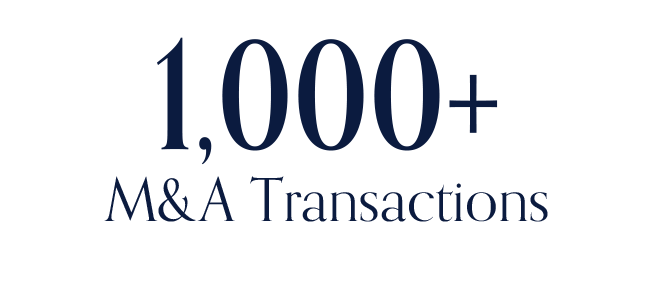
1,000+ Businesses Sold Across Florida
Confidential, Strategic Sale Process
Access to a Qualified Buyer Network
Maximized Valuation Through Positioning
Industry Experience Across High-Demand Sectors
Deal Structuring Expertise
Hands-On Guidance From Start to Finish
Deep Local Market Knowledge in South Florida
Built for Results—Not Just Listings
1,000+ Florida Business Owners Trust Us
Real stories from owners who sold, scaled, and succeeded with Sailfish.
Understand the Cost Before You Sell Your South Florida Business





South Florida Business Broker Commission Rates: The Approved Schedule
For Sailfish engagements, the approved commission schedule is 10% on the first $1 million, 8% on the second $1 million, 6% on the third $1 million, and 4% on both the fourth and fifth $1 million. Sellers should evaluate the services, buyer access, and closing support behind the fee—not simply compare percentages.
A commission agreement determines how the advisor is paid for preparing, marketing, negotiating, and closing the sale of a business. The schedule should be clear before the engagement begins, and it should identify the fee base, payment timing, minimums, retainers, and treatment of seller financing or earnouts. Owners who want the broader local sale process can also review Sailfish’s South Florida business broker guide.
Key Takeaways for South Florida Business Owners
The approved schedule begins at 10% on the first $1 million of transaction value.
The rate is 8% on the second $1 million and 6% on the third $1 million.
The rate is 4% on both the fourth and fifth $1 million.
The percentages apply by tranche, not as one percentage applied to the entire sale price.
A written engagement should explain what counts toward transaction value and when the fee becomes payable.
The lowest quoted percentage does not necessarily produce the highest net proceeds or the safest closing.
How the Tiered Commission Schedule Works
A tiered schedule charges one percentage on the first portion of the transaction and lower percentages on later portions. This recognizes that larger transactions create a larger absolute fee while still requiring additional financial preparation, buyer qualification, negotiation, diligence coordination, and closing work.
First $1 Million: 10%
The first $1 million is charged at 10%. This first tranche supports the core work required in nearly every sale: analyzing financial performance, identifying defensible add-backs, preparing the confidential marketing materials, developing the buyer strategy, screening inquiries, managing information release, negotiating the letter of intent, and coordinating due diligence through closing.
Second $1 Million: 8%
The portion of transaction value between $1 million and $2 million is charged at 8%. The first $1 million remains at 10%; it does not drop to 8% because the total price exceeds $1 million. A $2 million transaction therefore produces a fee of $100,000 on the first tranche plus $80,000 on the second tranche.
Third $1 Million: 6%
The portion between $2 million and $3 million is charged at 6%. On a $3 million transaction, the calculation is $100,000 on the first million, $80,000 on the second, and $60,000 on the third, for a total commission of $240,000.
Fourth and Fifth $1 Million: 4%
The fourth and fifth $1 million tranches are each charged at 4%. On a $5 million transaction, the calculation is $100,000 plus $80,000 plus $60,000 plus $40,000 plus $40,000, producing a total commission of $320,000. If a contemplated transaction exceeds $5 million, the written engagement should state how value above that level will be handled rather than leaving the issue open to interpretation.
What Transaction Value Means in a Commission Agreement
The sale price shown in a headline or letter of intent may not be the only economic consideration in a transaction. A deal can include cash at closing, seller financing, an earnout, retained equity, assumed liabilities, inventory, working-capital adjustments, consulting payments, or a noncompete payment. The engagement agreement should identify which components are included in the commission calculation.
This is especially important when two offers have similar stated prices but different structures. An all-cash offer at closing is not economically identical to an offer that relies heavily on a seller note or a contingent earnout. The broker’s responsibility is not merely to produce a price; it is to help the owner compare certainty, timing, tax coordination, financing risk, and the likelihood of collecting the entire consideration.
What the Commission Should Cover
A business broker’s commission should support an organized sale process from preparation through closing. Before signing, the owner should understand the scope of work and the people responsible for each stage.
Valuation and Financial Normalization
The process begins with determining the earnings a buyer can verify. For many owner-operated businesses, this means reviewing seller’s discretionary earnings and the proposed add-backs. Larger or more management-driven businesses may be evaluated using EBITDA. The advisor should identify unsupported adjustments before buyers do and explain how risk, transferability, customer concentration, recurring revenue, and owner dependence affect the likely range.
Confidential Marketing Materials
A strong sale process does not announce the company’s identity to everyone who expresses interest. The broker prepares a blind profile, a confidential information package, and a staged disclosure process. Employees, customers, vendors, and competitors should not learn about the potential sale merely because an unqualified buyer asked for information.
Buyer Outreach and Qualification
Marketplace exposure alone is not a buyer strategy. The broker should identify likely buyer groups, including qualified individuals, strategic acquirers, family offices, search funds, and private equity groups when appropriate. Each buyer should be screened for financial capacity, transaction experience, motivation, and fit before receiving sensitive information.
Offer Comparison and Negotiation
The best offer is not always the offer with the largest number at the top. Price, cash at closing, financing contingencies, working-capital requirements, seller notes, earnouts, transition demands, noncompete terms, and closing certainty all affect the owner’s outcome. Experienced representation helps the seller compare the whole deal and preserve leverage through the letter-of-intent stage.
Due Diligence and Closing Coordination
After an offer is accepted, the broker helps organize requests and keep the buyer, lender, attorneys, accountants, and seller moving toward the same closing target. That coordination matters because many transactions fail after the letter of intent, not before it. Clear records, prompt responses, and disciplined communication reduce avoidable renegotiation.
Retainers, Minimum Fees, and Other Terms to Review
Review the South Florida business broker guide for the complete local selling process.
South Florida business broker guide
Some engagements include an upfront retainer or preparation fee. The agreement should state whether that amount is credited against the success fee at closing. It should also identify any minimum commission, reimbursable marketing expenses, cancellation terms, exclusivity period, and post-termination protection period.
A minimum fee can matter on smaller transactions because the same core work—valuation, packaging, buyer screening, negotiations, diligence, and closing coordination—must still be completed. The important point is transparency. The owner should know the minimum, when it applies, and whether any other charges can be added.
Why Choosing the Lowest Commission Can Cost More
A lower fee does not compensate for weak pricing, poor confidentiality, an unqualified buyer pool, or an advisor who cannot manage diligence. The seller’s real objective is net proceeds from a transaction that closes on acceptable terms. A broker who creates genuine buyer competition, prevents a confidentiality failure, or protects the owner from an uncollectible earnout may deliver a substantially better result even when the quoted fee is not the lowest proposal.
Owners should ask how the broker established the valuation range, which buyer groups will be contacted, how financial capacity will be verified, who will prepare the marketing materials, and who will manage the deal after an offer is signed. Those answers reveal far more than a percentage standing alone.
South Florida Factors That Affect the Work Behind the Fee
South Florida is not one uniform buyer market. A company serving Palm Beach County may attract a different mix of buyers than a company concentrated in Broward or Miami-Dade. Industry licensing, bilingual customer relationships, storm exposure, real-estate requirements, route density, tourism sensitivity, and cross-county labor markets can all affect buyer interest and diligence.
Service companies with recurring revenue, trained management, documented processes, and clean financial records often attract broader interest. Businesses dependent on the owner, a single license holder, one major customer, or undocumented cash flow require more preparation. The commission schedule may be straightforward, but the work required to make a business financeable and transferable varies considerably.
Questions to Ask Before Signing a Brokerage Agreement
Will the approved 10% / 8% / 6% / 4% schedule be shown clearly in the agreement?
What forms of consideration are included in the commission calculation?
Is any retainer credited against the success fee at closing?
Is there a minimum commission or separate marketing expense?
How long is the exclusive engagement, and what happens if the agreement ends?
How are buyers screened before confidential information is released?
Who manages diligence, lender requests, and closing coordination?
How will the advisor compare cash, seller financing, earnouts, and retained equity?
What happens if the buyer introduced by the broker closes after the listing term?
Commission Should Be Evaluated Against the Owner’s Net Outcome
Commission is an important economic term, but it is only one line in the seller’s outcome. The final result also depends on valuation discipline, the quality of the buyer pool, the amount of cash delivered at closing, the risk assigned to contingent payments, the transition obligation, and whether the transaction actually closes.
An owner who is preparing for a sale should compare broker proposals using the same facts and the same expected transaction structure. If one proposal assumes an unrealistic price or ignores likely financing terms, its quoted percentage is not directly comparable. Sailfish’s broader business-sale planning guide explains how preparation, buyer qualification, negotiation, and diligence fit together.
Document the Fee Before the Sale Begins
The engagement agreement should be specific enough that the owner, broker, attorney, and closing agent can calculate the fee from the same transaction documents and reach the same result. Ambiguity around earnouts, seller notes, inventory, assumed debt, or a later closing creates unnecessary conflict. Review the agreement with the owner’s legal and tax advisors before signing, and resolve questions while both sides are focused on building the process rather than trying to interpret the fee during closing week.
Frequently Asked Questions About South Florida Broker Commissions
What commission schedule does Sailfish use for the first $5 million?
The approved schedule is 10% on the first $1 million, 8% on the second $1 million, 6% on the third $1 million, and 4% on both the fourth and fifth $1 million. The percentages are applied separately to each tranche.
Does the entire commission drop to 8% when a business sells for more than $1 million?
No. The first $1 million remains at 10%. Only the second $1 million is calculated at 8%, followed by 6% on the third and 4% on the fourth and fifth.
When is the commission paid?
The success fee is generally paid at closing from the seller’s proceeds, subject to the signed engagement agreement. Any retainer, minimum, or treatment of deferred consideration should be written clearly before the process begins.
Should a seller choose the broker offering the lowest percentage?
Not automatically. The owner should compare valuation quality, buyer access, confidentiality controls, negotiation capability, diligence management, closing history, and net proceeds. A low percentage does not help if the broker produces a weaker deal or cannot close it.
What should a South Florida owner do before requesting proposals?
Organize recent financial statements and tax returns, identify likely add-backs, list major customers and contracts, document licenses and key employees, and define the owner’s preferred timing and transition. Better information allows each advisor to evaluate the same opportunity and provide a more meaningful proposal.
For statewide guidance on valuation, confidentiality, buyer qualification, and closing, visit our Florida business broker guide.