
How Much Should I Sell My Company For?

Sell Your Business. Step Into Freedom.
Create the Future You Deserve— It Starts with Selling Your Business



Thinking About Selling Your Business?
Find Out What Your Business is Worth!
25+ Years of Success: Exclusive Buyers. Maximum Value. Zero Upfront Fees.
- ✓92% Success Rate – Proven expertise in closing efficiently.
- ✓Sell in as Fast as 90 Days – A streamlined, efficient process.
- ✓100% Confidential Sales – Protecting your business.
- ✓Multiple Competitive Offers – Serious buyers waiting.
Now is the Perfect Time to Sell Your Business in Florida:
Let Us Help You Get the Best Price


Why Florida Business Owners Trust Sailfish Equity Advisors
Choosing a business broker isn’t just a business decision—it’s a trust decision. For over 25 years, Sailfish Equity Advisors has helped Florida entrepreneurs sell with confidence, clarity, and maximum value.
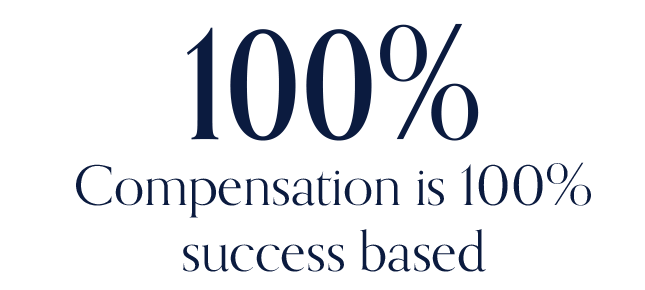
With 1,000+ deals closed, deep roots across the state, and a 100% success-based model, we’re the Florida business broker owners turn to when results matter most.
What makes us different:
Real-World Insight
We’ve bought, scaled, and sold our own companies—so we understand what’s at stake.Proven Track Record
From construction and healthcare to SaaS and services, our experience spans industries and deal sizes.Local Expertise, Statewide Reach
We know the buyers, market trends, and regional nuances from Miami to Pensacola.You Only Pay When You Win
No upfront fees. No retainers. We only succeed when you do.Custom Exit Strategies
Whether you're ready to sell now or planning for later, we tailor a plan to meet your goals.Confidential, White-Glove Support
Your sale stays private. Your legacy stays protected.
Thinking about selling? Let’s talk. Sailfish Equity Advisors is your trusted partner for every step of the journey.





Which Valuation Method Should You Use for a Florida Company?
The right valuation method depends on the company, its size, the quality of its earnings, its assets, and the reason for the valuation. Most operating businesses are valued primarily through earnings and market evidence. Asset value or discounted cash flow may matter in specific situations, but no formula should be used without matching it to the facts.
This guide compares the principal methods used to value a privately held company. It is not an asking-price strategy and it is not a full exit-planning checklist. Its purpose is to help a Florida owner understand what each method measures, when it is useful, and why a credible conclusion often reconciles more than one approach.
Start With the Purpose and Standard of Value
Before choosing a formula, define the question. A valuation prepared for a potential third-party sale may estimate likely market value under current buyer and financing conditions. A report prepared for estate planning, litigation, a shareholder dispute, or an internal transfer may use a different standard, date, level of control, or marketability assumption.
The value of the operating company also needs to be separated from items that may not transfer in a typical sale. Excess cash, personal vehicles, unrelated real estate, non-operating investments, and certain debts may be treated separately. Working capital, inventory, and necessary equipment may be included, excluded, or adjusted depending on the expected transaction structure.
A useful valuation states its assumptions. It should identify the measurement date, the financial period used, the expected assets and liabilities, and whether the conclusion reflects an asset sale, equity sale, controlling interest, or another defined interest.
The SDE Multiple Method for Owner-Operated Businesses
Seller's discretionary earnings is commonly used for smaller companies in which one working owner receives both compensation and profit. SDE typically begins with pre-tax income and adds back one owner's compensation, interest, depreciation, amortization, and documented expenses that are personal, nonrecurring, or not required for continued operations.
The resulting earnings figure is then paired with a market-supported multiple. That multiple reflects the size and type of business, consistency of results, customer characteristics, owner involvement, management depth, capital needs, growth prospects, and current buyer demand.
SDE is useful because it estimates the economic benefit available to one full-time owner-operator before acquisition debt. It becomes unreliable when adjustments are unsupported, more than one owner's labor must be replaced, or the seller ignores a market-rate cost for a critical role.
For example, if two owners each work full time, adding back both salaries without subtracting the cost of replacing one of them would overstate earnings. The valuation must reflect the labor a buyer will need after closing, not simply the way the current owners chose to pay themselves.
The EBITDA Multiple Method for Larger Companies
EBITDA measures earnings before interest, taxes, depreciation, and amortization. It is often used when the company is large enough to support a management structure and a market-rate executive team. Buyers may apply adjustments to produce normalized or adjusted EBITDA, but the analysis should preserve the ordinary costs required to operate the company without the seller.
An EBITDA approach is useful for comparing businesses with different capital structures and tax positions. It is also familiar to private equity groups, strategic acquirers, and lenders. The multiple may rise with scale, recurring revenue, management depth, favorable margins, and competitive buyer interest. It may fall with concentration, volatility, capital intensity, weak systems, or a difficult transition.
SDE and EBITDA are not interchangeable labels for the same number. SDE generally includes one owner's economic benefit; EBITDA generally assumes management compensation remains in the expense structure. A valuation that switches between the two without reconciling owner labor can materially misstate value.
The Comparable-Sales or Market Method
The market method uses transactions involving similar businesses to help establish a range. Relevant comparisons may include sold-business databases, industry transaction reports, broker records, lender experience, and current buyer feedback. The analyst may compare price with SDE, EBITDA, revenue, or another industry metric.
Comparable sales are useful, but private-company data is imperfect. A reported transaction may omit working capital, inventory, real estate, seller financing, earnouts, assumed debt, or unusual assets. The earnings calculation may differ from the subject company's calculation. A national transaction may also reflect a buyer pool or operating environment that is not comparable with the Florida company being valued.
The strongest market analysis does not select the highest available multiple. It explains why each comparison is relevant, adjusts for meaningful differences, and gives more weight to transactions with reliable data. A broad industry average is a starting reference, not an automatic answer.
The Asset-Based Method
An asset-based valuation estimates the fair value of the company's assets and subtracts its liabilities. The analysis may adjust book values for the current worth of equipment, inventory, receivables, intellectual property, real estate, and other assets.
This method is often important for holding companies, asset-intensive operations, companies with weak or negative earnings, and businesses that may be worth more through an orderly sale of assets than through continued operation. It can also establish a practical floor when tangible assets carry meaningful value.
The asset method may understate a profitable operating company because it does not automatically capture goodwill, trained employees, customer relationships, systems, reputation, licenses, or the ability to produce earnings. Conversely, book value may overstate worth when equipment is obsolete, inventory is slow-moving, receivables are doubtful, or liquidation costs are high.
The Discounted Cash Flow Method
Discounted cash flow, or DCF, estimates the present value of future cash flows. The analyst projects operating performance, capital spending, working-capital needs, taxes, and a terminal value, then discounts those amounts for time and risk.
DCF can be useful when future cash flows can be forecast with reasonable support, especially for a larger company with reliable budgets, recurring revenue, and a stable operating history. It also
Prepare and sell a Florida business through a structured process. helps an analyst test how assumptions about growth, margins, investment, and risk affect the conclusion.
The method is highly sensitive to its inputs. Small changes in the growth rate, terminal value, or discount rate can produce a large difference. A forecast built mainly from optimism does not become reliable because it is placed in a spreadsheet. The projections should be connected to capacity, signed contracts, pricing, staffing, historical conversion rates, or other evidence.
Industry Rules of Thumb Are a Secondary Check
Some industries use shorthand metrics such as a percentage of revenue, a value per route, a multiple of recurring revenue, or a price per location. These rules can be useful for quick orientation and for comparing companies that share similar economics.
A rule of thumb should not replace a full review. Two companies with the same revenue can have very different margins, customer retention, labor requirements, equipment needs, and owner involvement. The shorthand metric is most useful as a reasonableness check after normalized earnings and risk have been examined.
How an Advisor Reconciles the Methods
A credible conclusion does not average unrelated numbers mechanically. The analyst identifies which method best reflects how likely buyers would evaluate the company and uses the other methods as support or challenge.
For a profitable owner-operated service business, normalized SDE and relevant market transactions may carry the greatest weight. For a larger managed company, adjusted EBITDA and comparable acquisitions may be more informative. For an equipment-heavy company with limited profit, the asset method may set the foundation. For a mature company with predictable contracted cash flow, DCF may provide an additional test.
When methods produce very different answers, the difference should be explained. The asset value may be high while earnings are weak. A DCF forecast may assume growth that market transactions do not support. Comparable sales may include businesses with better management or recurring revenue. The disagreement is information, not a reason to hide one of the results.
Do Deal Terms Change the Valuation?
Valuation and transaction structure are related but not identical. A buyer may agree to a higher headline price when part of the consideration is contingent, paid over time, or supported by a seller note. A lower all-cash offer may carry less collection and performance risk for the seller.
Working capital, inventory, debt, cash, real estate, and equipment can also change the economics. The valuation should make clear what is assumed to be included. Owners should compare cash at closing, deferred payments, conditions, guarantees, and retained liabilities rather than treating headline price as the only measure.
These terms do not create an entirely new valuation method. They explain how the agreed value is funded, allocated, and transferred.
Information Needed for a Defensible Valuation
At minimum, gather three years of tax returns, profit-and-loss statements, balance sheets, current year-to-date results, and a trailing-twelve-month view. Add payroll by role, a schedule of owner compensation, documentation for proposed adjustments, revenue by customer and service line, and information about contracts or recurring revenue.
Depending on the company, the analyst may also need equipment and inventory schedules, accounts-receivable aging, lease terms, licenses, backlog, employee tenure, capital-spending history, and forecasts. Clean data does not guarantee a high valuation, but it allows the method to measure the company rather than the quality of the owner's explanation.
Owners who want to connect the valuation conclusion with an actual transaction can review how to prepare and sell a Florida business. The sale process adds confidential marketing, buyer qualification, offers, diligence, financing, and closing to the valuation work described here.
Business Valuation Methods FAQ
Is SDE or EBITDA better for valuing my company?
Neither is universally better. SDE is generally more useful for a smaller owner-operated company. EBITDA is generally more useful when the company supports management compensation and is evaluated by larger or institutional buyers. The selected measure must reflect the labor and costs required after closing.
Can revenue be used to value a business?
Revenue multiples can provide context in industries with consistent margins and operating models, but revenue alone does not show profit, capital needs, or risk. A revenue approach should be checked against earnings and the economics of comparable transactions.
When is the asset method most appropriate?
It is most relevant for asset-holding entities, capital-intensive companies, businesses with weak earnings, and situations in which the assets may be worth more than the operating company. It can also serve as a reasonableness check for a profitable business with substantial tangible assets.
Why can two valuation reports produce different results?
They may use different standards of value, measurement dates, earnings adjustments, forecasts, comparable transactions, discount rates, or assumptions about included assets and liabilities. The report should explain these choices so the owner can understand the difference.
Is an online valuation calculator reliable?
It can provide an early directional estimate when the inputs are accurate. It cannot independently verify adjustments, judge customer concentration, assess owner dependence, review contracts, or determine which buyers and financing sources fit the company.
Should a valuation produce one number or a range?
A range is often more useful for a potential sale because it shows how risk, buyer type, financing, and terms may affect the outcome. Formal engagements may require a single conclusion, but the assumptions behind that conclusion should still be clear.
For statewide guidance on valuation, confidentiality, buyer qualification, and closing, visit our Florida business broker guide.